Custom consumer products, developed around your brand
Lifestyle, travel and everyday-use products built from your concept, sketch or reference sample — with the silicone and multi-material engineering handled as one programme.
Finished consumer products, not components
This is the front end of ESKY: products a customer would buy, developed around your brand and your market.
What we develop
Lifestyle & Everyday Products
Complete silicone products designed for everyday consumer use, organization and convenience.
Travel & Portable Products
Compact, reusable and easy-to-carry silicone products developed for travel and mobile use.
Personal Care Products
Soft-touch finished silicone products for personal-care and daily-use applications.
Home & Organization Products
Functional silicone products for storage, organization, protection and everyday household use.
Soft-Touch Functional Products
Finished consumer products where grip, flexibility, comfort or protection is part of the product function.
Retail-Ready Custom Products
Custom molded silicone products developed with branding, packaging and repeat retail production in mind.
Customization options
Every product starts from your requirements. Scope is confirmed per project.
Custom Shape
Product geometry developed from your artwork, sample or product requirements.
Custom Mold
Dedicated tooling developed according to the confirmed product design.
Function & Structure
Functional requirements built into the product geometry and construction.
Pantone Color
Custom color matching based on confirmed Pantone references.
Branding & Surface Detail
Molded logos, printed details, textures and brand-specific surface features.
Retail Packaging
Retail-ready packaging developed according to product and market requirements.
Development process
Product Review
Review the product, application and requirements.
Tooling
Dedicated tooling built around the confirmed design.
Sampling
Samples checked against the agreed criteria.
Mass Production
Production with process controls across batches.
Quality Control
Checks against the approved sample.
Packaging
Packaging per the agreed specification.
Who these products are for
Consumer & Lifestyle Brands
For brand-specific finished consumer product lines.
Retail Product Brands
For retail-ready custom molded products and packaging.
Importers & Distributors
For repeat OEM/ODM consumer product programs.
OEM / ODM Product Companies
For finished product development from concept to production.
Frequently asked questions
Can you develop a product from a drawing or reference sample?
Yes. Projects can start from a drawing, sketch, reference sample or product concept; structure and moldability are reviewed before tooling.
Do you support custom silicone molds?
Yes. Dedicated molds are built around the confirmed design after review and sampling approval.
Can silicone hardness and Pantone colors be customized?
Yes. Hardness and Pantone-matched colors are selected per application and confirmed on samples.
Can you help develop a complete finished product rather than only a component?
Yes. We support complete product development - structure, material, tooling, sampling, production and packaging.
Can custom retail packaging be included?
Yes. Retail packaging, inserts and kitting scope are confirmed per project.
Can the approved product be repeated for future OEM orders?
Yes. The approved sample and confirmed specifications serve as the reference for repeat OEM/ODM production.
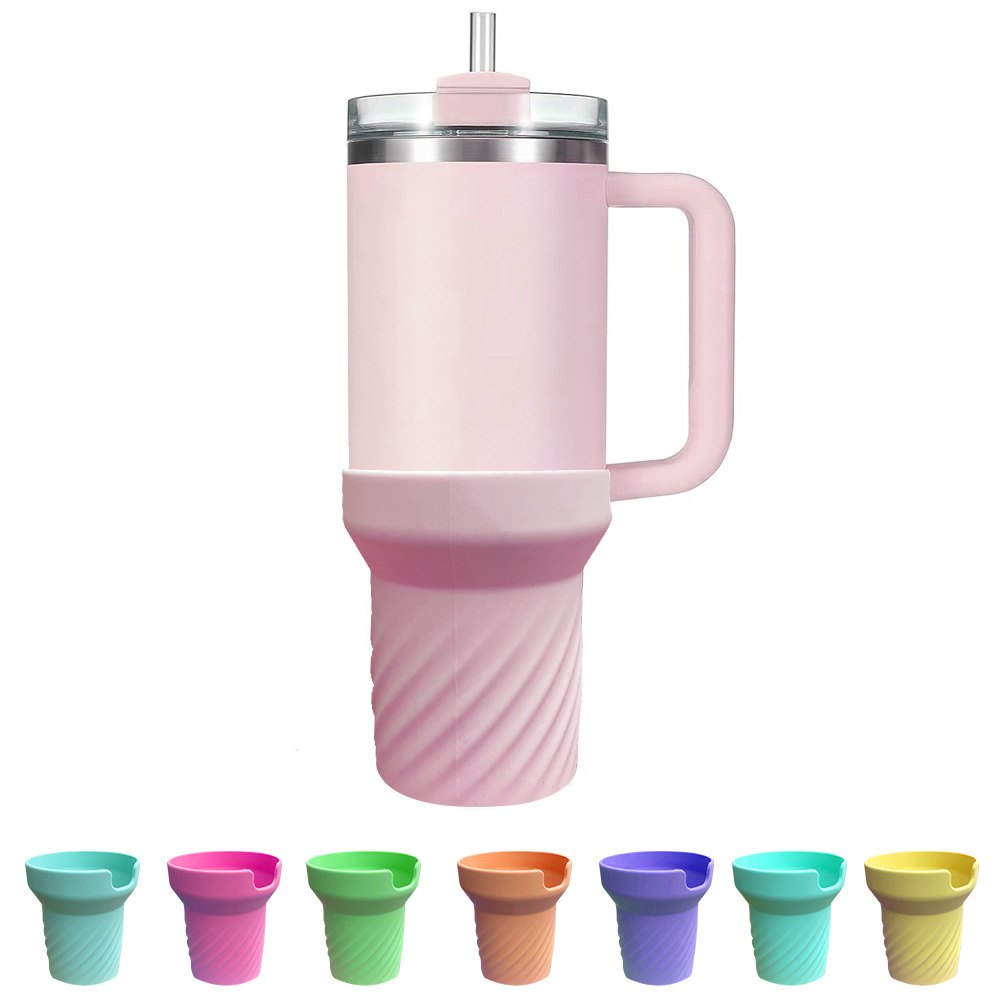
How can tumbler sleeves and boots balance fit, tolerance and removable cleaning?
Tumbler sleeves and boots live or die by fit: too tight and they will not seat, too loose and they twist or slide off. The reliable approach is to dimension from the actual tumbler — measured, not from the brand’s nominal size — and design the silicone with an interference fit at the grip zones plus deliberate relief where removal happens. Decide early whether the sleeve is fixed or removable for washing: removable designs need a clearance strategy and edge treatment so they release cleanly without tearing. Wall thickness, texture and hardness then tune the grip feel. If you expect multiple tumbler sizes, plan the size SKU set deliberately. Provide the physical tumbler or full dimensions, the use scenario and any branding requirements, and we will develop the fit with sample trials on the real cup.
How can collapsible travel bowls be validated for stability and folding life?
Collapsible bowls fail in two predictable ways — they collapse when they should stay open, and the folding zones crack after repeated use — so validation mirrors those failures. Stability is checked with the bowl deployed and loaded: wall stiffness, rim shape and base geometry determine whether it stands up to food, water and a pet or traveller nudging it. Folding life is tested by cycling the fold-and-unfold pattern with the bowl loaded and cleaned the way users will treat it, then inspecting the crease zones for whitening, thinning or cracking. Define the acceptance numbers — load, cycles and end-state appearance — before sampling so the result is measurable. Provide the reference sample, capacity and use scenario, and we will develop the geometry and the fold-cycle validation for the approval process.
How can silicone personal-care brush heads balance softness, tear resistance and cleaning?
Brush heads sit at the intersection of three demands that pull in different directions: bristles soft enough for skin, a structure strong enough not to tear during use and cleaning, and a shape that rinses clean without trapping residue. The levers are bristle geometry — length, taper and tip shape — plus hardness, the silicone grade and the density of the brush pattern. Softer, finer tips feel better but need thicker roots or a more tear-resistant compound to survive; denser patterns clean well but must rinse freely. Product claims around skin-friendliness should be tied to the design choices you can demonstrate. Provide the application — face, body, scalp — the target skin feel and the cleaning conditions, and we will develop the bristle structure with samples to balance feel, durability and washability.
How should pet lick mats address chewing, fragments and use instructions?
Lick mats are used while a pet is actively licking, but they must also survive the chewing, pawing and teeth that come with real use. The design review therefore covers three areas: material and structure chosen so pieces do not break off easily, geometry without small detachable features, and textures deep enough to work without creating thin, fragile edges. Pets are not regulated the way children’s products are, so the compliance route differs by market and claim — treat any food-contact or safety statement as something to verify against the destination market rather than assume. Clear use instructions matter too: supervised use, cleaning guidance and when to replace the mat. Share the design, target market and pet size range, and we will review the structure and the wording of your use instructions at development stage.
What information is needed for quotation?
Drawings or samples, target quantities, material and color references and packaging expectations. Review is available upon project submission.
Where to go next
Developing a consumer product in silicone?
Send a drawing, reference sample or even a rough concept. We review structure, material and the development path, then reply with the next steps.