Quality is how we reduce project risk
Criteria are agreed against the approved sample, applied across production, and checked before anything is released — so problems are raised before shipment, not discovered after delivery.
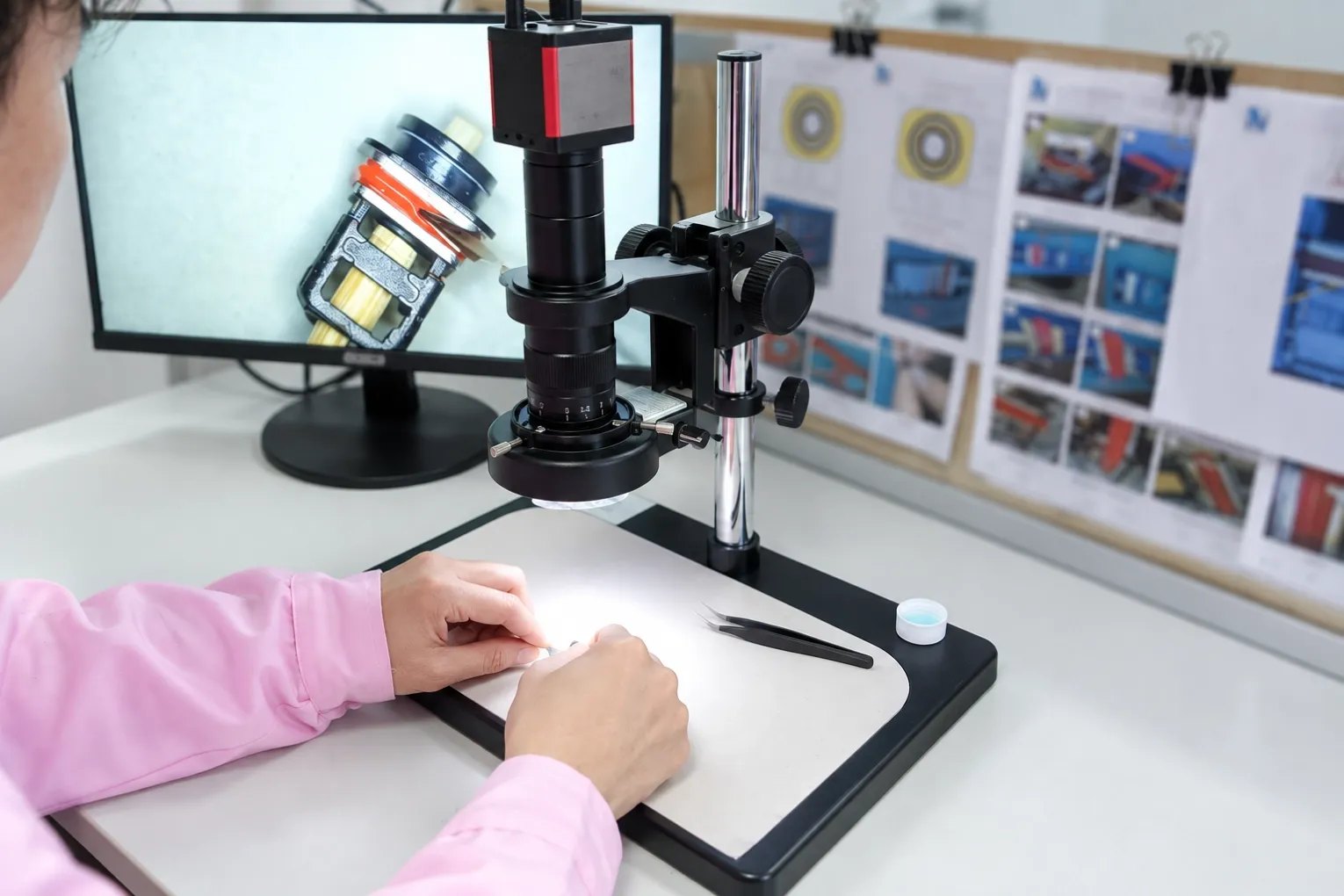
The approved sample is the standard
Material and compliance support
Certification scope differs by item: quality-system and social-compliance certifications relate to the manufacturing site, while FDA- and LFGB-related items refer to material and testing support available for applicable products and markets. Requirements are confirmed per project rather than assumed, and documentation is matched to the manufacturing site, product and target market.
QC across the project
Incoming Material / Component Check
Review incoming silicone materials, plastic or metal components, hardware and packaging items where required.
Sample Confirmation
Check dimensions, appearance, color, hardness, fit and function against the confirmed project requirements.
In-Process Inspection
Monitor critical product characteristics during molding, trimming, assembly or production.
Assembly Inspection
Check component matching, fit, orientation, hardware installation and product completion.
Packaging Inspection
Check labels, accessories, quantity, packaging condition and set completeness.
Final Pre-Shipment Inspection
Review finished products against the approved sample and confirmed shipment requirements before release.
Inspection reference
Inspection criteria should be agreed during product development and sampling so that production and final inspection use the same confirmed reference.
Approved Sample
The approved sample is the primary reference.
2D Drawing
Drawings with key dimensions and requirements.
3D / CAD Requirement
CAD data used for geometry confirmation.
Confirmed Dimensions
Dimensions agreed during development and sampling.
Pantone / Color Reference
Confirmed color references for comparison.
Material / Hardness Requirement
Material and hardness per specification.
Assembly Specification
Assembly scope and sequence per project.
Packaging Requirement
Packaging format and set definition.
Customer-Specific Quality Points
Customer-defined checkpoints added to the plan.
Product checks
Dimensions
Checked against the confirmed dimensions.
Silicone Hardness
Hardness confirmed against the specification.
Color Consistency
Color compared against the approved reference.
Surface Finish
Surface quality consistent with the approved sample.
Flash
Flash kept within the agreed allowance.
Parting Line
Parting line finished per agreed surfaces.
Logo / Detail Clarity
Molded details and logos remain legible.
Product Function
Function checked against the requirement.
Fit / Interface
Fit confirmed against mating parts.
Visual Condition
Visual condition reviewed before release.
Multi-material & assembly
Multi-material products require both individual component checks and final assembled-product confirmation.
Plastic / Metal Insert Position
Inserts positioned as designed.
Overmold Coverage
Coverage matches the confirmed geometry.
Interface Fit
Interfaces fit as approved on samples.
Retention / Connection
Connections hold as designed.
Assembly Orientation
Parts oriented correctly at assembly.
Hardware Position
Hardware positioned per the design.
Strap / Textile Installation
Straps and textile installed per the design.
Functional Check
Assembled products checked for function.
Packaging & kits
Correct Product
Products match the confirmed list.
Correct SKU
SKU matches the order.
Correct Quantity
Quantities verified per set.
Correct Accessories
Accessories included per the set definition.
Labels / Barcodes
Labels and barcodes applied per requirement.
Instruction Cards
Cards included where required.
Gift / Retail Packaging Condition
Packaging clean and intact.
Outer Carton Marking
Carton marking per shipment requirement.
Set Completeness
Sets complete per the confirmed list.
Shipping Protection
Products protected for shipment.
Color & appearance
Appearance requirements should be confirmed during sampling before repeat production begins.
Pantone Reference
Confirmed references used for comparison.
Color Comparison
Color compared against the approved reference.
Surface Texture
Texture matches the confirmed sample.
Matte / Gloss Finish
Finish reviewed against the approved sample.
Molded Logo
Logos checked for clarity and placement.
Printed Detail
Printed details checked per requirement.
Visual Defects
Visual defects reviewed against agreed criteria.
Surface Cleanliness
Surfaces checked clean before packing.
Dimensions & fit
Critical dimensions and fit points depend on the product and should be confirmed before tooling and sample approval.
Critical Dimensions
Key dimensions checked per drawing.
Tolerance Points
Tolerances agreed during development.
Product Fit
Fit confirmed against mating parts.
Assembly Interface
Interfaces checked at assembly.
Seal / Contact Area
Sealing and contact areas checked.
Grip / Soft-Touch Area
Grip areas checked for feel.
Functional Movement
Moving parts checked for function.
Accessory Compatibility
Accessories fit as intended.
Repeat production
Approved samples and confirmed specifications are used as the reference for future OEM/ODM production runs. Repeat production is reviewed against the same confirmed reference used for the approved project.
Material / Component Consistency
Materials and components consistent across runs.
Color Consistency
Color compared against the approved reference.
Dimensions
Dimensions checked against the confirmed drawing.
Surface Finish
Surface finish consistent with the approved sample.
Assembly Method
Assembly follows the confirmed sequence.
Packaging Configuration
Packaging matches the confirmed format.
Final Product Appearance
Final appearance reviewed before release.
Issue handling
Project-specific follow-up is based on the confirmed product and quality requirements.
Identify the Issue
The issue is identified and described clearly.
Separate Affected Products
Affected products are separated from the run.
Confirm Requirement / Reference
The requirement is confirmed against the approved reference.
Review Cause
The cause is reviewed with the relevant process step.
Correct / Rework Where Appropriate
Rework or correction is applied where appropriate.
Re-Inspect
Corrected products are re-inspected against the same criteria.
By project type
Inspection emphasis adapted to each project type.
Custom Silicone Consumer Products
Checks for finished consumer products and sets.
Accessories & Components
Fit and function checks around existing products.
Branded Merchandise & Gift Sets
Appearance, labeling and set completeness.
Industrial & Technical Parts
Dimensions, tolerance and function checks.
Multi-Material Products
Component, interface and assembly checks.
Repeat OEM / ODM Programs
Repeat consistency against approved references.
Engineering notes from production programmes
- Appearance-critical programmes: process, handling and packaging controls are defined around yellowing and visual-stability risks on clear and light-coloured parts.
- Sample-to-bulk consistency: repeat runs are audited against the approved sample across material, colour, dimensions, assembly and packaging.
Frequently asked questions
What do you inspect before shipment?
Finished products are reviewed against the approved sample and shipment requirements, covering appearance, dimensions, function, accessories, quantity, labels and packaging.
Do you inspect against the approved sample?
Yes. The approved sample and confirmed specifications are the primary reference for production and final inspection.
Can dimensions and silicone hardness be checked?
Yes. Dimensions and hardness are checked against the confirmed drawing and specification.
How do you control color consistency?
Color is compared against the confirmed Pantone or reference sample, on parts and across production runs.
How are assembled products inspected?
Assembly checks cover component matching, fit, orientation, hardware installation and functional confirmation on finished products.
Do you check packaging and accessories?
Yes. Packaging checks cover correct products, quantities, accessories, labels, set completeness and packaging condition.
How is repeat production compared with previous approved orders?
Repeat runs are reviewed against the approved sample and confirmed specifications, including material, color, dimensions, finish, assembly and packaging.
Can customers provide their own inspection requirements?
Yes. Customer-specific quality points can be added to the inspection plan and confirmed before production.
How should I specify yellowing resistance for clear or light-colored silicone?
Yellowing resistance is a specification you define, not a property a supplier can guarantee in the abstract. Specify three things: the exposure the product will actually see (sunlight, heat sources, contact chemicals such as chlorine or detergents), the appearance limit you can accept against an approved visual standard, and the verification point — colour compared with the approved sample after a defined conditioning step. Material choice helps: platinum-cured base polymers generally start cleaner for clear and light colours. Without an agreed reference and check point, a requirement like “should not yellow” cannot be enforced. Share the use environment and appearance expectations, and we will propose the material route and the colour-verification step for the approval process.
Why can silicone hardness readings differ with specimen and test conditions?
Silicone hardness is measured with a durometer, and readings are only comparable when the specimen and method match. Thickness, cure state, temperature and the time the indenter rests on the part all shift the number — a thin wall, an under-cured sample or a cold reading will not agree with a standard test plaque. That is why two suppliers can quote different hardness for the “same” part: they measured different specimens under different conditions. The fix is procedural: agree the scale (Shore A is the usual reference for silicone), the specimen — a standard plaque or a defined location on the actual part — and the measurement conditions, and record them with the drawing. Share your drawing and acceptance limits, and we will align the hardness test method before production so inspections are comparable.
Which actions should life-cycle tests reproduce for keypads, clips and straps?
Life-cycle testing only predicts anything when it reproduces how the part is actually handled — the failure you are trying to prevent happens at the use motion. For keypads, that is repeated actuation with the intended force and travel, checked for contact failure and legend wear. For clips and snap features, it is repeated engage-and-release in the assembly direction, plus an overload case to see how the part fails when a user forces it. For straps and tethered parts, pull in the real loading direction, including the angle and jerk of everyday handling. Set the cycle count, force and pass criteria against samples before production starts. Share the drawings and usage conditions, and we will define the test motions and acceptance numbers for the validation plan.
How should outdoor silicone parts be tested for cold, sunlight and saltwater exposure?
Outdoor parts age through three main channels, and each needs its own check written into the specification: low-temperature flexibility (does the compound stay usable at the coldest expected condition), sunlight and heat (colour and surface appearance against an approved range after defined exposure), and saltwater or sweat (discoloration, sticky surfaces, and any metal hardware corroding at the bond line). The acceptance form is the same in each case — compare against the approved sample after a defined conditioning step, because “weather resistant” without a check point cannot be inspected. State the real use environment and shelf or storage conditions. Share the product, destination climate and appearance limits, and we will propose the material route and the environmental verification points for approval.
Where to go next
Send your quality requirements with the enquiry
Tell us the target market, the function of the part and any testing requirements. We confirm the inspection approach with the quote.