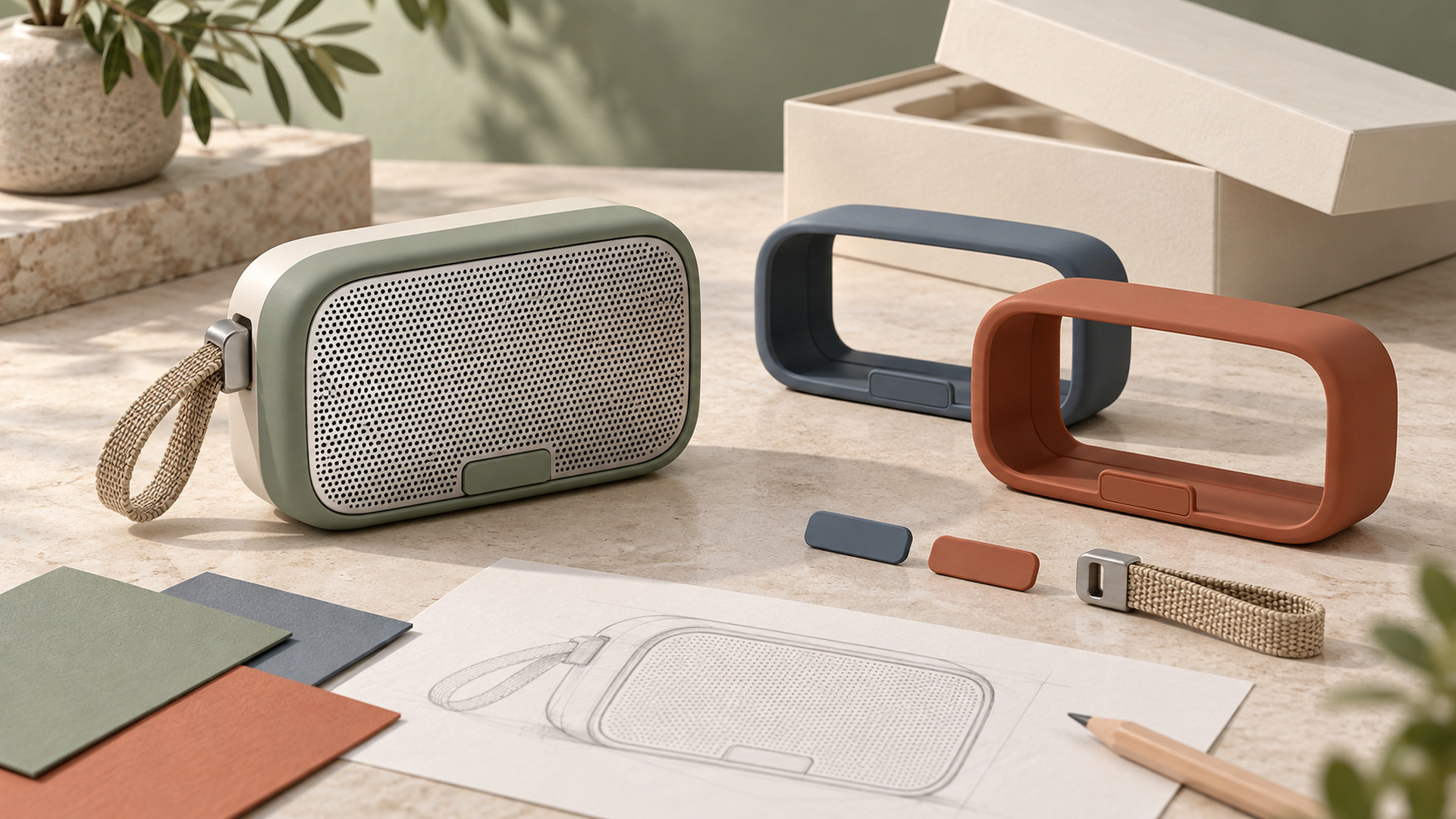
How to Develop Modular Silicone Corporate Gifts That Can Be Reused Across Multiple Campaigns
Most corporate gifts are developed around one campaign: one logo, one colorway, one event and one delivery date.
That works when the project is genuinely one-off. It becomes inefficient when the same company runs employee programs, client gifting, seasonal campaigns, regional launches or licensed collaborations several times a year.
A more reusable product architecture is:
stable functional core + replaceable customization layer
The functional core remains largely unchanged. The visible brand layer—such as a silicone sleeve, insert, badge, strap, grip, protective component or packaging element—can change between campaigns.
This does not mean turning every gift into a complicated modular system. It means deciding early which parts should carry long-term function and which parts should carry short-term branding. For merchandise agencies and corporate-gifting teams, that distinction reduces repeated tooling, repeated sample approval and unnecessary re-engineering.
Why One-Off Promotional Products Are Hard to Reorder
A promotional item may be easy to buy once and surprisingly difficult to reproduce six months later.
The first order may depend on a specific decoration method, temporary packaging setup, particular color batch or one supplier's interpretation of the artwork. When the buyer returns for another campaign, the product may need to be sampled again because too much of the branding is tied directly to the core product.
Typical problems include:
- a new mold for every artwork change;
- repeated sample approval;
- inconsistent colors between campaigns;
- changes to hardware or packaging;
- minimum quantities that do not fit smaller regional programs;
- logos permanently built into the main product;
- unclear ownership of molds or custom modules;
- difficulty creating replacement or seasonal SKUs.
The better development question is not simply what branded item should we make? It is: which parts of the product should remain stable, and which parts should be designed to change?
Separate the Functional Core From the Customization Layer
The functional core performs the main job of the product. Depending on the project, it could be an electronic device, a rigid plastic housing, a metal accessory, a drinkware component, a reusable tray, a textile bag, a charging accessory or a reusable hardware platform.
The customization layer carries campaign-specific identity. It may be a molded silicone insert, a colored silicone cover, a removable sleeve, a logo badge, a grip component, a strap, a character module, a protective bumper or a branded pull tab.
The core should not need to be redesigned every time the marketing message changes.
This logic already exists in commercial gifting. QALO's corporate-gifting program pairs established wearable products with customizable silicone options and volume gifting; its corporate-gifting page lists smart rings, silicone products and smart-ring covers as gifting categories. rOks goes further: its program is built around an interchangeable ice-tray system where buyers can customize the insert, tray and bag independently while the platform stays reusable. Neither is an ESKY SUPPLY project. They illustrate the commercial principle that works: keep the expensive or functional platform stable and move more campaign variation into replaceable components.
Where Silicone Works Well as a Replaceable Interface
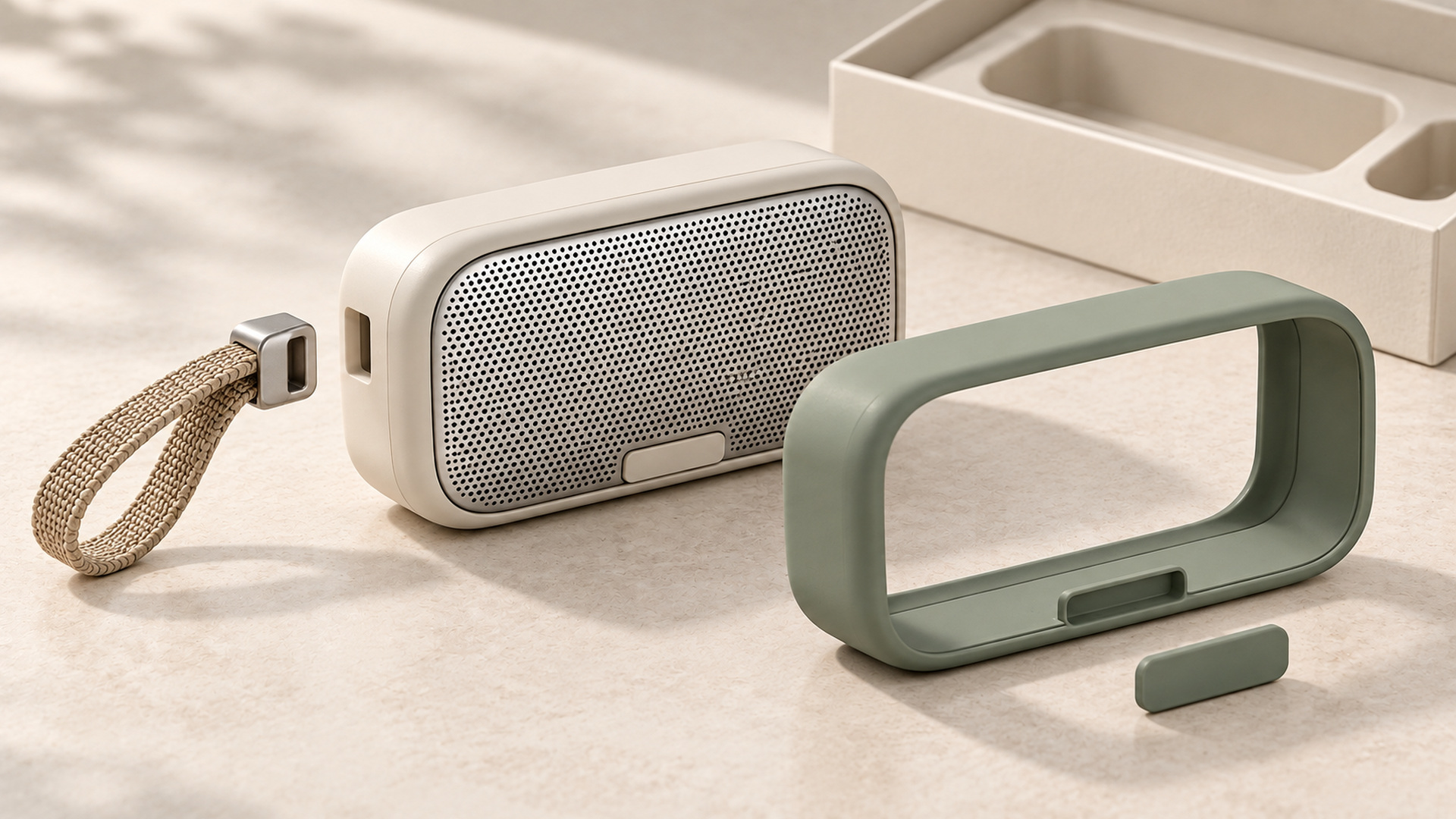
Silicone is useful in modular systems because it combines flexibility, grip, color and three-dimensional form, and it can be designed to stretch over, snap into, slide around or mechanically lock with harder materials.
Protective sleeves
A rigid product can stay unchanged while the sleeve carries campaign-specific color, texture or molded branding. This works best when the sleeve is a removable component rather than permanently bonded to the core.
Removable inserts
A silicone insert can add identity or function without changing the main housing. This is the rOks logic: the insert design changes while the tray system stays consistent. The same principle applies to other product categories, provided the retention interface is engineered correctly.
Straps and carrying components
Travel products, bottles and electronic accessories often have a stable body but flexible carrying elements. A silicone or silicone-combination strap becomes the replaceable campaign layer through molded color, logo treatment, hardware changes, strap geometry or accessory packs.
Logo and character modules
A logo does not always need to be molded permanently into the primary product. A smaller badge, tab, sleeve or insert may carry the campaign identity instead. This is especially useful when different clients share the same functional platform.
Snap-In, Slide-In and Mechanically Captured Modules
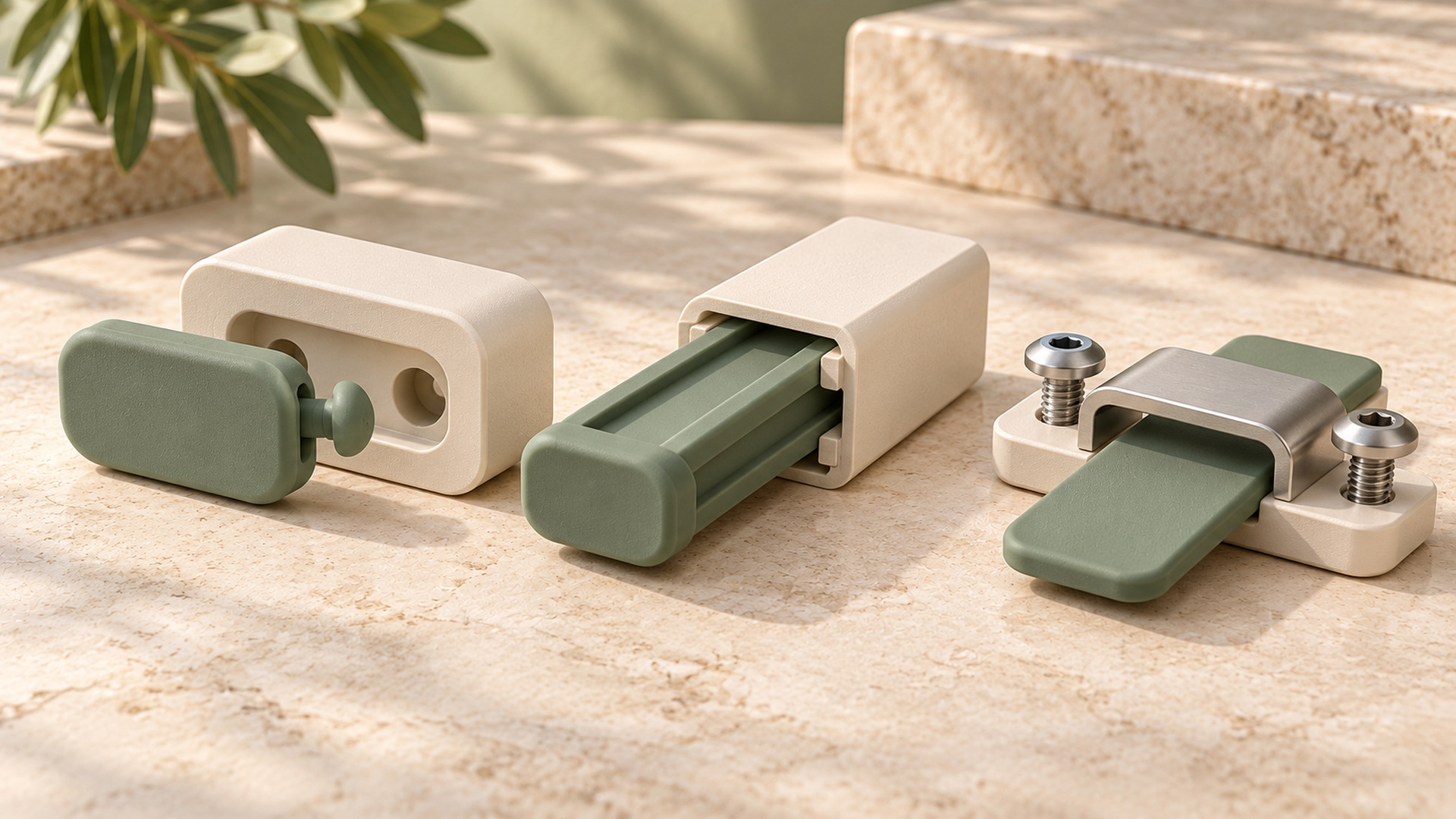
A replaceable component still needs controlled retention. The interface must be designed around how often the component is removed, who replaces it, and what load it experiences.
Snap-in structures
Flexible geometry creates local retention around a rigid feature, which makes replacement simple. But thin hooks or roots need careful DFM review: repeated flexing can turn them into a tear concentration point.
Slide-in interfaces
A silicone element can slide into a plastic or metal track, giving better positional control than a stretch-over sleeve. The tolerance between soft and rigid components then becomes critical. Too loose and the part moves during use; too tight and installation is difficult or the silicone is over-stressed.
Mechanical capture
The silicone part can be retained by surrounding plastic, metal or textile geometry. This is often preferable when accidental release would create a quality or safety problem.
The right interface depends on insertion force, removal force, number of replacement cycles, silicone hardness, wall thickness, mating material, user access, and whether replacement happens at the factory or by the end user. Define the required behavior first; there is no universal mechanism.
Designing for Repeated Attachment and Removal
A modular component should not be approved only when it is new. It should also be checked after repeated use. A silicone insert may feel secure in initial assembly but gradually loosen as the interface stretches; a thin pull tab may pass sample approval but tear after repeated removal.
Useful questions include:
- Does removal force change over repeated cycles?
- Do local edges start to tear?
- Does the part permanently deform after being stretched?
- Does the mating rigid feature create cutting or abrasion?
- Can the component still be installed correctly after cleaning?
- Can the user install it backwards?
- Does decoration crack, peel or wear during repeated flexing?
- Does the fit change after storage under compression?
There is no universal cycle-life number for a modular silicone gift. Set the target from the actual program: a seasonal insert changed twice a year has a different requirement from a wearable module removed every day.
Color, Logo and Licensed Artwork Without Re-Engineering the Core
Modular architecture becomes commercially useful when visual changes do not force structural changes. Corporate programs may need campaign colors, client-specific branding, anniversary versions, regional versions, licensed artwork, character editions or event-specific designs. If all of those changes require a new main tool, the product is not truly modular.
Instead, branding moves to a smaller interchangeable part. That reduces new tooling, design review, sampling time, validation work, artwork change risk and reorder complexity.
A replaceable component still has manufacturing limits. A detailed logo or licensed character may need larger feature size, increased local thickness, simplified line work, multi-color molding, printing instead of molded relief, or a different parting-line strategy. Artwork review should happen before the replaceable component is tooled.
Silicone + Metal, Plastic or Textile Interfaces
Premium branded products are usually multi-material products rather than standalone silicone items.
Silicone + plastic
Plastic provides rigidity, precise locating geometry and assembly features. Silicone adds grip, cushioning, sealing, soft-touch contact, color or brand identity. In a modular product, the plastic part becomes the stable core while the silicone element carries the variable campaign layer.
Silicone + metal
Metal adds weight, strength or a more premium surface; silicone protects contact areas or creates a contrasting soft-touch feature. Where a silicone module must be replaceable, plan for mechanical retention before relying on permanent bonding.
Silicone + textile
Textile products can use silicone as pull tabs, branded patches, strap connectors, soft grips or accessory modules. The load path must be clear: if a textile strap carries structural load, the silicone should not accidentally become the weakest structural element unless that is intentional and validated.
Replacement Packs, Seasonal Colors and Corporate Programs
A modular product supports a different commercial model from a one-off promotional item. The same functional platform can carry replacement packs, seasonal colors, employee milestone versions, anniversary modules, event-specific branding, regional programs or licensed collections.
That changes the procurement question. Instead of asking what promotional product to buy for this campaign, the buyer asks what reusable platform could support several campaigns.
Tooling Ownership and Exclusivity Boundaries
A modular system may use several tools: a core-product mold, a standard insert mold, client-specific insert molds, logo tooling, character tooling, or jigs and assembly fixtures. Ownership should be defined before development.
Buyers should clarify:
- Who pays for each tool?
- Who owns the tool after payment?
- Is the functional core shared across programs?
- Is a client-specific module exclusive?
- Can replacement components be ordered separately?
- Can tooling be transferred?
- What happens to licensed-character tooling after the project ends?
- Who controls future modifications?
This matters especially when a merchandise agency manages products for multiple end clients. A modular design reduces future engineering cost only when tooling and IP boundaries are equally clear.
Packaging, Kitting and Multi-Location Fulfillment
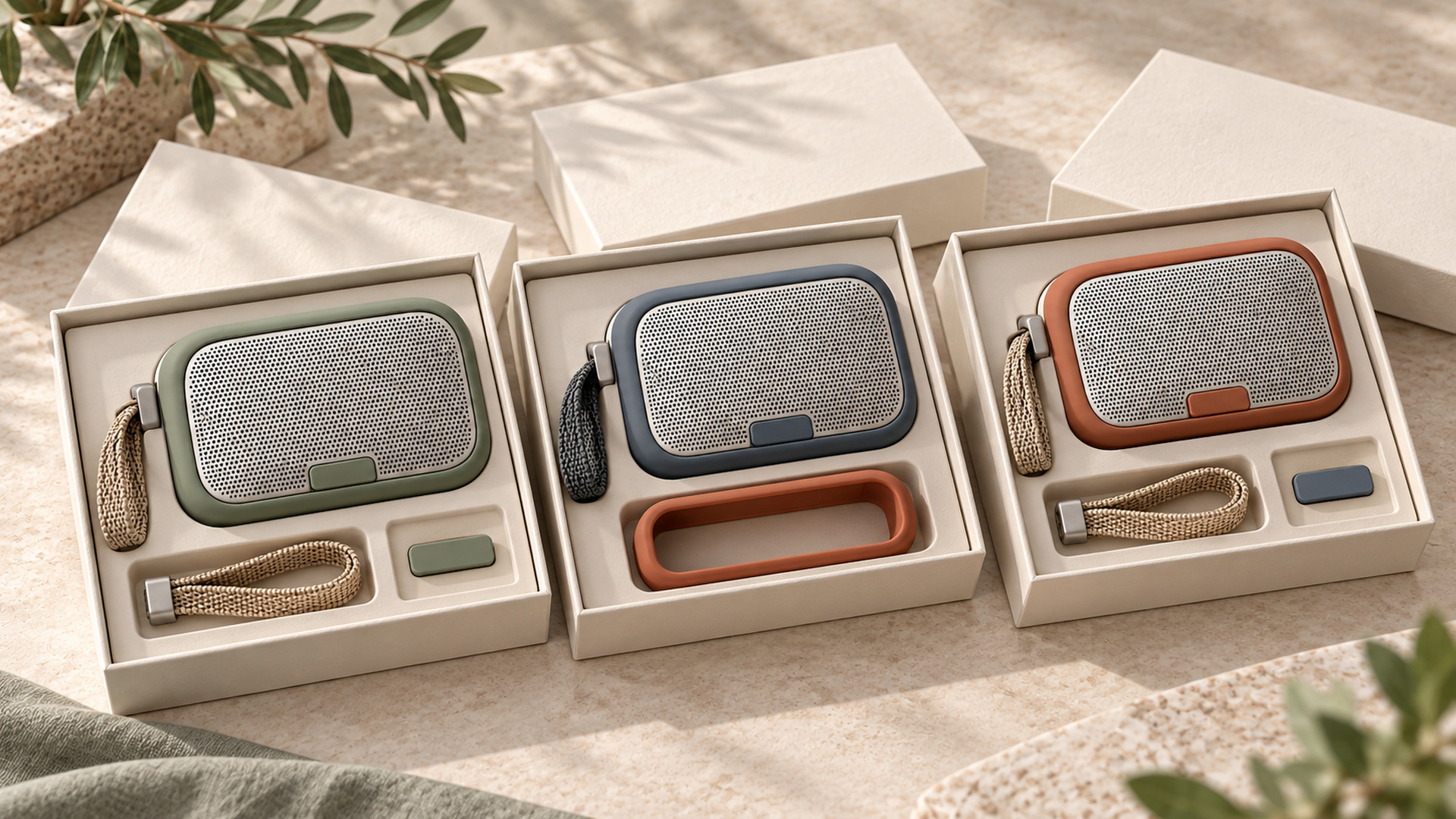
The modular strategy should continue into packaging. One campaign may ship as one core product + two silicone modules + an instruction card + a campaign sleeve. Another may use the same core + one licensed module + a premium gift box + direct-to-recipient delivery. The platform stays stable while the kit changes.
Bob Lilly Promotions illustrates the operational side: its materials describe in-house kitting, custom packaging, inventory handling and direct fulfillment for branded merchandise programs. Modular gift development is not only about molding. It also requires control of SKU separation, colors, client-specific parts, hardware, inserts, packaging revisions, kit completeness and destination-specific labeling. Without a controlled kitting system, modularity creates more operational complexity than it removes.
Pull, Tear, Cleaning and Cycle-Life Validation
Reusable components should be evaluated under realistic use. Depending on the product, validation may cover pull-out force, tear risk at retention points, repeated insertion and removal, cleaning exposure, temperature exposure, surface wear, deformation, color transfer and fit after repeated use.
The test plan should follow the real failure mode. A sleeve that only needs to stay installed should not inherit the validation plan of a module replaced every week. A decorative badge should not be judged by initial fit alone if it could detach during transport or everyday handling. Start from one question: how will this component actually fail in use?
What to Include in a Modular Silicone Gift RFQ
An RFQ for a modular product should describe the platform, not only the first campaign. Useful information includes:
- function of the core product;
- which components should stay unchanged;
- which components should be replaceable;
- expected campaign frequency and quantity per campaign;
- estimated annual quantity;
- required colors, logo or artwork options;
- whether licensed artwork is involved;
- preferred material and attachment method;
- expected replacement frequency;
- packaging, kitting and fulfillment requirements;
- destination markets and compliance requirements;
- tooling ownership expectations.
If future campaigns should share the same base tooling, say so at initial development. That gives engineering a reason to design for reuse instead of optimizing only the first order.
Is Modular Architecture Right for This Project?
A modular silicone architecture makes sense when the functional core stays stable, the customization layer changes, the connection interface is designed for repeated use, tooling boundaries are clear, and packaging and kitting are planned as part of the system.
It is not right for every project. For a single event with no expected reorder, a conventional custom product is simpler and cheaper. For recurring gifting programs, seasonal launches, employee recognition, licensed collaborations or replacement-product programs, modularity reduces repeated development and supports a more consistent product family.
Technical References
The commercial examples below are evidence of existing modular/custom-gifting business models. They are not ESKY SUPPLY projects.