By ESKY SUPPLY — custom silicone product development and manufacturing.
Silicone is widely used in wearables, audio devices, beauty tools and healthcare products because it can combine softness, flexibility, durability and cleanability. But a part that contacts skin for hours or days needs more than a soft material.
1. Material grade matters
The silicone grade should be selected according to the actual product and target market. The required documentation may differ between consumer wearables, beauty devices, wellness products and healthcare applications.
2. Hardness affects comfort
Softer silicone can reduce pressure points, but very soft materials may stretch or deform too much. Geometry and support structure should be reviewed together with hardness.
3. Surface finish matters
A smooth surface can improve cleanability, while certain textures can improve grip. For long-term contact, rough mold marks or flash can become uncomfortable.
4. Moisture and sweat
Wearable parts may be exposed to sweat, water, soap, cleaning agents and skin oils. The material and bond structure should be validated against realistic use.
5. Bonding around inserts
Skin-contact products often combine silicone with plastic housings, metal frames, sensors, textile or electronic inserts. The overmolded interface should remain stable under flexing, heat, cleaning and repeated wear.
6. Define Skin-Contact Requirements and Evidence
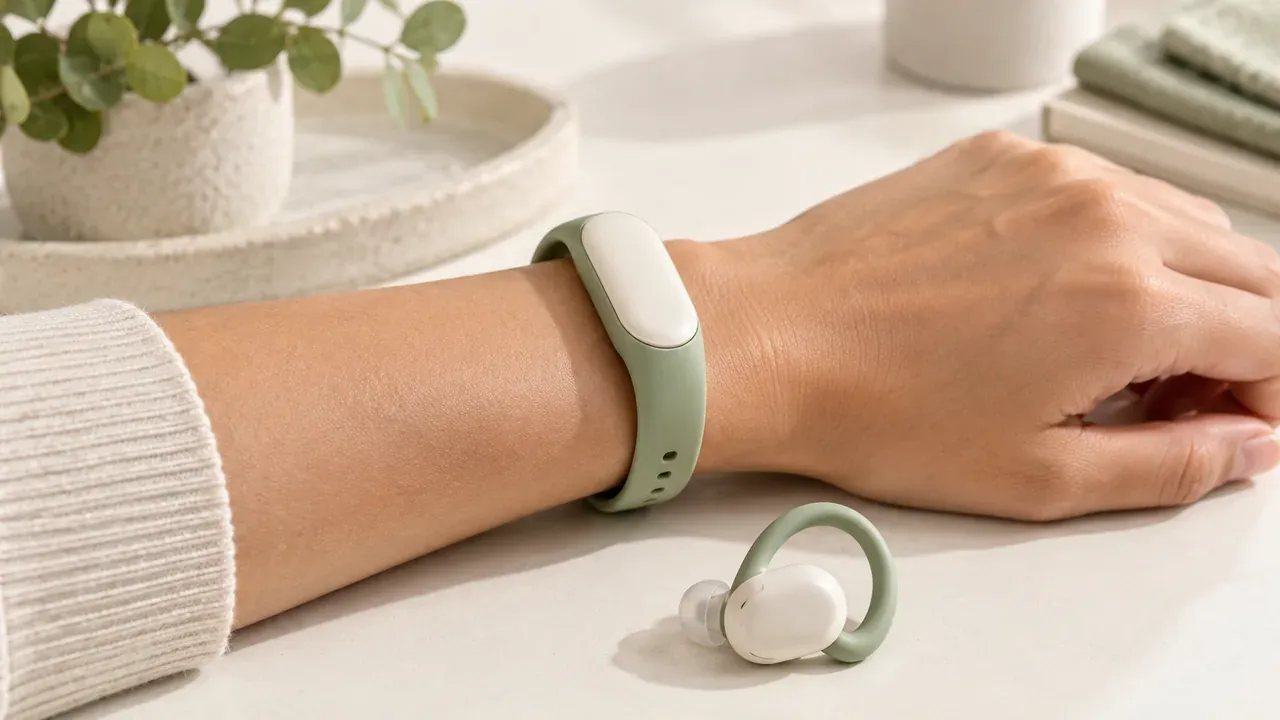
Requirements and evidence should be defined for the finished product, not copied from generic marketing claims. Set out the intended use and contact conditions, review the material documentation against them, and plan verification on the actual finished part. Statements such as "non-allergenic" or "zero irritation" are only appropriate when the evidence supports them for that specific use — one test report does not guarantee the same outcome for every user. If a product is classified as a medical device in a target market, the applicable biological-compatibility and regulatory requirements depend on that classification and intended use; they are not carried over automatically from consumer items such as wristbands, ear hooks or beauty tools.
Selection Checklist
• Product use and target market — determines which material documentation and market-specific requirements apply.
• Contact area, daily contact duration and reuse — influences grade selection, surface finish and cleaning design.
• Exposure to sweat, water, skincare products and cleaning agents — affects material formulation and surface stability requirements.
• Softness, support structure and surface requirements — hardness, geometry and finish are selected together, not in isolation.
• Bonding to plastic, metal or other parts — determines substrate compatibility review, priming or mechanical retention.
• Material documentation and finished-use validation — defines which data sheets, test reports or supplier documents to request, and how the final part is verified.
7. Design for cleaning
If the product is worn repeatedly, consider drainage, crevices, removable parts and accessible cleaning surfaces. A soft material cannot compensate for poor hygiene design.