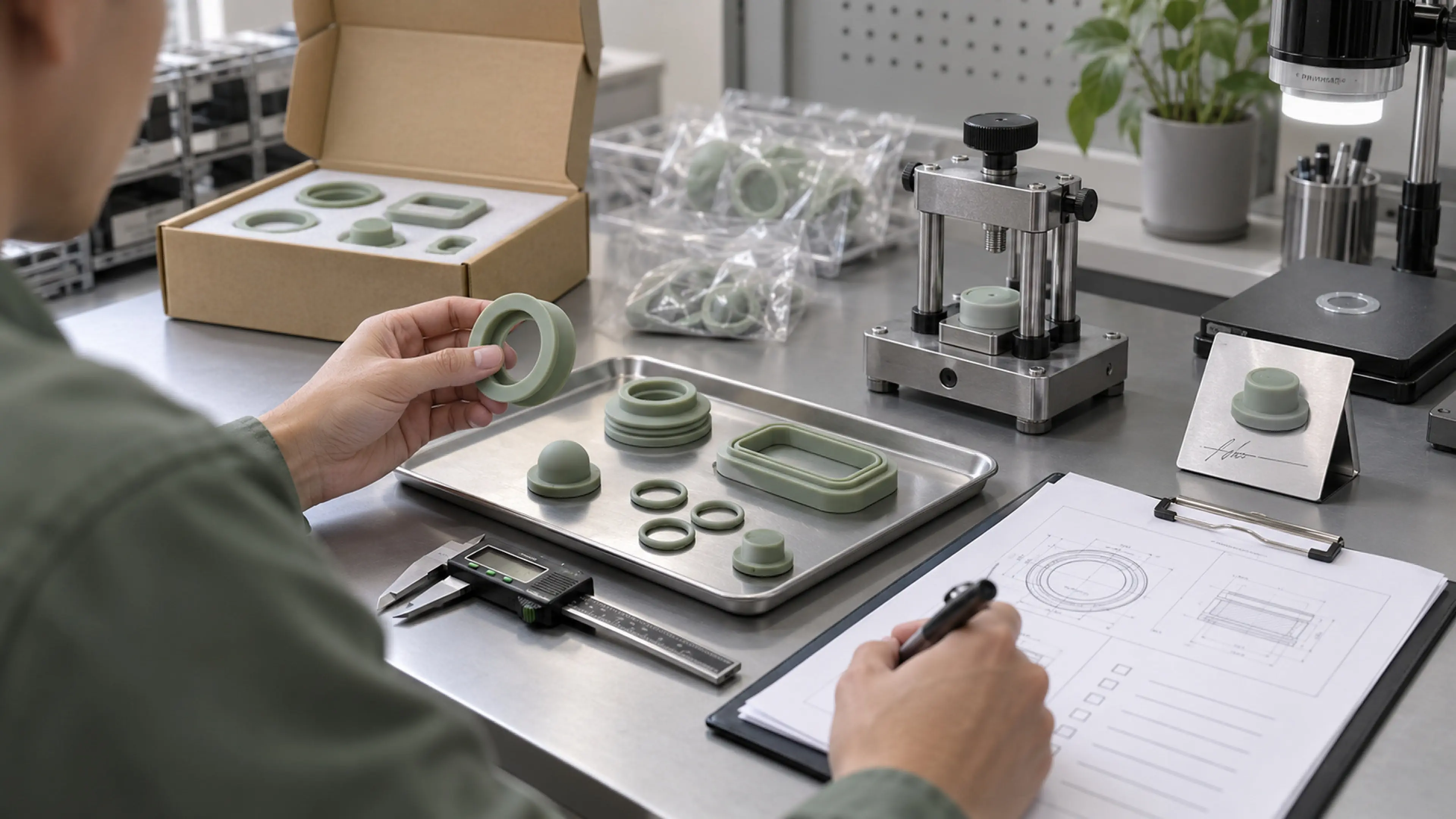
What information is needed for an accurate custom silicone quote?
An accurate silicone quote comes from handing the supplier enough to price the part without guessing, not from sending a drawing and hoping. Most re-quoting and most "but your price was different last time" arguments trace back to the same cause: two suppliers read the same file and priced two different projects. The fix is to put the assumptions on the table before anyone cuts a purchase order.
This matters most the first time you tool a part, when you are comparing factories, or when a first quote comes back suspiciously low. At that moment you are not really asking "how much." You are deciding what counts as the same part across suppliers — which material grade, which route, which inspection and packaging are inside the number.
What you are really trying to pin down
At the RFQ stage the expensive mistake is rarely a missing price. It is an undefined scope. Two quotes can look identical on paper while quietly assuming different material grades, tooling routes, inspection scopes, packaging, and approval standards.
Write the objective into the brief. For most custom silicone projects that objective is to cut down the number of quote rounds and end up with quotations that actually compare. That is a better target than asking for a generic "best material" or "best price," because the right answer moves with geometry, use conditions, target market, and annual volume.
Treat a supplier answer that depends on a hidden assumption as a red flag. If the price hinges on the exact grade, a mating part tolerance, a destination market, a user-age classification, or a test condition, that dependency should be stated in writing rather than buried under a confident yes.
The factors that make a quote robust
The following inputs usually decide whether a quotation holds up through tooling and into repeat orders:
- Design input maturity. Concept sketch, physical sample, 2D drawing, or CAD — and which dimensions and which surfaces are cosmetic.
- Commercial assumptions. Launch quantity, forecast annual volume, repeat-order pattern, target market, and how much packaging is in scope.
- Manufacturing route. LSR injection, HCR/compression, overmolding, insert molding, or secondary assembly and decoration.
- Approval method. What counts as an approved sample, which features are critical-to-quality, and how later changes are controlled.
- Evidence. Equipment, process track record, comparable past parts, inspection records, tooling ownership, and batch traceability.
Two comparisons matter here in particular. First, ask each supplier to itemize its assumptions so competing quotations rest on the same scope. Second, watch what has been left out — tooling, inspection, assembly, packaging, or compliance work that quietly changes the total project cost after the unit price is chosen.
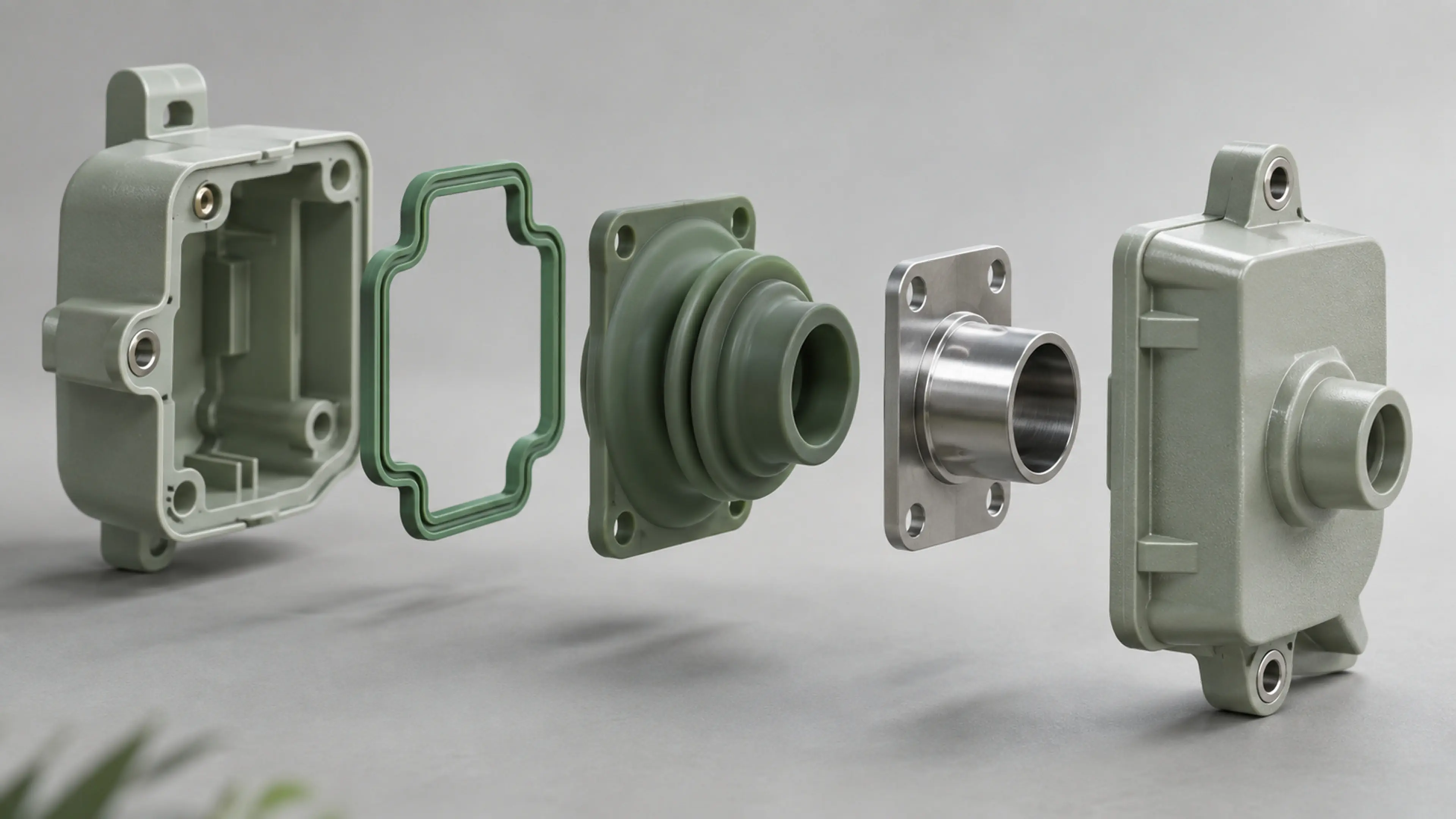
Turn vague language into an acceptance standard
Custom silicone projects usually start with subjective words: "soft," "strong," "good bond," "premium finish," "easy to clean," "food safe," "waterproof." Those are fine as design intent, but they cannot be inspected on a production line. Convert the requirement into something a QC inspector can act on:
- A controlled reference — approved sample, color reference, signed CAD/2D drawing, or agreed visual standard.
- Critical characteristics — the dimensions, actuation force, retention, appearance zone, interface fit, or seal condition that actually affects use.
- A test condition — how the part is loaded, cleaned, aged, assembled, or inspected.
- An acceptance rule — what passes, what fails, and what is cosmetic versus functional.
- A revision record — which drawing, sample, and packaging version the approval refers to.
This is especially important when the first prototype is handmade, 3D-printed, or cast in a soft tool that will not exist in production. A working prototype proves the concept is viable; it does not prove that production variation has been solved.
Compare options by trade-off, not by headline spec
When several routes seem possible, score each against the same criteria: manufacturability, functional risk, tooling investment, unit economics, QC burden, compliance impact, and repeat-order stability.
A cheaper route is the right call when the requirement is simple and the risk is contained. A more expensive route earns its place when it removes an assembly step, tightens repeatability, or protects a critical interface. The question to ask is always the same: what cost is being removed, and what risk is being traded in?
The same logic applies to supplier comparison. A quote that bundles tooling validation, defined inspection, packaging, assembly, and traceability is not directly comparable with one that only covers molded parts. Ask each supplier to list exclusions and assumptions before you compare unit prices.
How to validate before mass production
A useful RFQ forces assumptions into the open. Ask the supplier to state the proposed process, material family, tooling approach, inspection scope, and what is excluded. That is what makes quotations comparable, and it is what stops a low first quote from turning into an expensive engineering change later.
A sane validation sequence moves from design review to representative samples, then to pilot or first-production approval, with the evidence getting steadily closer to real production conditions. For a high-risk feature, use more than one kind of evidence. A dimension can be measured, but the assembly should still be function-tested. A bond can be pull-tested, but the finished assembly may also need aging or cycling. A raw-material compliance report can be reviewed, but the finished product still needs a compliance plan that fits its actual market.
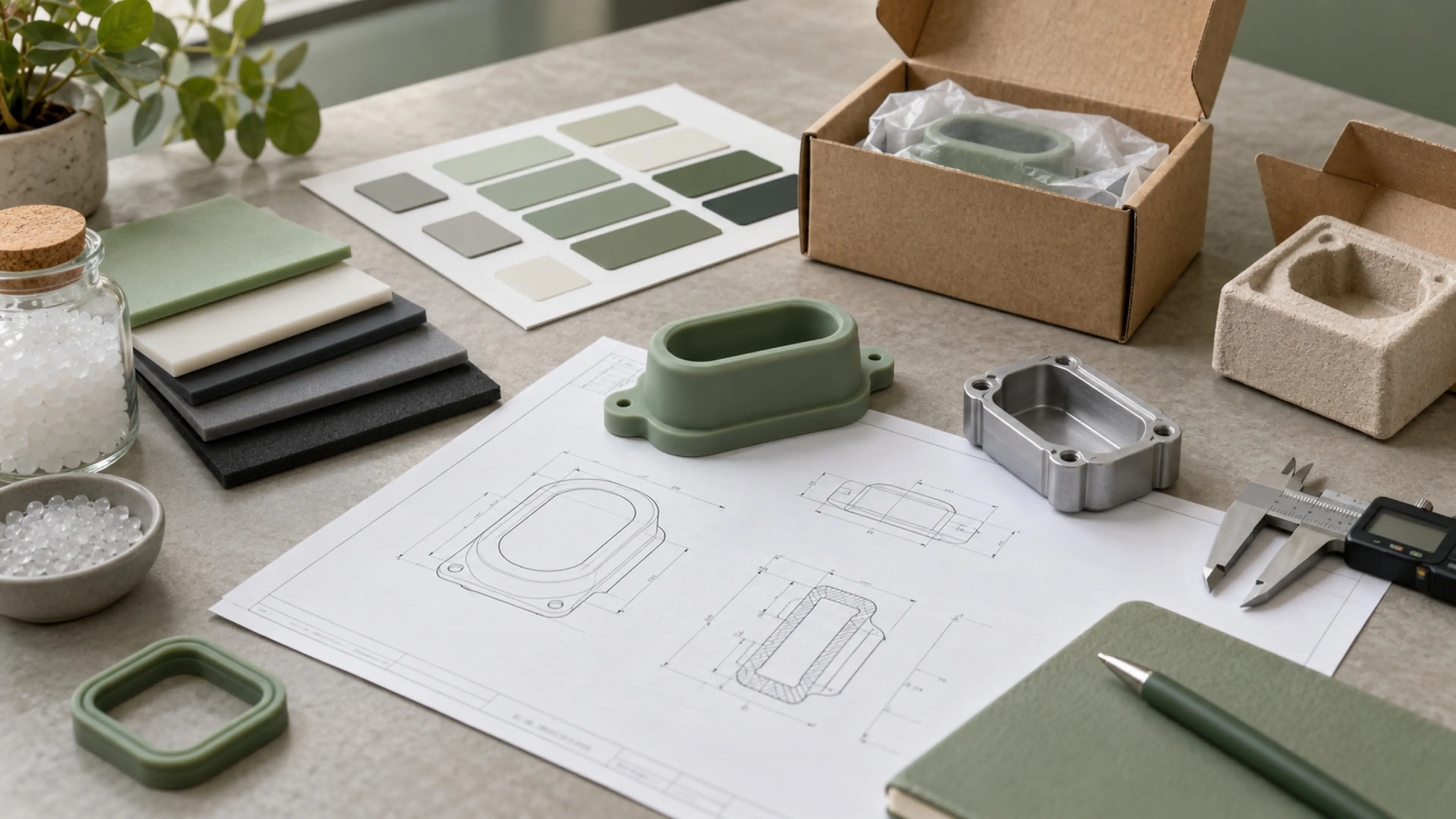
What to prepare before RFQ, tooling, or sample approval
Before a supplier commits to price or cuts steel, gather as much as the project allows:
- CAD, 2D drawing, physical reference sample, or clear concept sketch.
- Intended function and the failure modes that would be unacceptable.
- Material preference, if known, plus any restricted-substance or contact conditions.
- Mating-part information — plastic, metal, glass, textile, magnets, electronics.
- Target market, user group, and regulatory context.
- Expected order quantity, launch quantity, and repeat-order forecast.
- Cosmetic expectations, color reference, and logo or decoration requirements.
- Packaging, assembly, kitting, and labeling scope.
- Critical dimensions and a proposed approval method.
- Known exposure to heat, cleaners, oil, sweat, food, UV, compression, flexing, or transport stress.
Missing some of this does not have to stall development. It does mean the quote or design recommendation should flag the open assumptions and the point at which they must be closed.
Questions to ask the supplier
Ask questions that expose assumptions rather than invite slogans:
- What manufacturing route are you proposing, and why?
- Which material grade or family is assumed?
- Which features do you see as highest risk for molding or assembly?
- What information is still missing before final tooling?
- How will critical dimensions or functional features be checked?
- What is included in the price, and what is excluded?
- What changes after sample approval would force revalidation?
- How will material batches, mold revisions, and production lots be traced?
- Which tests apply to the finished product, and which only to the raw material?
Strong answers are product-specific. "We can mold any silicone," "FDA silicone," or "100% quality guaranteed" are not substitutes for a defined engineering and control plan.
Conclusion
There is no universal yes/no answer to what an accurate silicone quote needs. It comes down to describing the finished product, the manufacturing route, the interface conditions, the validation method, and the market in enough detail that the supplier is not guessing. The most useful next step is to make the requirement measurable before you commit to tooling. That cuts quote rounds, prevents late design changes, and makes supplier performance easier to judge across repeat orders.