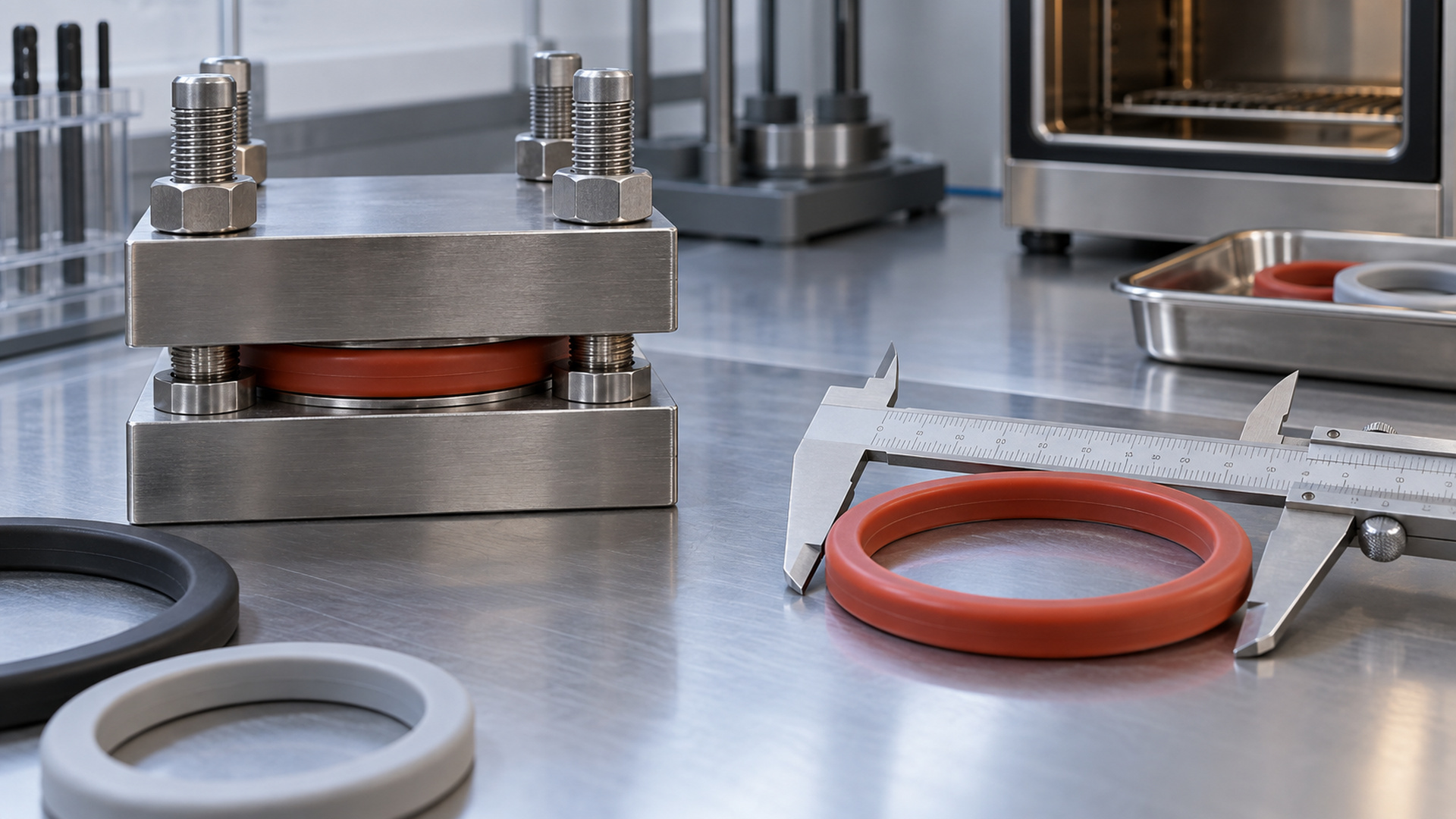
Why does compression set matter when selecting a silicone seal?
A new silicone seal looks perfect on day one, compressed between two housing faces and holding its line. Six months later it may have quietly lost the battle. The question is not whether it seals when you assemble it, but whether it still springs back after being held squeezed for months — and that is exactly what compression set measures.
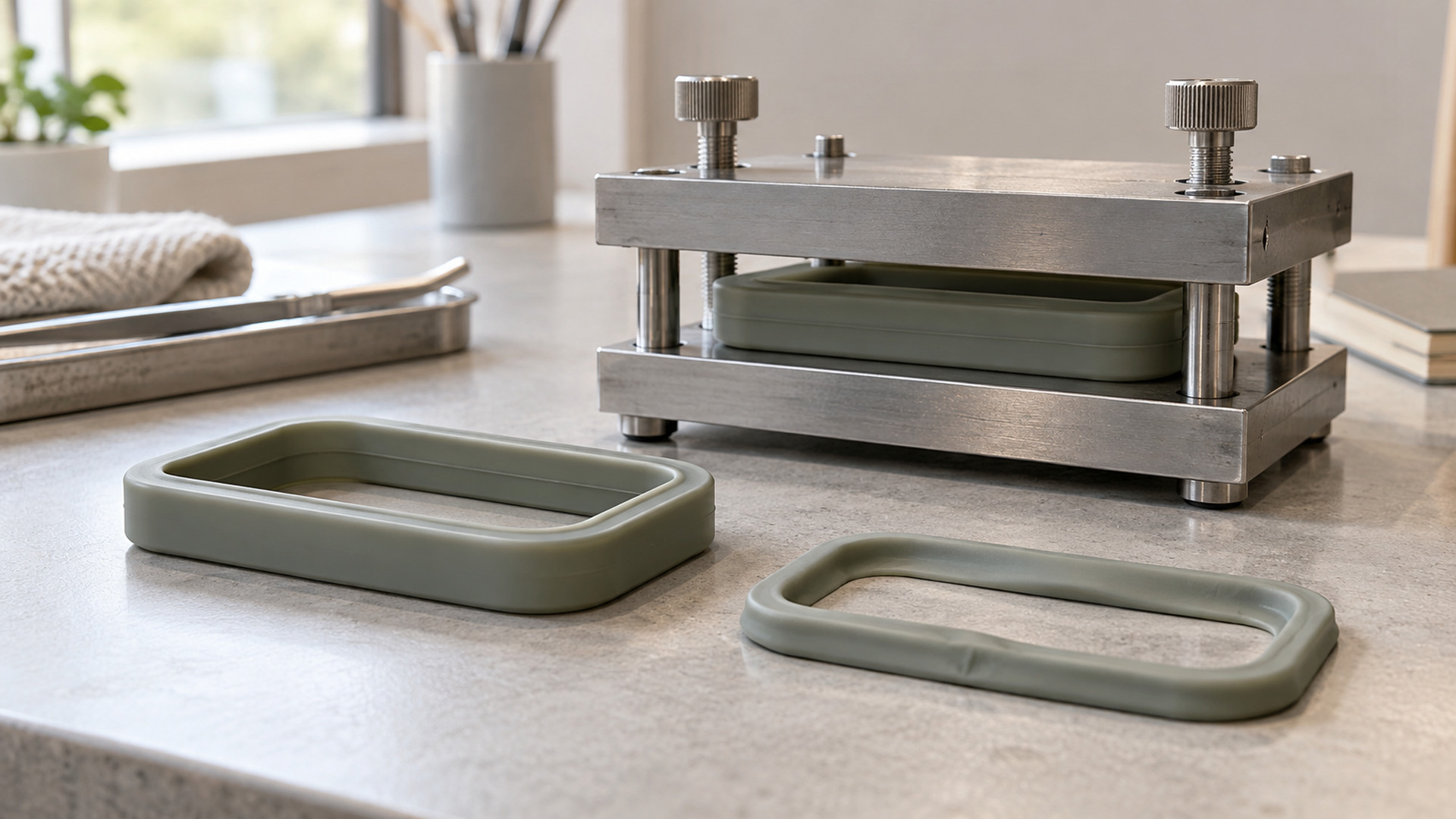
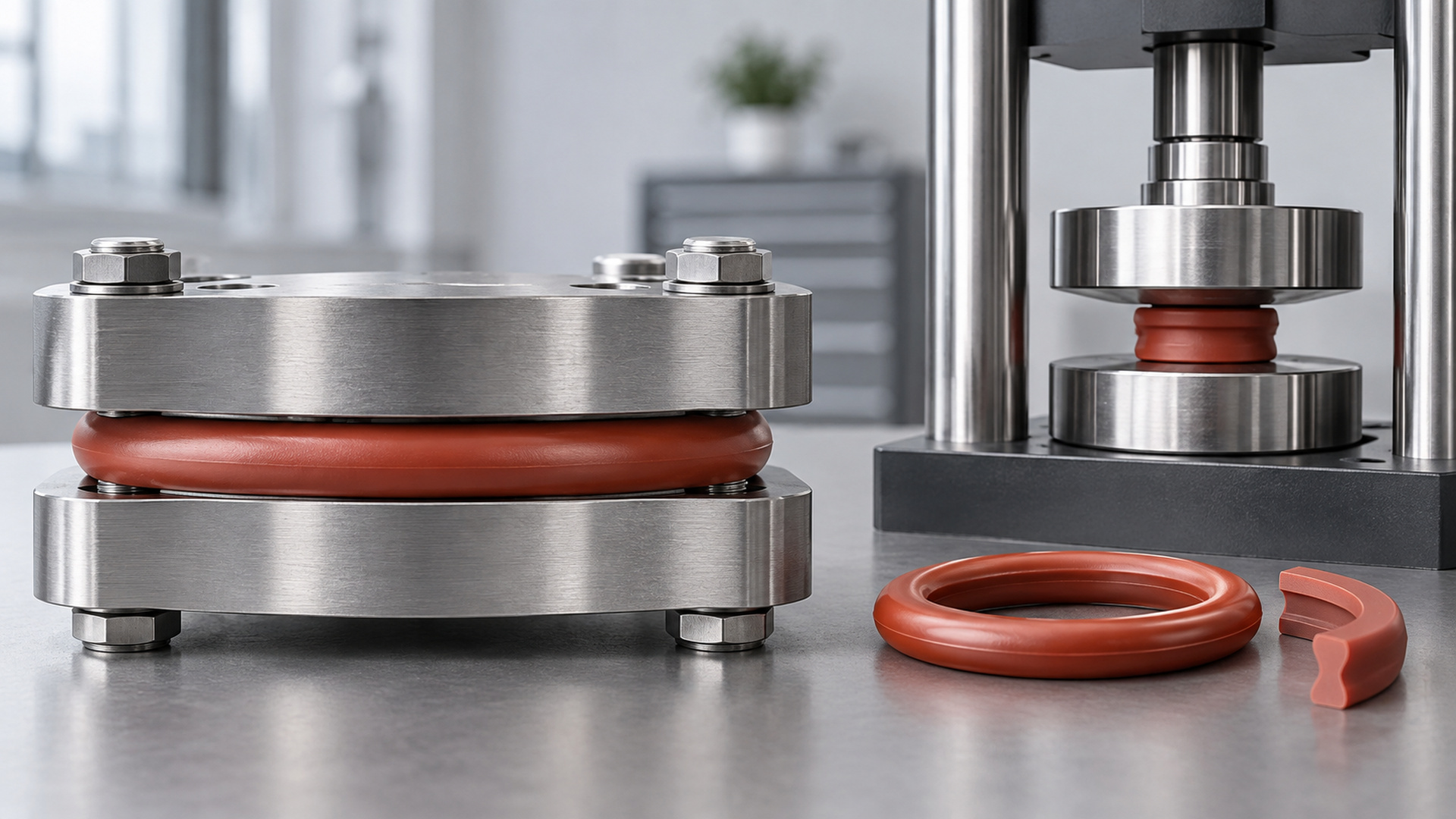
Compression set is the permanent deformation a seal retains after it has been compressed for a time, often at elevated temperature, and then released. A low-compression-set grade springs back and keeps sealing; a high-compression-set grade stays crushed, loses contact pressure, and begins to leak. Selecting a seal without looking at this property is betting on the first day, not the service life.
How to read the number
Compression set is tested by compressing a specimen to a fixed deflection, holding it under defined time and temperature, releasing it, and measuring how much of the thickness it recovers (the ASTM D395 test method is the common reference). A lower percentage means better recovery.
But the number on a datasheet is measured on a standard test button under ideal conditions. Your seal runs in a real groove, at a real compression, in a real housing — so the datasheet figure is a ranking tool between grades, not a guarantee of your part's service life.
A seal is only as good as its assembly
A gasket is a component, not a finished device. Two seals of the same grade can behave very differently once assembled, because sealing depends on the whole stack:
- Compression. The seal has to be squeezed enough to conform, but not so much that it over-stresses.
- Housing stiffness. A flexible housing deflects under load, which changes how much the seal is actually compressed.
- Tolerance stack-up. Variation in mating parts can leave one seal under-compressed and another over-compressed.
Review tolerance stack-up, compression, and housing stiffness together. A great seal grade in a poorly proportioned groove will still leak.
Storage and packaging set the seal before you do
Compression set does not only happen in service. A silicone part held compressed in its packaging for months can take a permanent set before it ever reaches a device. Two practical checks follow from that:
- Test the seal under realistic long-duration compression and storage orientation, not just its appearance on the day it arrives.
- Validate any packaging material that contacts the silicone surface, since some materials can interact with the silicone over long storage.
A seal that looked perfect in the launch batch may arrive flat and set if it was packed under compression.
Temperature is the accelerator. Compression set develops faster when the seal sits compressed while hot, which is why the test is run at elevated temperature rather than room condition. A seal that recovers well at cool temperatures can fail once it sees the heat of an enclosed device or a warm kitchen, so the grade choice has to match the highest temperature the seal actually experiences in service, not the average.
Turn vague language into an acceptance standard
"Waterproof" or "good seal" cannot be inspected. Convert intent into something measurable:
- A controlled reference — approved seal sample, groove drawing, and signed housing stack-up.
- Critical characteristics — the compression percentage, seal force, and recovered thickness that must hold.
- A test condition — compression duration, temperature, and the release measurement.
- An acceptance rule — the maximum acceptable compression set and the leak test the assembly must pass.
- A revision record — the grade, groove design, and housing version approved.
Confirm the material and construction before locking the test plan, because they set what the seal can recover.
Questions to ask the supplier
- What is the compression set of the grade, at what temperature and duration?
- What compression and groove dimensions did you design for?
- How does housing stiffness and tolerance variation affect the real compression?
- Has the assembled seal been leak-tested, not just the material?
- How should the part be packed to avoid set before use?
- Which finished-product compliance documents apply in my market?
Credible answers talk about recovery under your conditions. "It's a good sealing silicone" does not say whether it seals next year.
Conclusion
Compression set is the reason a seal that works on the bench can fail in the field. It measures how much the seal springs back after being held compressed, and that recovery depends on grade, groove design, housing stiffness, and even how the part is stored before assembly. Compare grades on their recovery, validate the seal as part of the complete housing, and test long-duration compression rather than trusting the day-one look.
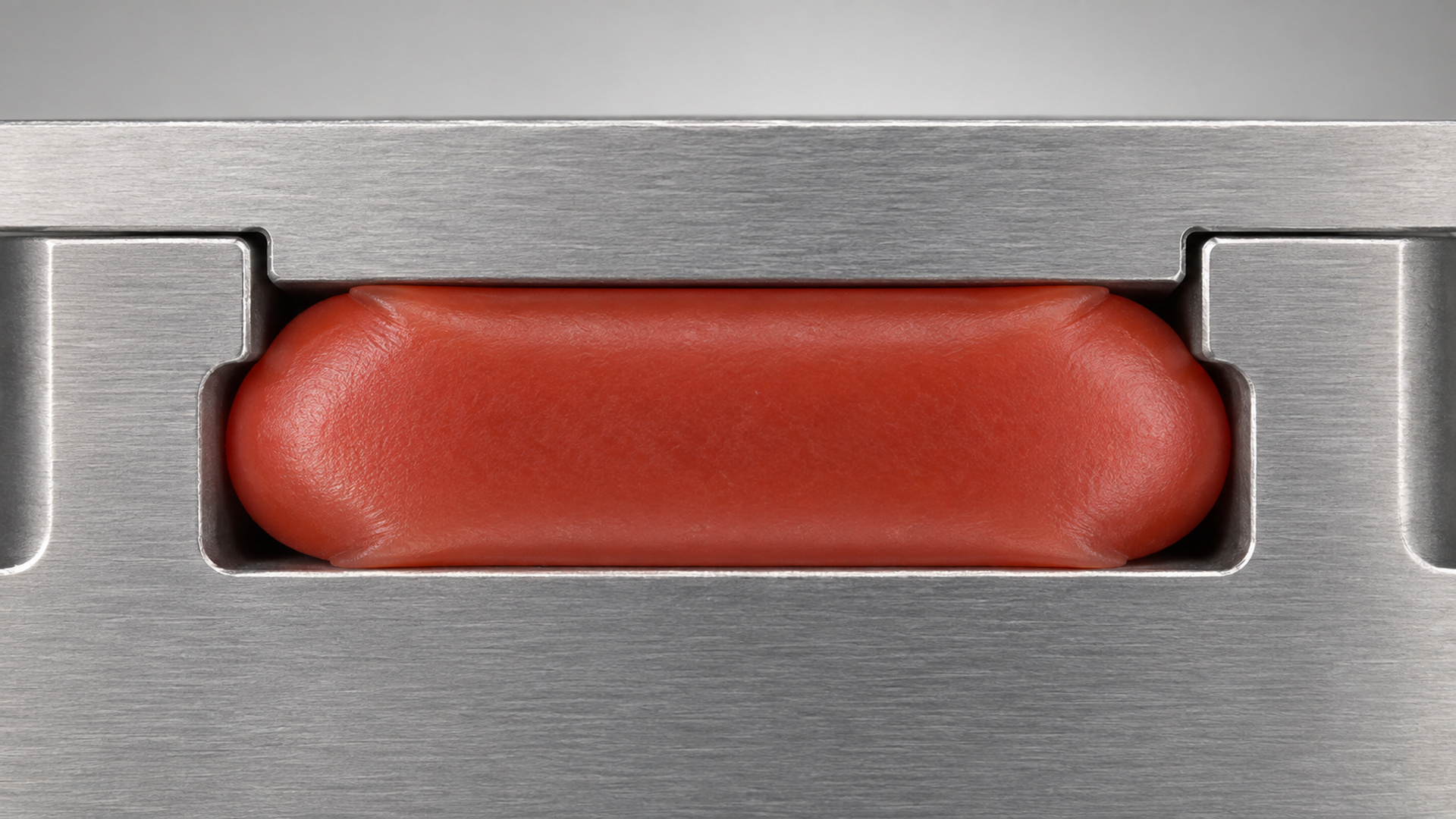
The groove itself is part of the design. A seal that is squeezed too hard bottoms out and stops springing back; one that is squeezed too lightly never closes the gap. That is why groove dimensions and the seal's free height are specified together, and why a seal chosen only for its material often under-performs in a groove it was not sized for. Treat groove fill and compression as part of the seal selection, not a separate afterthought.