How should I choose between silicone, TPE and TPU for my application?
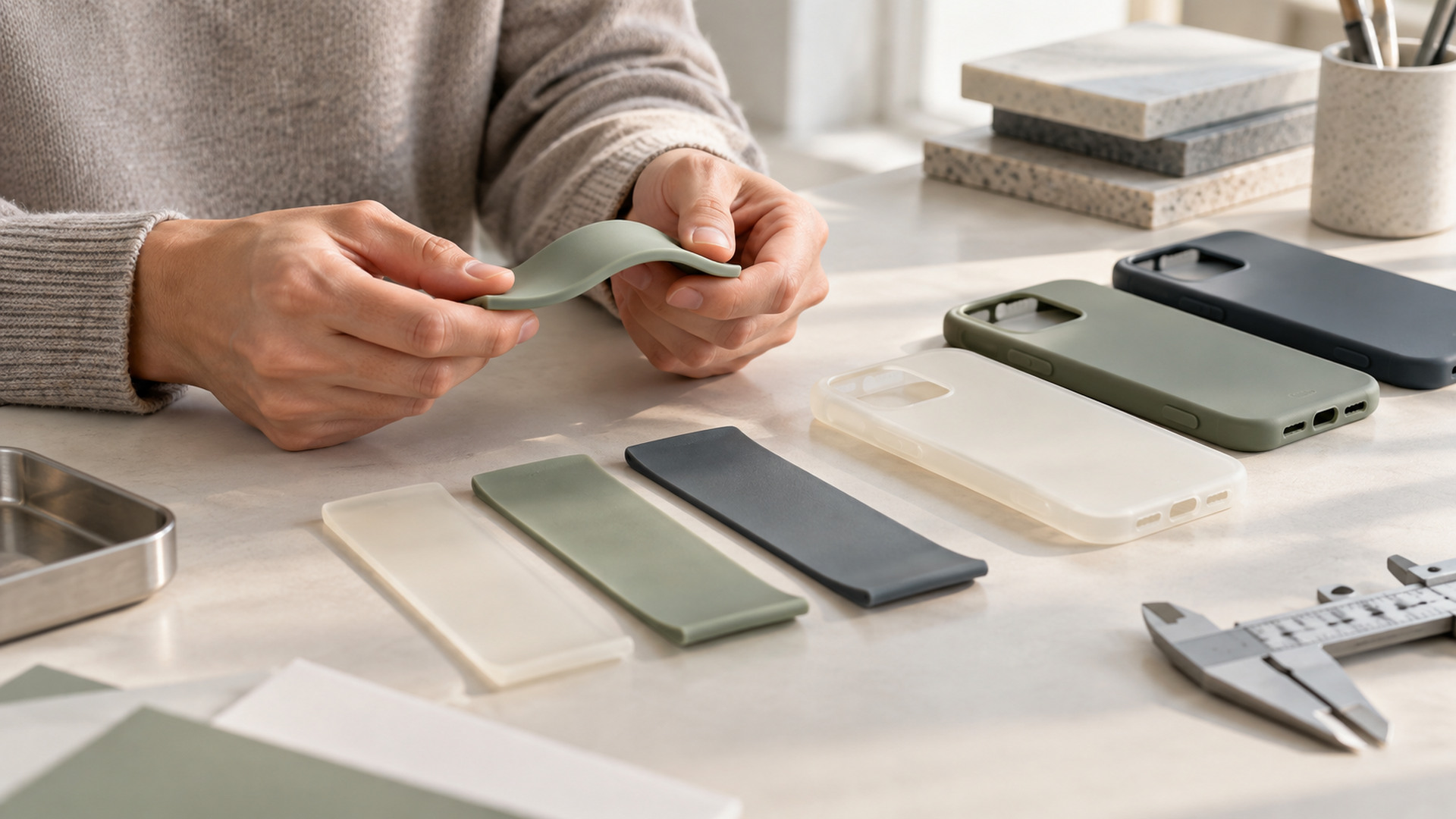
All three feel soft and flexible in hand, which is exactly why people choose badly between them. Silicone, TPE, and TPU are elastomers, but they sit at different points on heat resistance, abrasion, skin feel, and how easily they bond to other materials. A grip made in TPE and a grip made in silicone can look near-identical on screen and behave nothing alike after a summer in a car or a year on skin.
Choose by comparing temperature resistance, feel, wear, and processing requirements — not by which one the supplier happens to mold. And remember that perceived softness depends on both the material's hardness and the wall geometry, so a Shore number alone does not tell you how the part will feel.
The three materials at a glance
| Factor | Silicone | TPE | TPU |
|---|---|---|---|
| Heat resistance | Broad, high-temperature capable | Limited; softens at lower heat | Moderate; degrades at sustained heat |
| Skin / feel | Soft, dry, premium feel | Flexible, rubbery, grip | Firmer, elastomeric |
| Abrasion / wear | Moderate | Moderate | Strongest of the three |
| Overmold bonding | Bonds well to many plastics/metals | Overmolds readily | Strong bond to compatible substrates |
| Cost | Higher entry cost | Generally lower | Mid-range |
| Compliance | Strong food/medical grade options | Grade-dependent | Grade-dependent, not universal |
None of these is universally "best." The right pick follows what the part actually has to survive.
When silicone is the answer
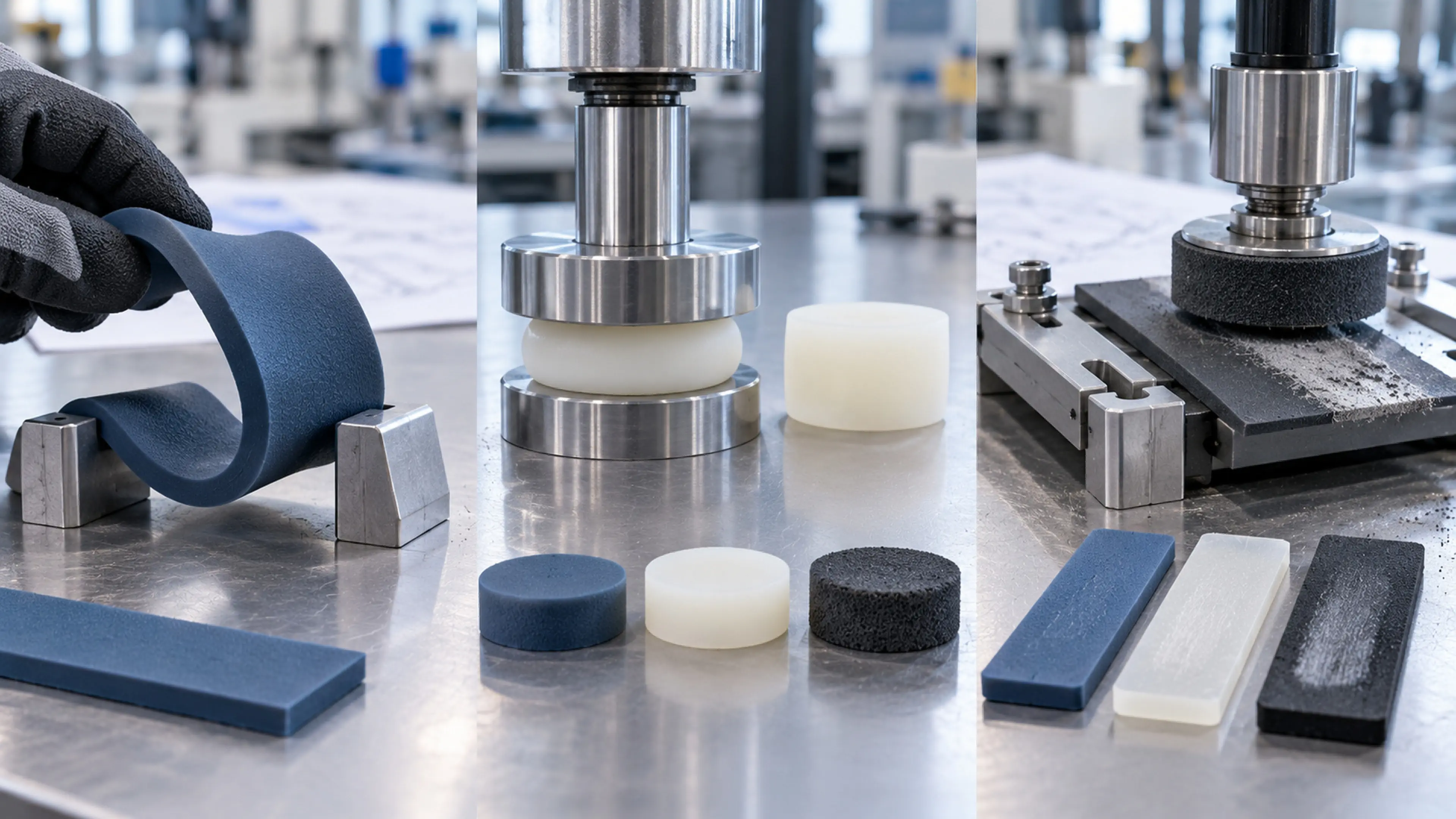
Silicone earns its place when the part meets heat, skin, food, or demanding aging conditions, or when a clean, dry, premium feel matters. It holds up across a wide temperature range and is the usual choice for food-contact and skin-contact parts where a compliant grade is required. Its trade-off is cost and, compared with TPU, lower abrasion and tear resistance in high-wear contacts.
When TPE is the answer
TPE is the economical, easy-processing flexible option when heat and aging demands are modest. It overmolds readily onto rigid plastic and covers a wide hardness range, which makes it popular for grips, soft-touch surfaces, and consumer parts where premium feel is nice but not critical. Its limits are lower heat resistance and aging performance: it is the wrong choice for a part that sees sustained high heat or long-term sun.
When TPU is the answer
TPU is the choice when the part takes abrasion, impact, and mechanical abuse — a case, a clip, a structural flexure, a wear surface. It is firmer and tougher than silicone or TPE, with strong wear resistance and good bond strength to compatible substrates. Its trade-off is that it is less "squishy," has a narrower heat envelope, and can be susceptible to UV yellowing depending on grade.
Cost and processing round out the choice. TPE and TPU are thermoplastics, so they recycle their own scrap and run on standard injection equipment, which often lowers entry cost. Silicone is a thermoset: it cures irreversibly, its scrap is not re-melted, and its tooling tends to cost more up front. If the product is a low-cost, high-volume commodity part, that processing difference can be decisive; if it is a premium part that must hold up over years, the silicone cost buys something the thermoplastics cannot.
Grade and environment still decide
Whichever family you land on, the exact grade is what determines real behavior. Temperature, oils, cleaners, UV, sweat, food contact, repeated flexing, or compression all push the choice one way or another. Pigments, coatings, inks, and bonding agents each add compatibility and compliance questions of their own, and the supplier's declarations must match the finished use and market — not just sit in a binder.
Turn vague language into an acceptance standard
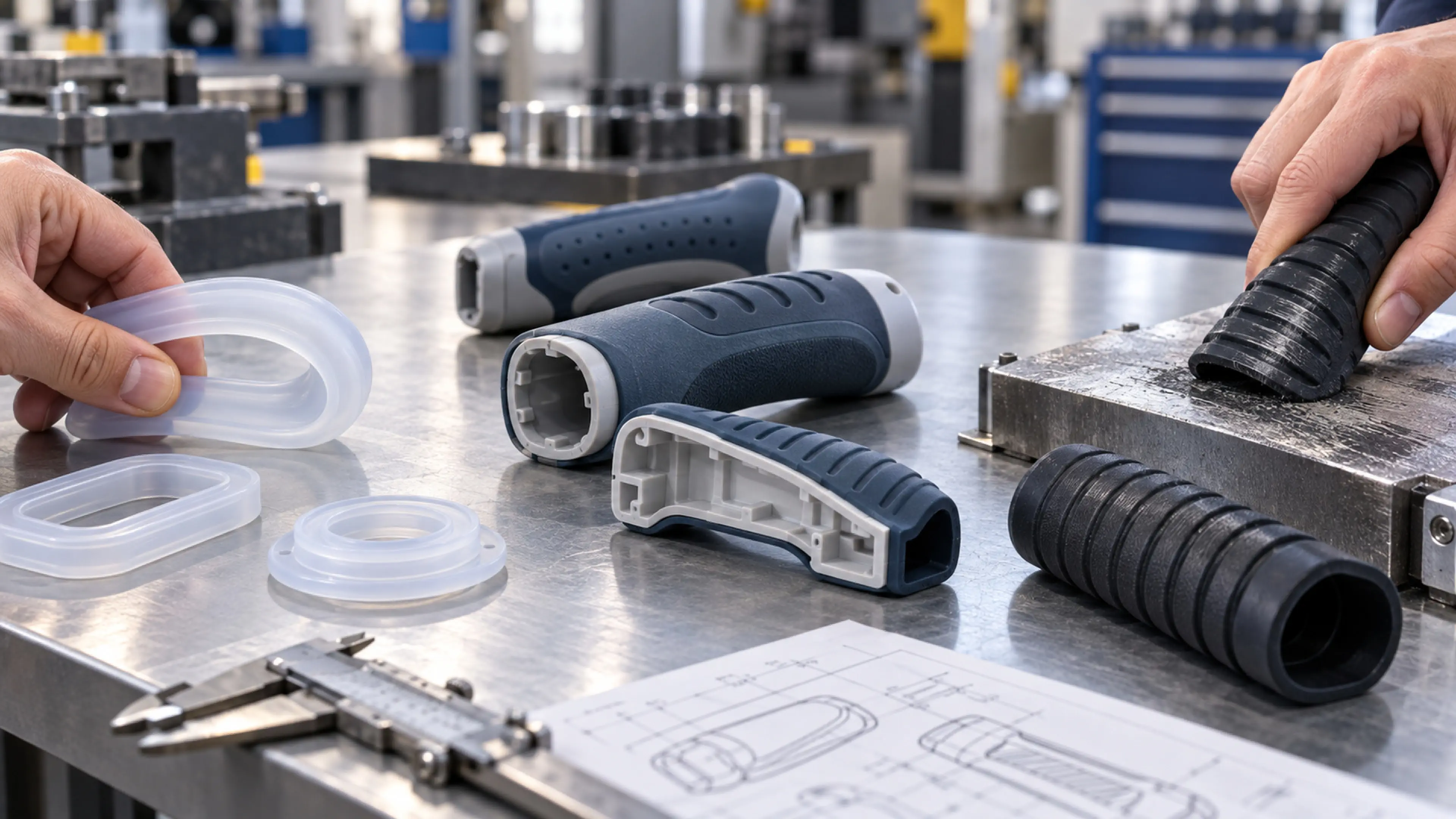
"Soft," "premium feel," or "durable" cannot be molded to a spec. Convert intent into something testable:
- A controlled reference — approved sample, color standard, and signed drawing.
- Critical characteristics — the hardness, actuation force, abrasion zone, or appearance that matter.
- A test condition — how the part is heated, flexed, cleaned, aged, or worn.
- An acceptance rule — what passes, what fails, cosmetic versus functional.
- A revision record — the material grade, drawing, and sample version approved.
Confirm material choice with representative molded parts, not a data sheet, whenever geometry or use conditions strongly affect performance.
Questions to ask the supplier
- Why this material for my heat, wear, and skin-contact conditions?
- How does it compare to the other two on the load my part sees?
- Which exact grade is assumed, and what compliance does it carry?
- How does it bond to the plastic or metal substrate I need?
- How will hardness, feel, and appearance be checked against the reference?
- Which finished-product compliance documents apply in my market?
Credible answers tie the material to the application's stress. "It's soft rubber" is not a selection rationale.
Conclusion
Silicone, TPE, and TPU solve different problems. Reach for silicone when heat, skin, food, or a premium dry feel dominate; TPE when you need low-cost, easy soft-touch overmolding under mild conditions; TPU when abrasion and mechanical toughness matter most. Compare them on the actual environment and the feel you can measure, then validate on real molded samples — the same hardness number in two materials is not the same product.