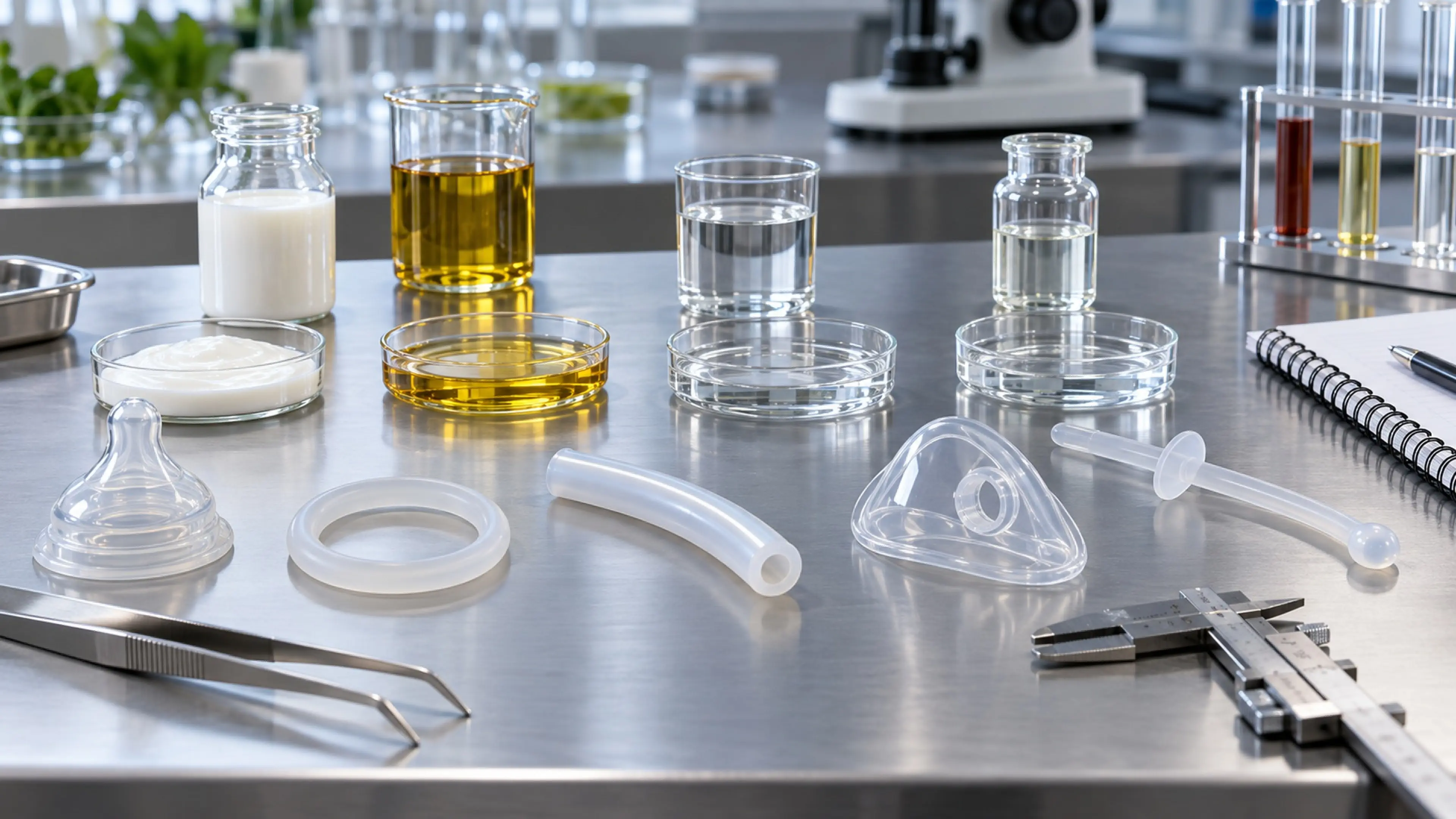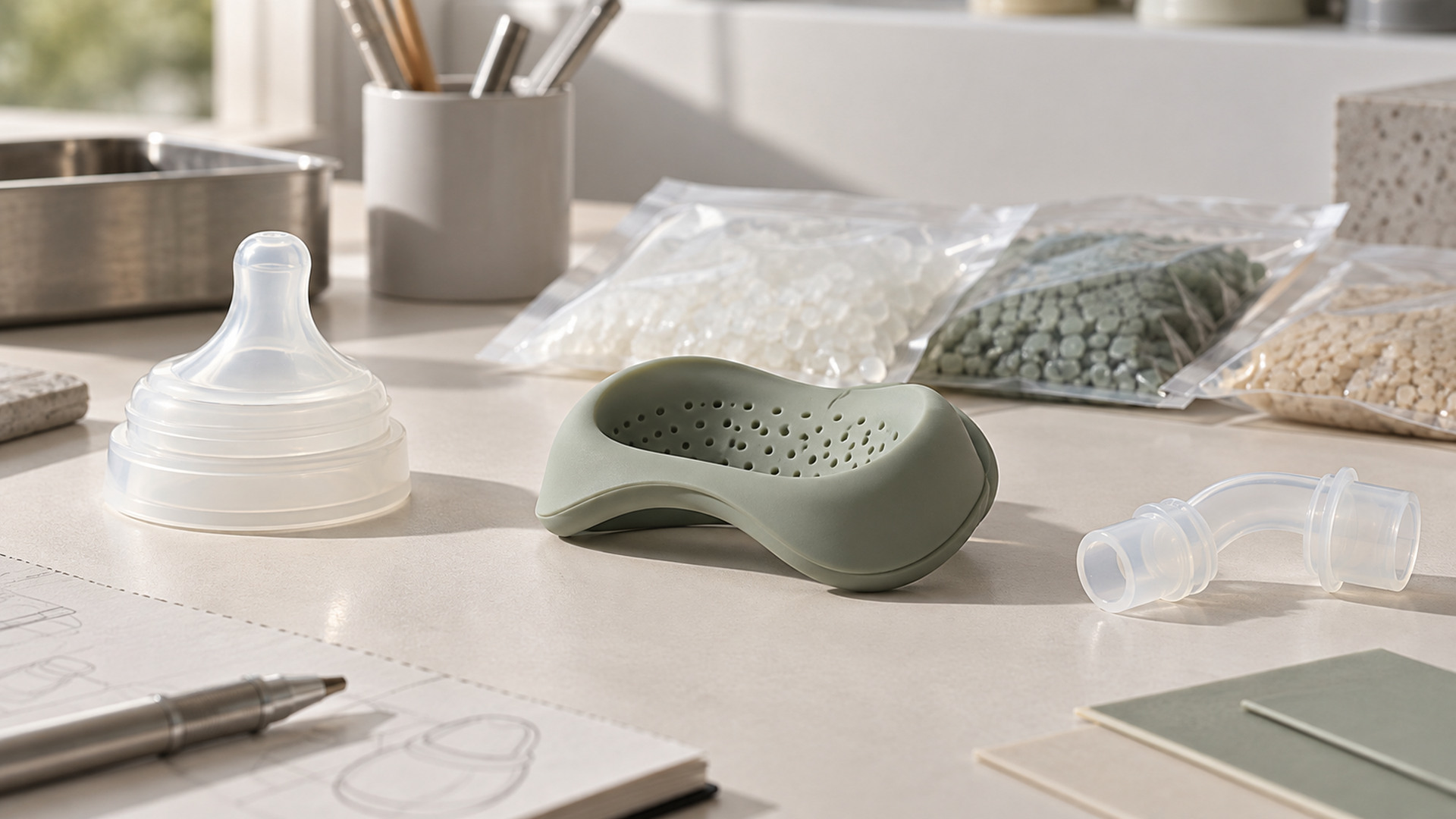
Are food-contact, skin-contact and medical-use silicones interchangeable?
Short answer: no. A silicone that satisfies food-contact rules is not automatically skin-safe for prolonged wear, and neither one automatically meets a medical-grade bar. These are three different regulatory regimes with different exposure assumptions and different evidence expected — and "silicone" on its own tells you almost nothing about which regime a given part has actually been cleared for.
The mistake buyers make is treating a raw-material declaration as a blanket finished-product approval. The right way to think about it is to confirm the material evidence against the actual end use: what touches what, for how long, at what temperature, and in which market.
The three categories are not one ladder
It is tempting to assume "medical-grade" simply covers everything below it. It does not work that way:
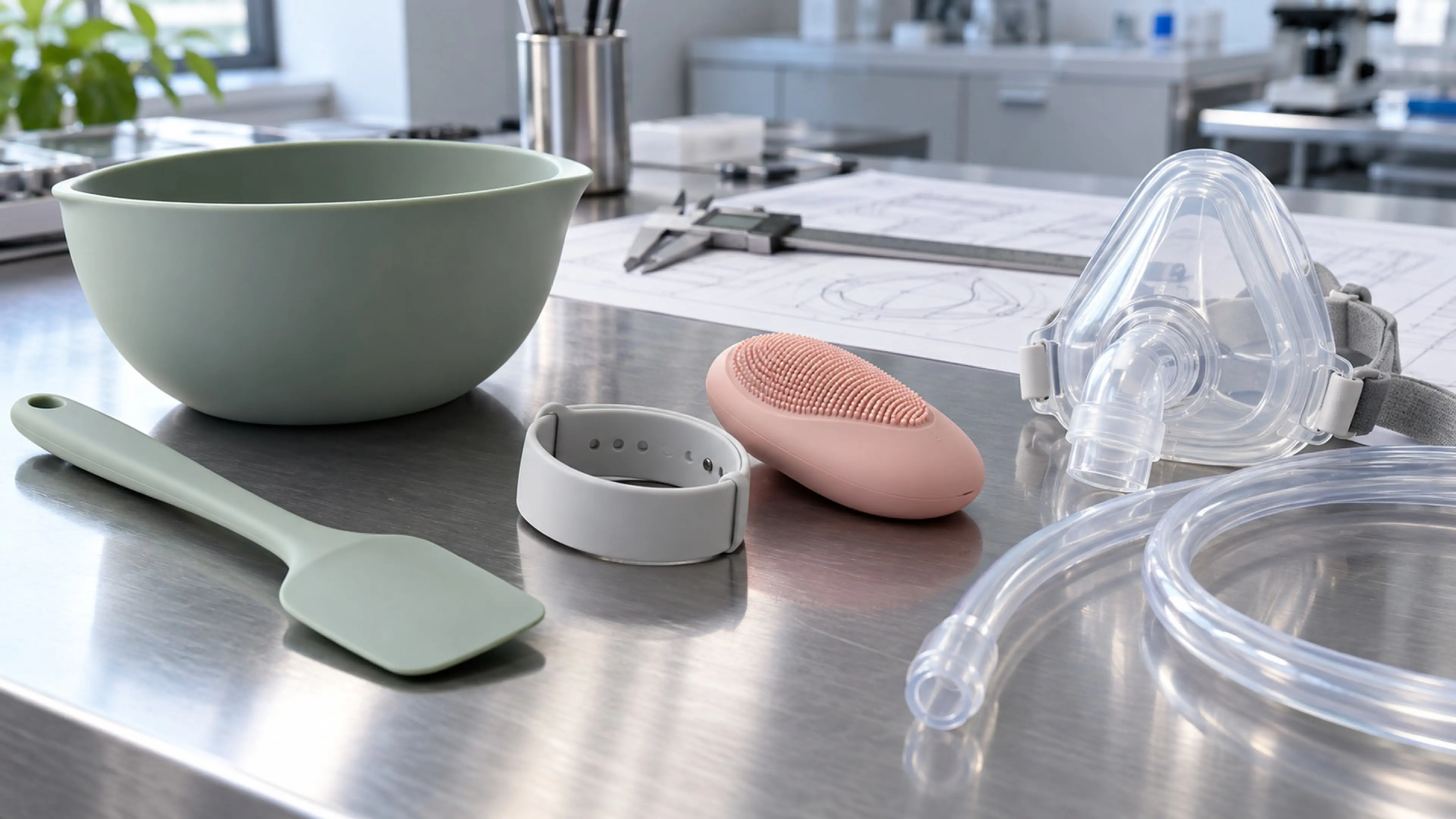
- Food-contact is governed by food-contact frameworks — in the US, FDA food-contact rules, and in the EU, frameworks such as BfR recommendations and LFGB. The concern is migration into food, which depends on food type, temperature, and contact time.
- Skin-contact products, especially prolonged wearables, have their own concerns around irritation, sensitization, and the body oils, sweat, and sunscreens the part actually meets.
- Medical-use parts, particularly those contacting the body or used in clinical settings, carry the heaviest evidence expectations, including biocompatibility assessment scoped to the contact type and duration.
A material that passes one does not carry automatic credit in another.
A raw-material report is not finished-product approval
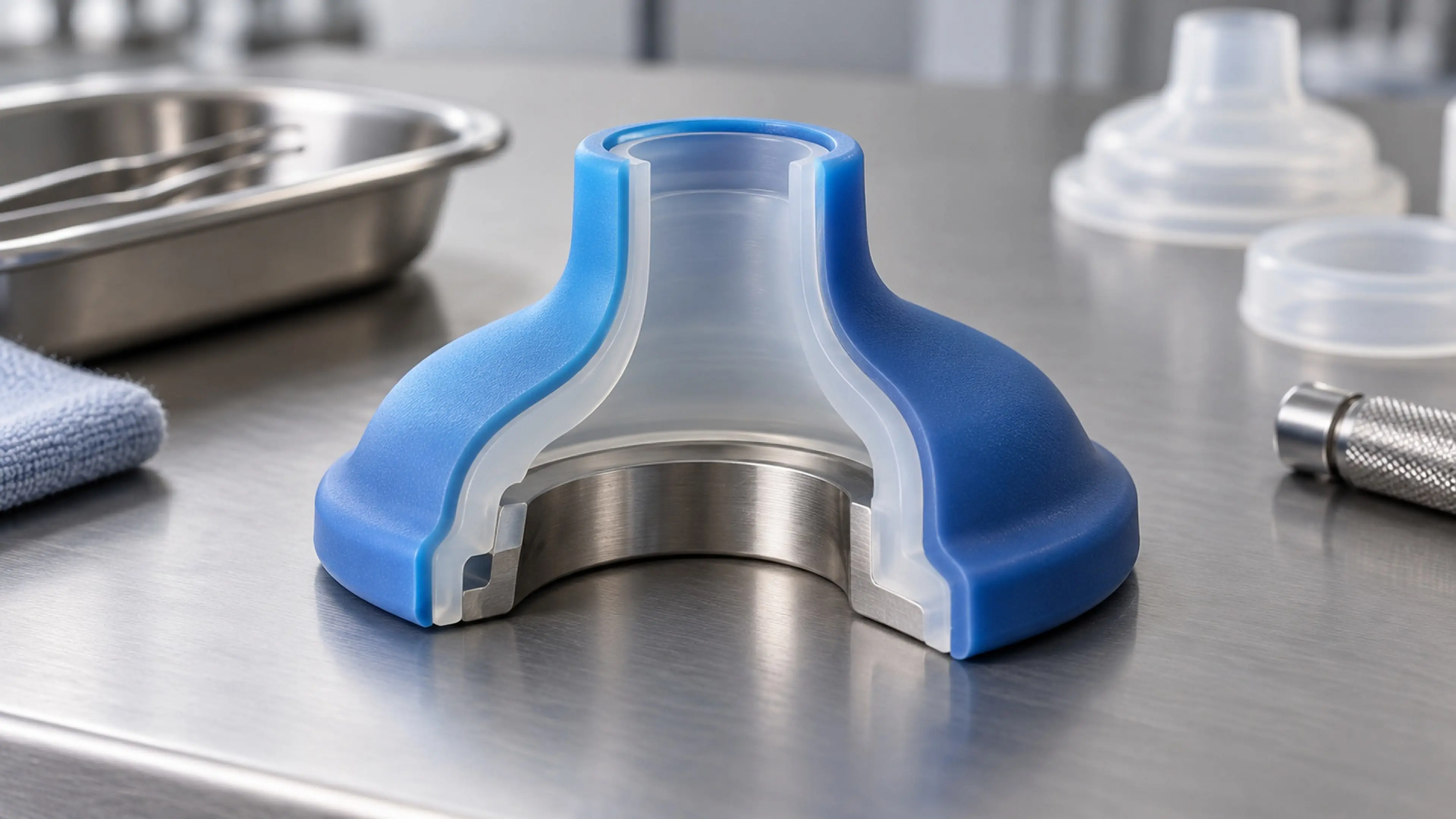
This is the gap that causes the most trouble. A supplier's food-contact declaration is a statement about the base polymer compound. The finished part is more than the compound: pigments, cure system, release agents, bonding primers, and any overmolded substrate can each change what contacts the user.
Do not treat a raw-material declaration as a blanket finished-product approval. The part's own contact surface, its additives, and its processing have to be evaluated against the actual use. A clean base resin does not clear a colored, printed, or bonded finished component on its own.
Test against the real contact, not a generic condition
Validation is only meaningful if it uses the real contact media and a realistic exposure sequence. Testing silicone against water tells you little if the product actually holds oily sauce, sits against skin with sweat and sunscreen, or sees repeated cleaning. Inspect both appearance and functional change after exposure — discoloration or surface tack is a cosmetic signal, while swelling or loss of seal force is a functional one.
Match the evidence to the actual food-contact condition, the specific component, and the destination market, rather than pulling the nearest declaration from the binder.
Duration and depth of contact matter as much as the category itself. A part that touches food briefly at room temperature is a different case from one that holds hot liquid for hours, just as a wearable touched to skin for minutes differs from one worn all day. The longer and closer the contact, the more the exposure sequence - sweat, sunscreen, cleaners, repeated use - has to be built into the evidence rather than assumed away.
Turn vague language into an acceptance standard
"Food-safe," "skin-friendly," or "medical-grade" without a supporting dossier is a claim, not a specification. Convert intent into something documented:
- A controlled reference — approved sample, material grade, and signed contact-condition statement.
- Critical characteristics — the contact surface, migration or biocompatibility expectation, and function that must hold.
- A test condition — the real contact media, temperature, duration, and cleaning cycle.
- An acceptance rule — which declarations or tests cover the finished product in the target market.
- A revision record — the grade, additives, and sample version the evidence belongs to.
Questions to ask the supplier
- Which contact category is this grade actually cleared for, and under what standard?
- Is the declaration on the raw compound or the finished colored/bonded part?
- Does the evidence match my real contact medium, temperature, and contact time?
- Which additives or primers contact the user, and are they covered?
- Which finished-product documents apply in my market versus raw-material reports?
- How will material lots and changes be re-validated?
Credible answers name the regime and the scope. "FDA silicone" or "medical grade" as a one-line answer does not establish that your finished part is covered.
Practically, ask each supplier to state which contact category their evidence covers and which it does not. If you need both food and prolonged skin contact on one product, that may mean specifying a grade and validating the part against both sets of expectations rather than assuming one certificate stretches across them. Buying a more expensive grade 'just in case' is rarely the answer either; it adds cost without the testing to back the use.
Conclusion
Food-contact, skin-contact, and medical-use silicones are not interchangeable shortcuts; each has its own regulatory basis and evidence expectation. A raw-material declaration is a starting point, not a finished-product approval, because pigments, primers, and the contact surface itself all matter. Match the evidence to the real contact condition and market, and expect the finished part — not just the resin — to be what gets cleared.