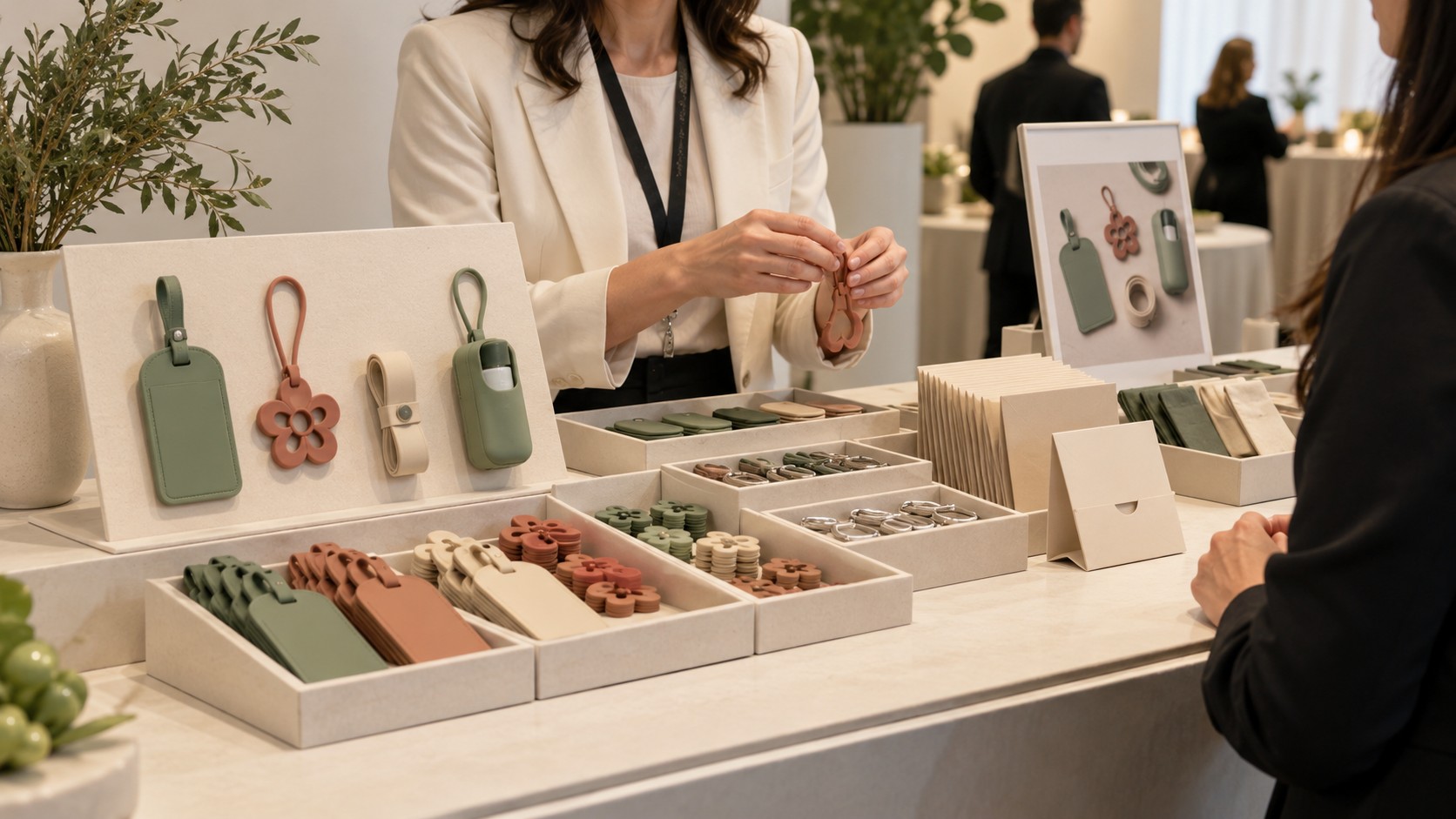
Custom Silicone Products for Brand Activations: From Brief to Event Delivery
For an event buyer, a custom silicone product has two jobs: it must be worth taking home, and it must work within the event operation.
A charm may look right in a rendering but take too long to attach at the counter. A popular color may run out while other variants remain unopened. A finished batch may be ready at the factory yet miss the venue's delivery window.
These are product-development decisions as well as event-planning decisions. Before approving a custom silicone giveaway, define how guests will choose, assemble, receive and use it. That brief gives the manufacturer a practical basis for tooling, samples, packing and shipment.
Define the Guest Experience and the Delivery Deadline
Start with the intended interaction. Will guests select a finished item, choose a color, add a charm, or assemble several components with staff assistance?
Write the sequence in plain language. For example: the guest chooses a luggage tag and an original molded charm; staff fit the approved connector; the guest receives the assembled accessory in a take-home sleeve. This is a development example, not a description of an ESKY case study.
Next, identify the recipient group, expected attendance, event locations and practical restrictions. A compact registration desk and a staffed customization counter need different products and packing methods.
Specify the required arrival date at the receiving location, including any onward movement to the venue. The event opening date alone is not enough to plan production and logistics.
Choose a Product With a Defined Use
Silicone can contribute flexibility, tactile detail, grip or protection. Choose it for a function or design reason the recipient can understand.
Possible starting points include a molded luggage tag, cable organizer, protective holder or original character accessory. Each needs a different brief. A decorative charm mainly needs appropriate attachment and durability; a device holder also needs controlled fit and access to the device's functions.
Decide whether an existing geometry with tailored color and decoration is sufficient, or whether a proprietary shape justifies new tooling. Full customization has more approval stages. It should earn that additional work through a useful function or a distinctive design.
For the broader design options, see custom silicone merchandise development.
Separate Factory Work From Counter Work
An event is a poor place to discover that assembly needs a fixture, adhesive curing or specialist handling. Assign each operation before sample approval.
| Operation | Decision to make during development |
|---|---|
| Silicone molding and decoration | Final artwork, color versions and factory approval samples |
| Structural hardware installation | Whether it must be permanently assembled before shipment |
| Guest-selectable component | How it attaches, who fits it, and how correct engagement is checked |
| Electronics or NFC function, if included | Who supplies and verifies the module and finished assembly |
| Take-home packing | Whether staff can complete it consistently within the event flow |
Use a common connector only when its fit and retention work across the intended variants. Making every component removable adds unnecessary risk and handling time. Keep the guest's choice simple enough to operate reliably.
Test the Counter Experience With Physical Samples
A production sample review should include the person responsible for operating the event. Give them the proposed trays, instructions, components and take-home packaging.
Run a small rehearsal. Observe whether staff can identify variants, fit the parts correctly and explain the product without repeated assistance. Record damaged parts, assembly mistakes and steps that slow the interaction. Measure actual handling time during the trial rather than promising a universal guests-per-hour figure.
If the connector is difficult to use, revisit the interface or move that operation to the factory. If too many choices slow selection, reduce the visible options while keeping replenishment stock organized behind the counter.
The rehearsal should evaluate an assembled item after handling, not just an untouched display sample.
Approve Artwork Before It Becomes Tooling
Send editable artwork, branding rules and any licensing constraints with the brief. Identify who has authority to approve the physical interpretation of the artwork.
A molded character may require adjustments to fine lines, projecting details and color boundaries. The approval process should distinguish an artwork proof from a molded sample: approval of the graphic does not automatically approve thickness, attachment or surface finish.
For licensed work, clarify permitted products, territories, quantities and approval steps with the rights holder. Keep that approval trail connected to the tooling revision. A late artwork change can affect more than printing if the identity is built into the molded geometry.
Agree Functional Checks Around Actual Handling
A silicone attachment can be pulled, twisted, repeatedly removed or rubbed against a metal edge. The validation plan should follow those uses.
Ask the development team to identify the likely failure point, then specify the test setup and acceptance rule. Relevant checks may include connector retention, tear initiation, repeated attachment, surface wear and cleaning exposure. Force and cycle targets need a product-specific basis; they should not be copied from an unrelated accessory.
For any electronics or NFC module, review the assembly process with its supplier. Confirm that installation, surrounding hardware and encapsulation choices preserve the intended function. An electronic component should not simply be placed into a silicone molding process without checking its processing limits.
Classify the Finished Product Before Distribution
Giving a product away does not remove its safety obligations. The US CPSC's promotional-products guidance explicitly addresses products used for marketing, with particular attention to products intended primarily for children. Requirements depend on the product, its materials and intended users. [1]
Define the audience and foreseeable use early. A character accessory, a toy and a battery-powered promotional product may require different reviews. Do not rely on the campaign name or an "adult gift" label to settle classification.
Ask for evidence that matches the finished configuration. The exact review should follow the destination market; a general statement that silicone is safe does not cover hardware, detachable components or electronics.
Build a Refill Plan by Component
Onsite customization changes the stock calculation. Attendance alone does not tell you how many connectors or individual charms will be needed.
Use a component plan:
Planned component demand = expected completed gifts × components per gift × expected selection share.
Then record a separately justified allowance for trial use, damage or uncertain preferences. Selection shares are planning assumptions, not observed demand. Identify which assumptions are weakest and use rehearsal or earlier event data where available.
Pack replenishment units by component and variant, with clear counts. Separate display stock, operating stock and replacements. Agree what staff should do if a preferred option runs out; substituting an unapproved connector is not a suitable contingency.
Approve the Event Pack as Well as the Take-Home Pack
Guest packaging should explain and protect the product. Event packaging should help staff operate the program.
Ask for a packing list showing component codes, quantities, colors and carton locations. For multiple venues, define whether shipments are split at the factory, a distribution center or another agreed location. Confirm labels and receiving requirements with the responsible logistics provider.
The final sample approval should cover the assembled accessory and its complete take-home pack. Separately review how refills are counted and protected in transit. Assembly and packaging belong in the original quotation, not in instructions added after production.
What to Send With the RFQ
Prepare the audience, event flow, product concept, artwork, expected quantities, variant assumptions, target markets and arrival requirements. Add the proposed onsite assembly steps and name the approval owner.
Ask the manufacturer to identify the decisions that must be frozen before tooling, the sample stages and the latest practical point for packaging changes. A pilot should confirm both the product and the event handling method before full production is released.
ESKY SUPPLY develops custom branded silicone products, including multi-material components, tooling, assembly and kitting. Share your activation brief and product references to review the manufacturing scope and the decisions needed before sampling.
Technical References
- US CPSC: Buying Promotional Products — A Guide to Federal Safety Laws. US regulatory background; applicability must be established for the actual product and recipient group.