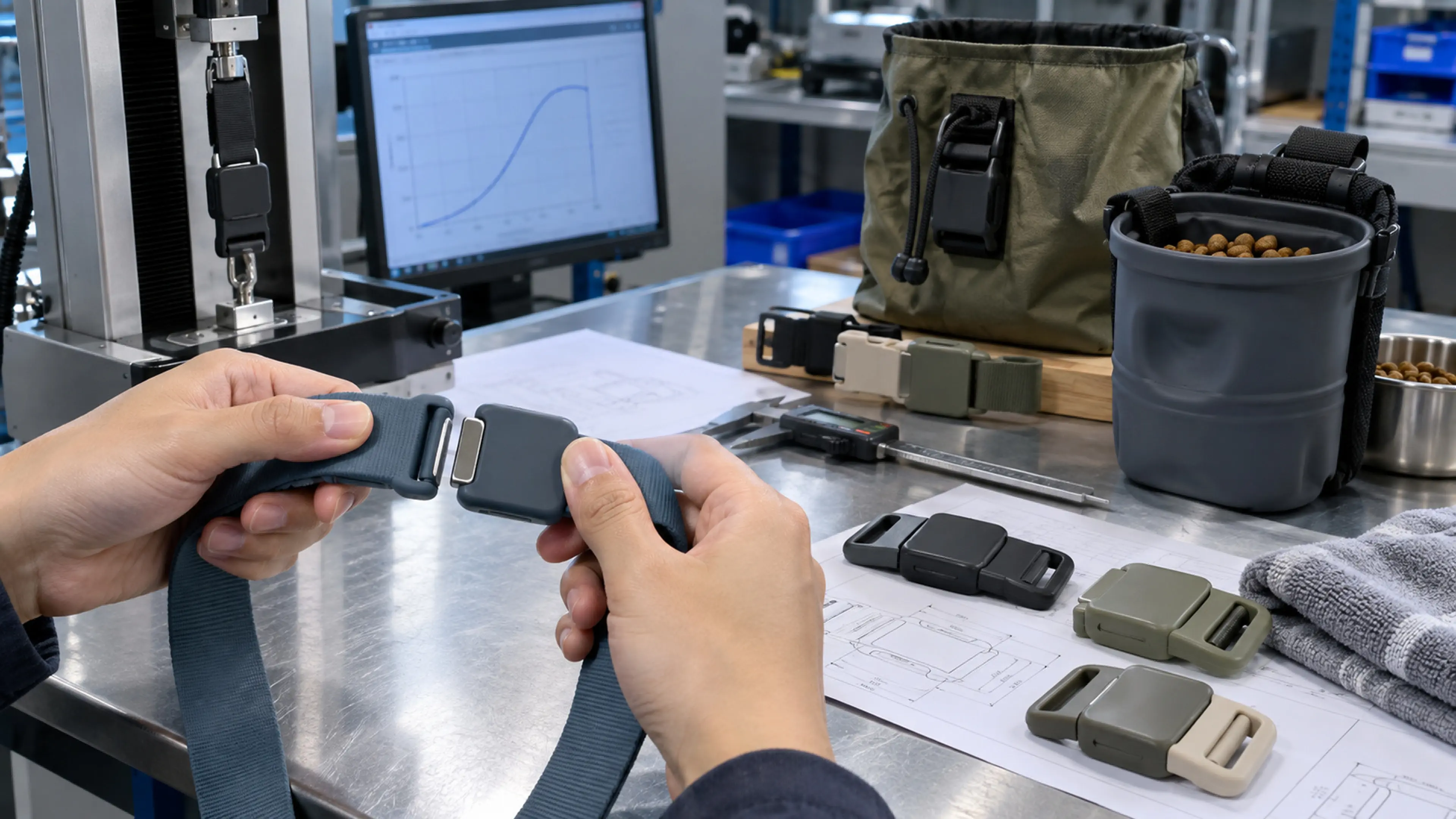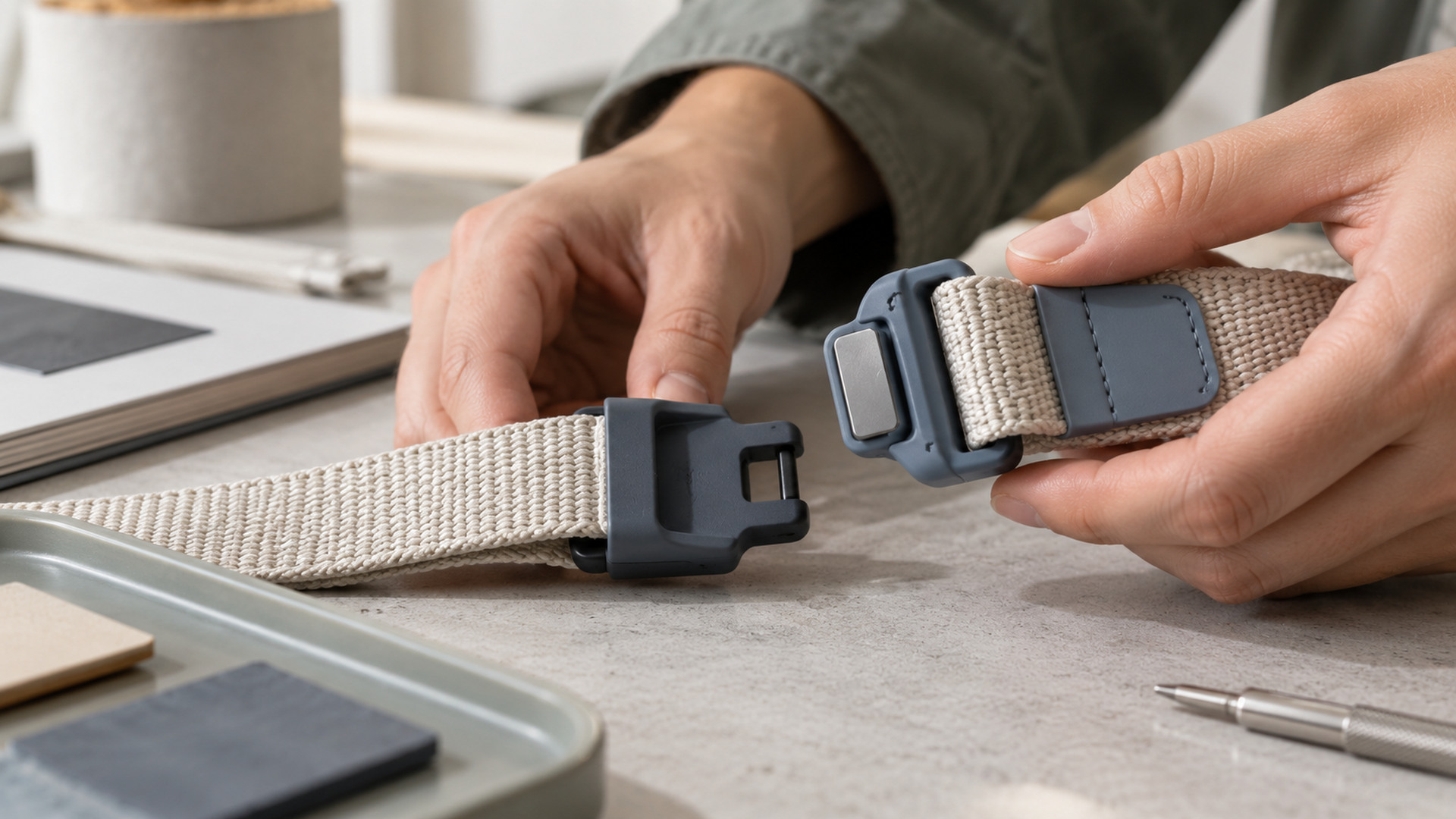
How can magnetic buckles balance one-handed use with resistance to accidental release?
The tension in a magnetic clasp is the whole design. Make the pull-apart force too light and a bag, pouch, or pet clip opens when it snags on a door handle; make it too heavy and the one-handed convenience that sold the product disappears. The answer is not to chase a single "best magnet strength." It is to separate two measurements that buyers too often treat as one — the force a user applies on purpose, and the force the clasp can survive without opening by accident.
This becomes urgent once a brand has a working prototype and is choosing between magnet grades and housing geometry. The prototype clips shut with a satisfying click, and the team assumes the hard part is solved. Only when the strap is pulled sideways, caught on something, or loaded off-axis does the release behavior become clear.
Design for the off-axis load, not the straight pull
Magnetic attraction is easy to quote and hard to trust on its own. A datasheet pull-apart force measured straight along the magnet axis tells you almost nothing about what happens in a bag, where loads arrive sideways, at an angle, or through a twist.
The robust designs add a mechanical capture on top of the magnet:
- A shallow ramp or detent that must be overcome in a defined direction.
- A hooked or chamfered entry that guides deliberate closure but resists snagging release.
- A housing pocket that traps the magnet and keeps it from walking out under side load.
Specify the magnet by its capture geometry as well as its grade. Ask whether the buckle opens only under the intended release motion, and test off-axis and snagging loads, not just a straight pull to the force number.
Treat usability and accidental release as separate numbers
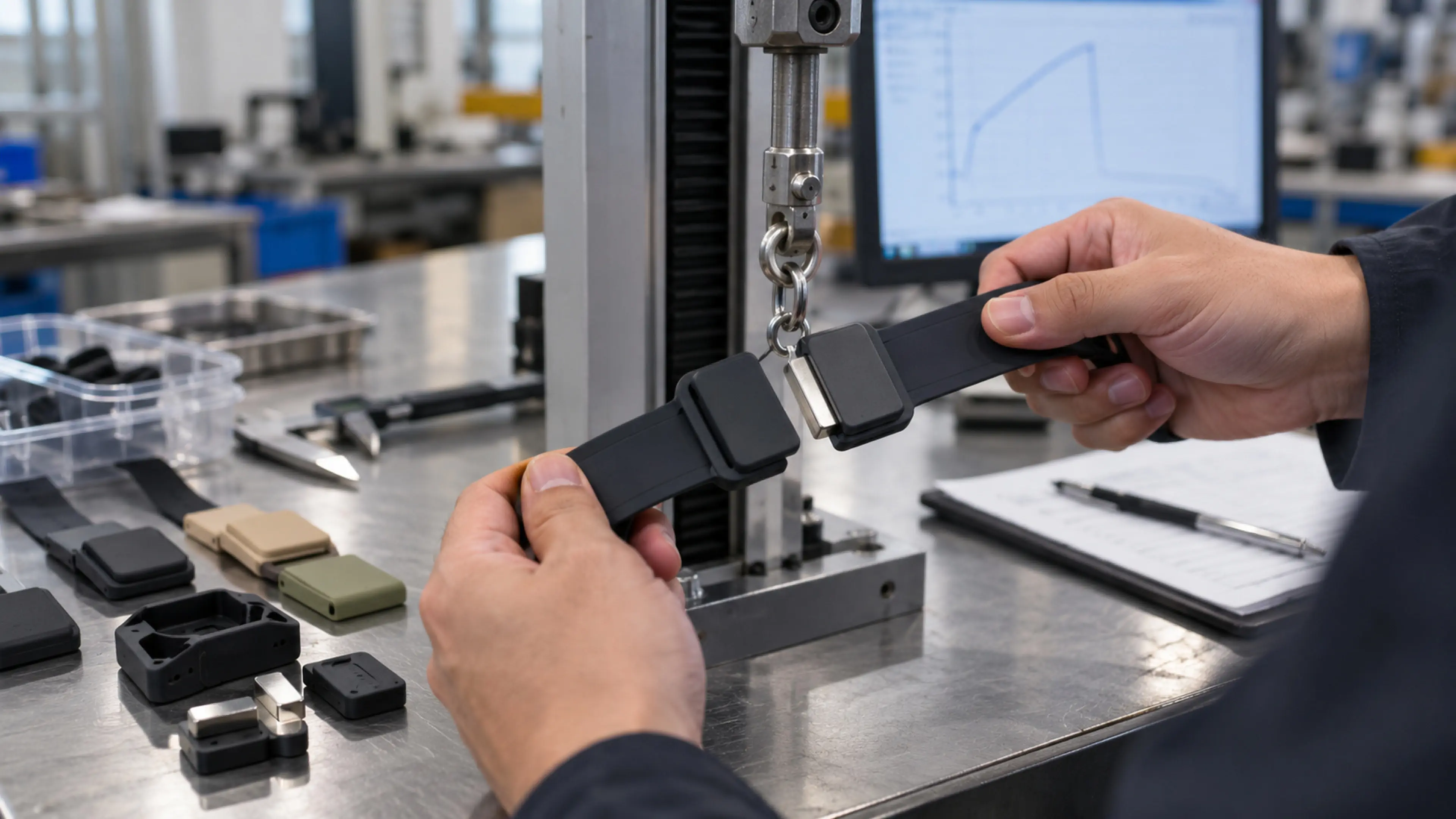
The two requirements need separate acceptance values, because tuning one against the other is where the product lives:
- Deliberate actuation. The user should be able to open it with one hand, without looking, within a comfortable force range. Too light a force feels fragile; too heavy defeats the product's reason to exist.
- Unintended release. The clasp should stay closed under the load the bag, pouch, or collar actually sees — hanging weight, a sudden pull, a snag — without opening.
Measure both on the assembled product, not on the loose magnet pair. A magnet that holds perfectly on the bench can behave very differently once it is seated in a soft silicone housing that flexes and shifts the contact angle.
Watch the hardware that touches the silicone
Where the metal or plated insert sits inside the overmolded silicone, small details drive both durability and appearance:
- Plating or coating condition on any edge that will flex against silicone.
- Sharp insert corners that can wear through the elastomer over repeated cycles.
- Corrosion at the interface, especially for outdoor, pet, or sweat-exposed products.
- Whether the magnet is fully encapsulated, so skin or content never contacts the metal.
An overmold that looks sealed on day one can develop a weak edge after heat and flex cycling if the insert was not radiused or secured.
Turn the requirement into a written test
"Opens easily but won't pop open" is not a specification. Put it on paper before tooling:
- Reference. An approved clasp sample that defines both the closure feel and the housing geometry.
- Deliberate-release force range. The comfortable one-handed opening force, as a band rather than a single target.
- Unintended-release threshold. The off-axis, snag, and hanging loads under which the clasp must remain closed.
- Aging check. Whether the same release behavior holds after thermal cycling, sweat exposure, and repeated open/close cycles.
- Revision record. The drawing and sample version the approval refers to.
Because the first prototypes are often hand-assembled with loose magnets, confirm the numbers again on pilot-production overmolded parts — the housing geometry changes the real behavior.
What to ask before quoting
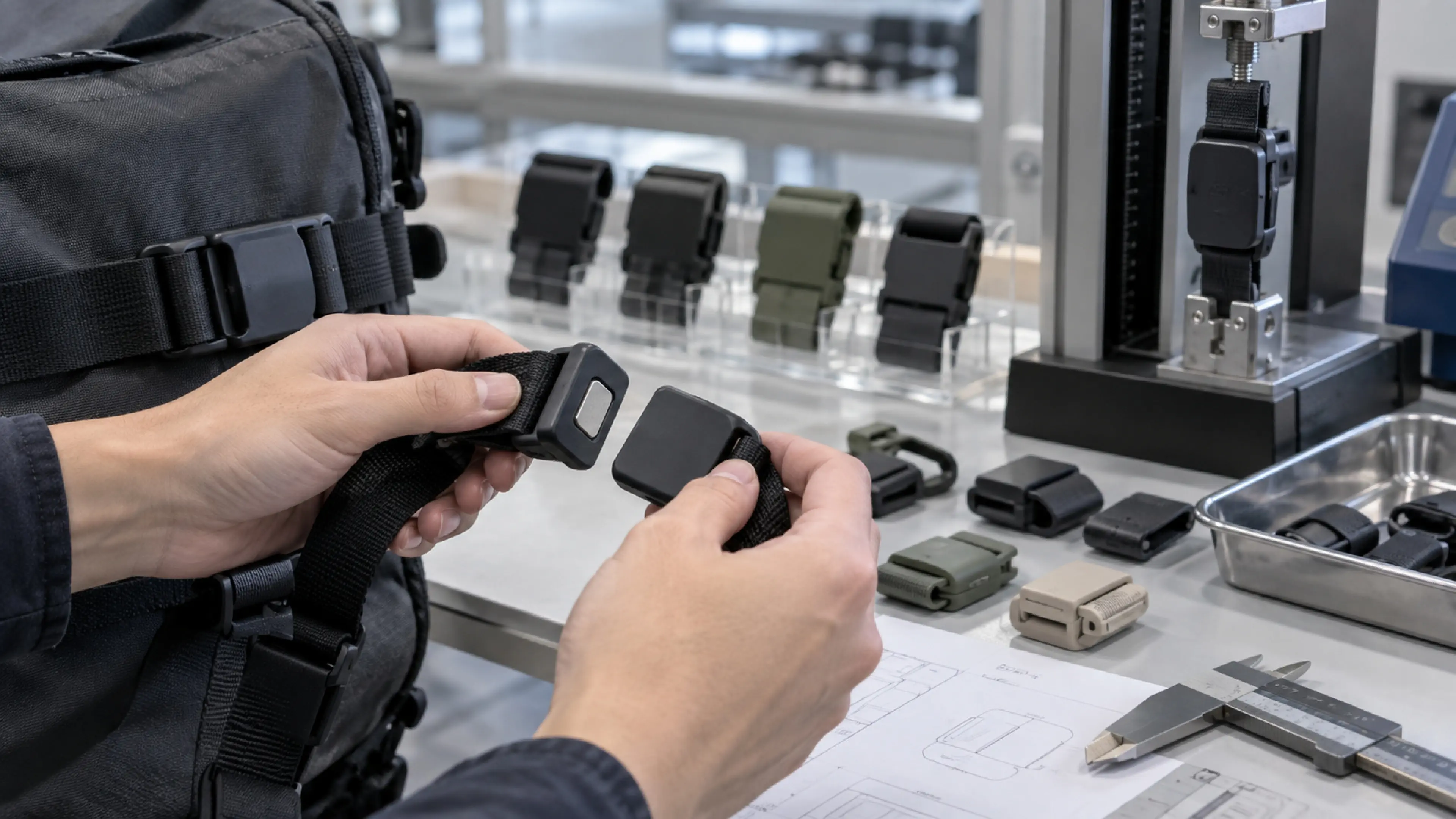
- Do you design the mechanical capture, or rely on magnetic pull alone?
- How do you test off-axis and snagging release, not just straight pull-apart?
- Is the magnet fully encapsulated in silicone, and what is the insert material and plating?
- What happens to release force after heat, sweat, and repeated cycling?
- Is CE marking actually required for this product and market, rather than applied by default?
Quotes that bundle the magnet, the overmold, the release testing, and the inspection plan are not comparable to quotes that price only the molded shell. Ask each supplier to state its assumed magnet grade and release force before comparing unit price.
Conclusion
A magnetic clasp that balances easy one-handed opening with accidental-release resistance is engineered, not selected off a magnet datasheet. Define the deliberate-opening force and the snagging threshold as separate numbers, add a mechanical capture that survives off-axis loads, and retest the overmolded assembly after aging. That is what turns a satisfying prototype click into a repeatable product.