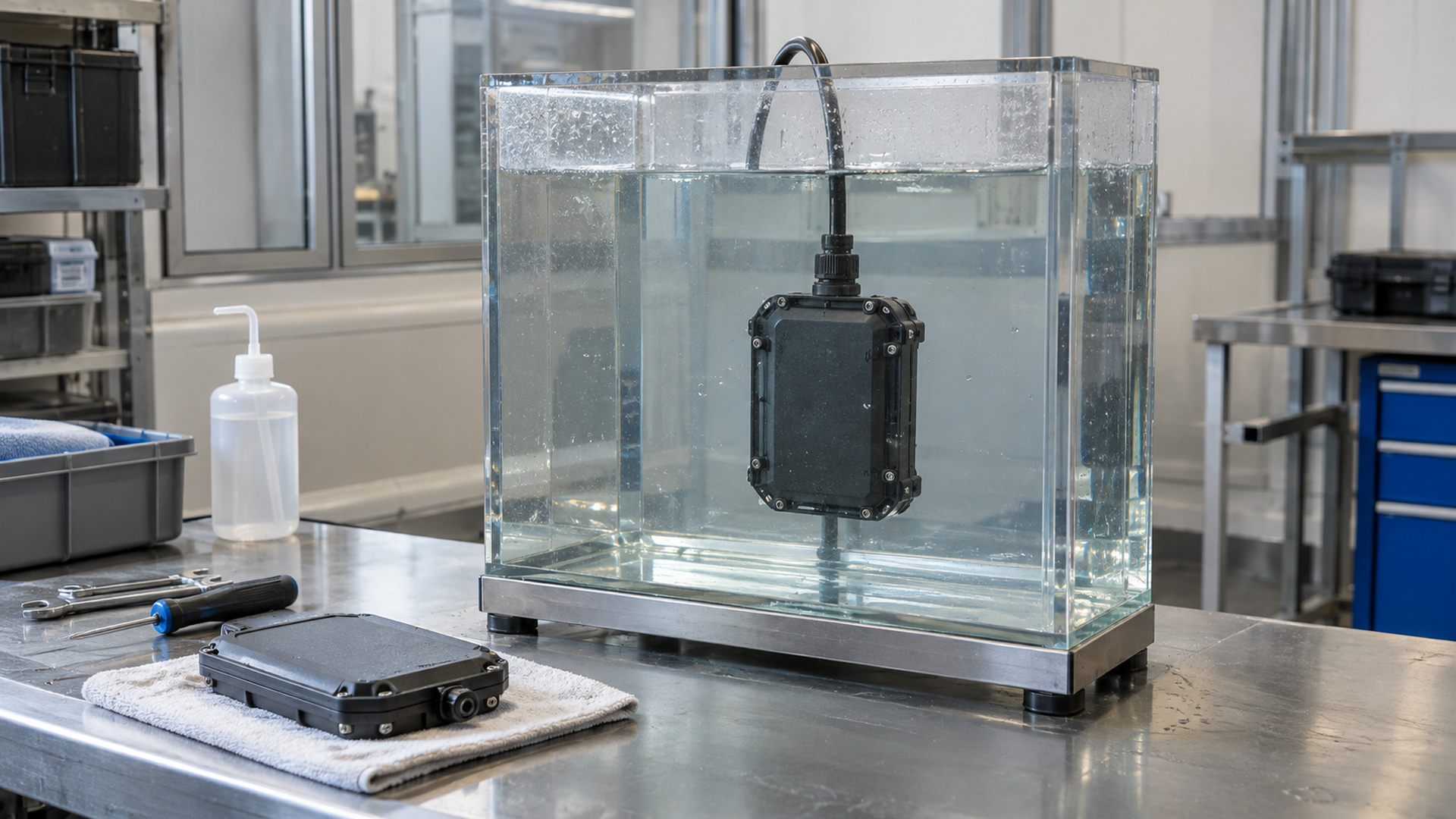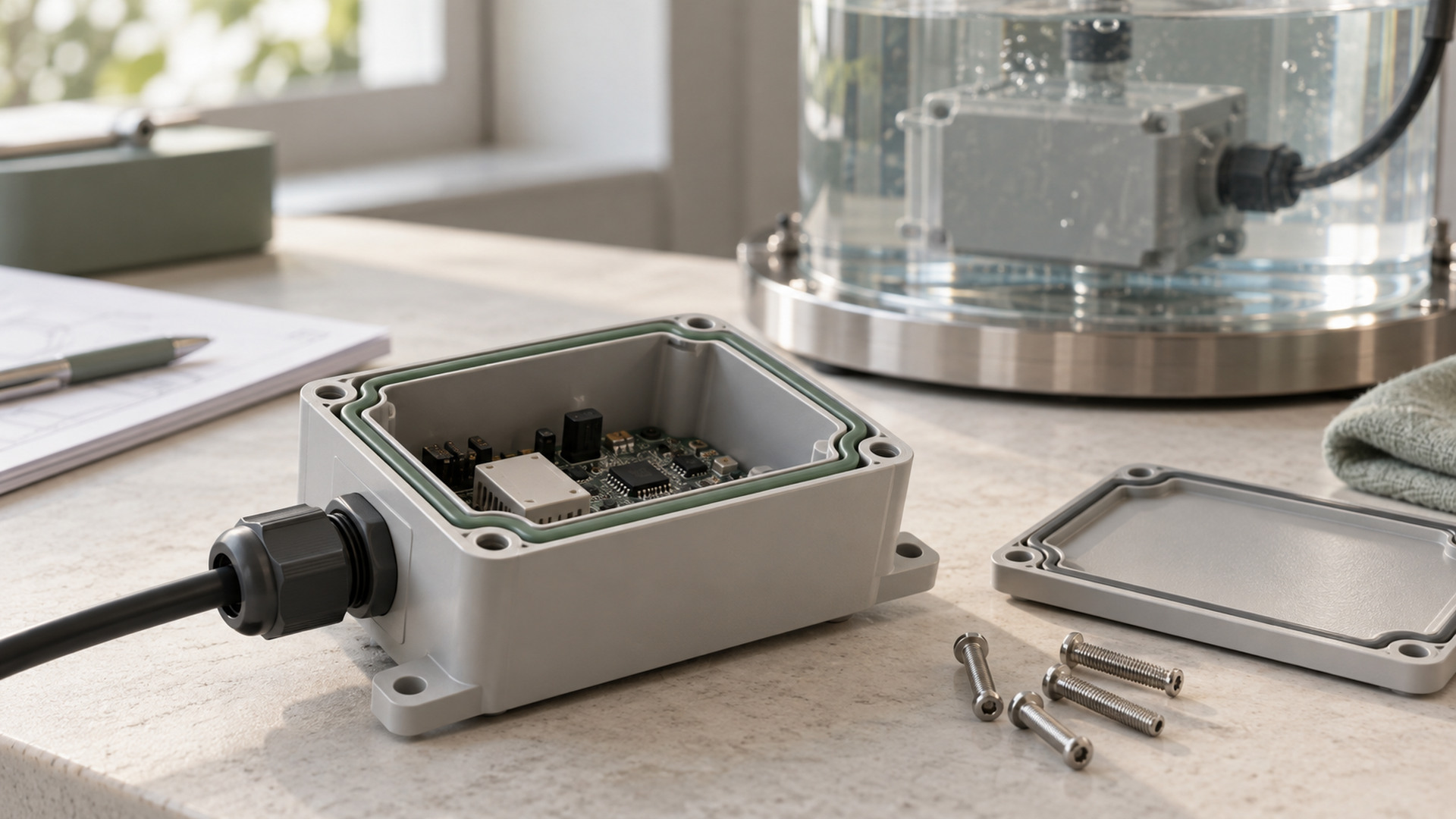
Can a silicone gasket alone prove a device meets IP67 or IP68?
No. An IP67 or IP68 rating is assigned to the complete device, not to the gasket. A silicone seal can be perfectly molded to its drawing and still fail the device-level water test because the housing flexes, the screws strip, the button membrane leaks, or the tolerance stack-up leaves the seal under-compressed somewhere around the enclosure.
For product teams designing sealed electronics, wearables or outdoor devices, the issue is separating component performance from whole-device validation. The gasket is one variable in a sealing system, and the rating comes from testing the finished product.
What IP ratings actually cover
IP ratings, defined by IEC 60529, describe ingress protection against dust and water for an enclosure. IP67 means temporary immersion; IP68 means continuous immersion under conditions specified by the manufacturer. The test is run on the complete enclosure with all its seams, buttons, connectors and cable entries assembled as the customer uses it.
A gasket measured on a bench tells you about the seal material, not whether the device survives immersion.
Why a good gasket is not enough
Sealing depends on the whole system:
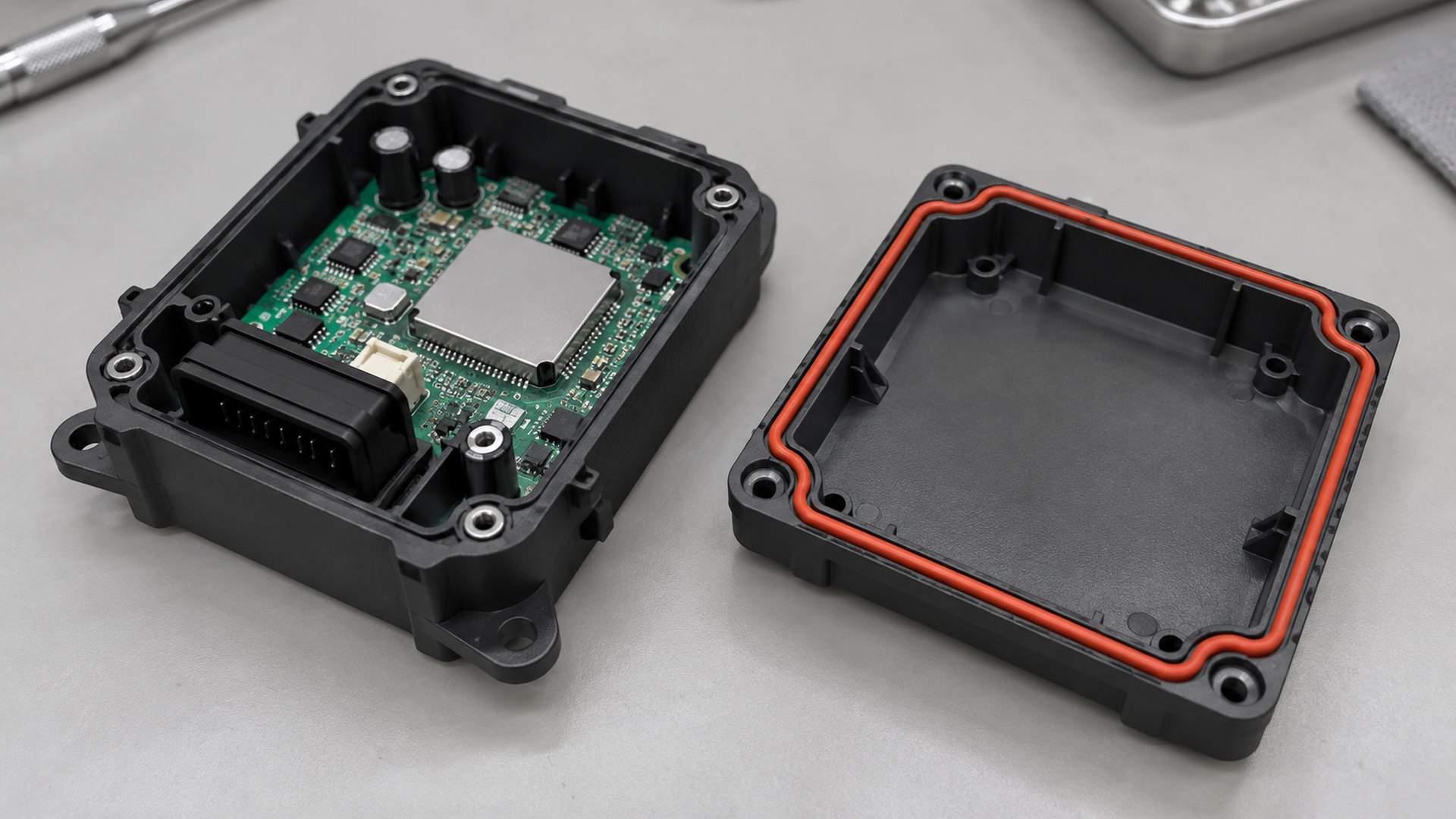
- Housing tolerance and stiffness. A flexible housing bows under assembly screws, changing compression around the seal.
- Compression set. The gasket must recover its shape over the device's life.
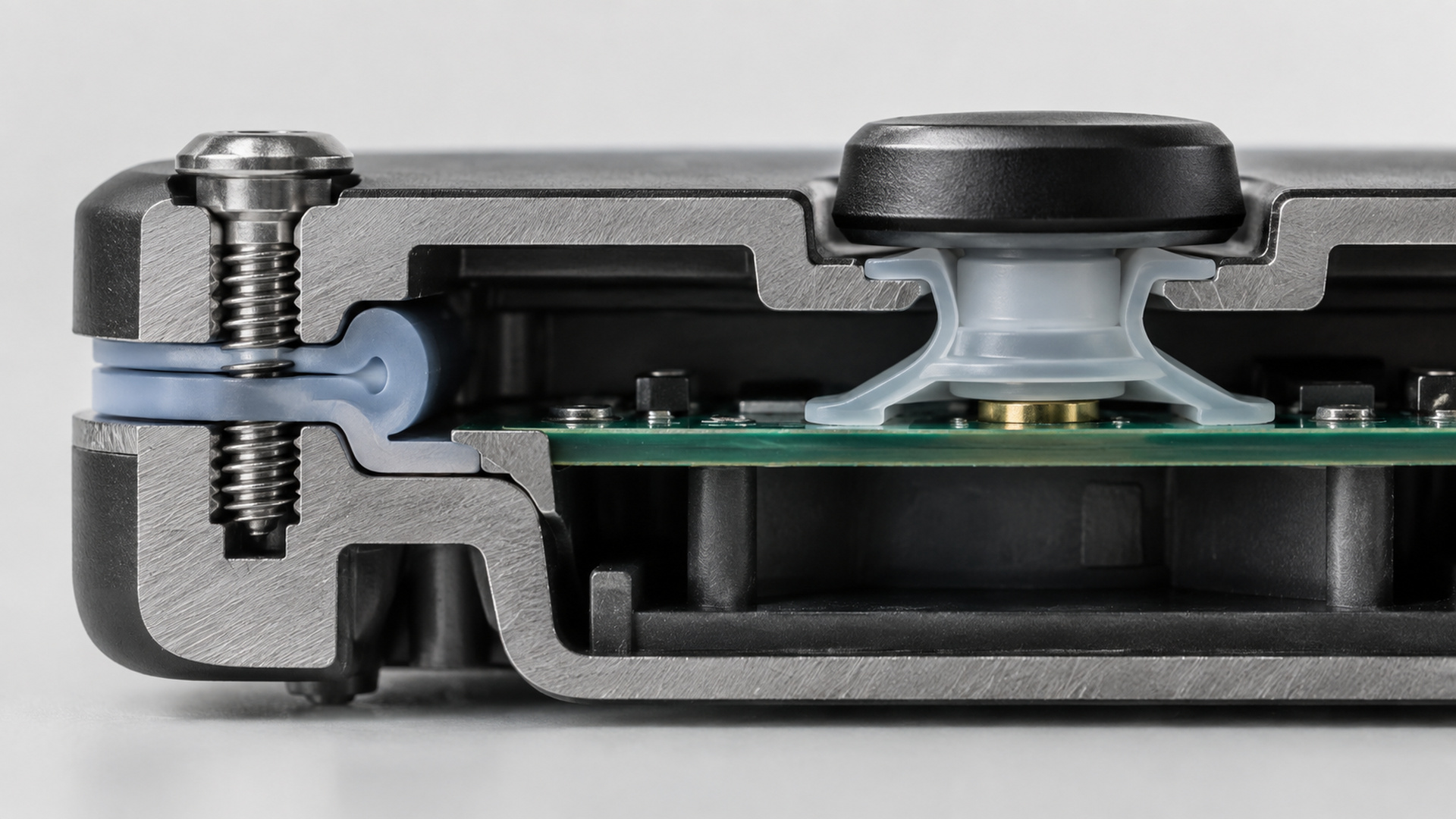
- Button and feedthrough seals. Every membrane button, connector or switch is a separate leak path.
- Assembly torque and screw pattern. Uneven compression leaves a gap somewhere.
- Mating surface finish. A scratch or parting line on the housing flange defeats the gasket.
The gasket material is necessary but not sufficient.
What to design for
To make the device-level IP test passable:
- Control housing flatness and the flange the seal sits on.
- Specify seal compression as a range, not a single dimension.
- Use a silicone grade with low compression set for the service temperature.
- Route every button, cable and connector through its own sealed path.
- Validate the whole assembly, not just the gasket.
Two checks matter:
- Treat the gasket as a component; validate the complete device as an assembly.
- Review tolerance stack-up, compression and housing stiffness together, not in isolation.
Turn the requirement into an assembly-level test
"Sealed" is not a rating. Convert the requirement into:
- A controlled reference — an approved sealed assembly.
- Critical characteristics — seal compression range, housing flatness, button membrane seal.
- A test condition — the actual immersion depth and duration for the target rating, on the fully assembled device.
- An acceptance rule — no water ingress after the specified immersion.
- A revision record — which housing revision, gasket lot and assembly torque the test covers.
Compare options by trade-off
A softer gasket can compensate for housing variation, but too soft and it extrudes or sets permanently. A stiffer housing costs more to tool but makes the seal predictable. The right balance depends on the device's cost target and the IP rating being claimed.
Validate at the assembly level
Run the IP immersion test on the finished device, not on a loose gasket. Component measurements support the test but do not replace it.
What to prepare before the RFQ
- The target IP rating and the immersion depth/duration the product must meet.
- CAD of the housing and the gasket groove.
- The number of buttons, connectors and seams that must seal.
- Assembly method (screws, ultrasonic weld, adhesive).
- The environment the device will see (sweat, rain, submersion).
- Target market and any certification body involved.
If the IP rating is not yet decided, say so — the gasket design changes with it.
Questions to ask the supplier
- Do you test the fully assembled device to the IP rating, or only the gasket?
- What compression range is the gasket designed to?
- How do you account for housing flatness and screw torque?
- Which silicone grade do you recommend for low compression set?
- What button and connector sealing approach do you recommend?
Generic "our gaskets are waterproof" answers are not IP certifications.
Conclusion
A silicone gasket is a necessary component, but an IP67 or IP68 rating belongs to the whole device. Design the housing flatness, screw pattern, compression range and button seals as a system, and run the immersion test on the finished assembly. The gasket supplier can help with the seal, but the rating is earned at device level.