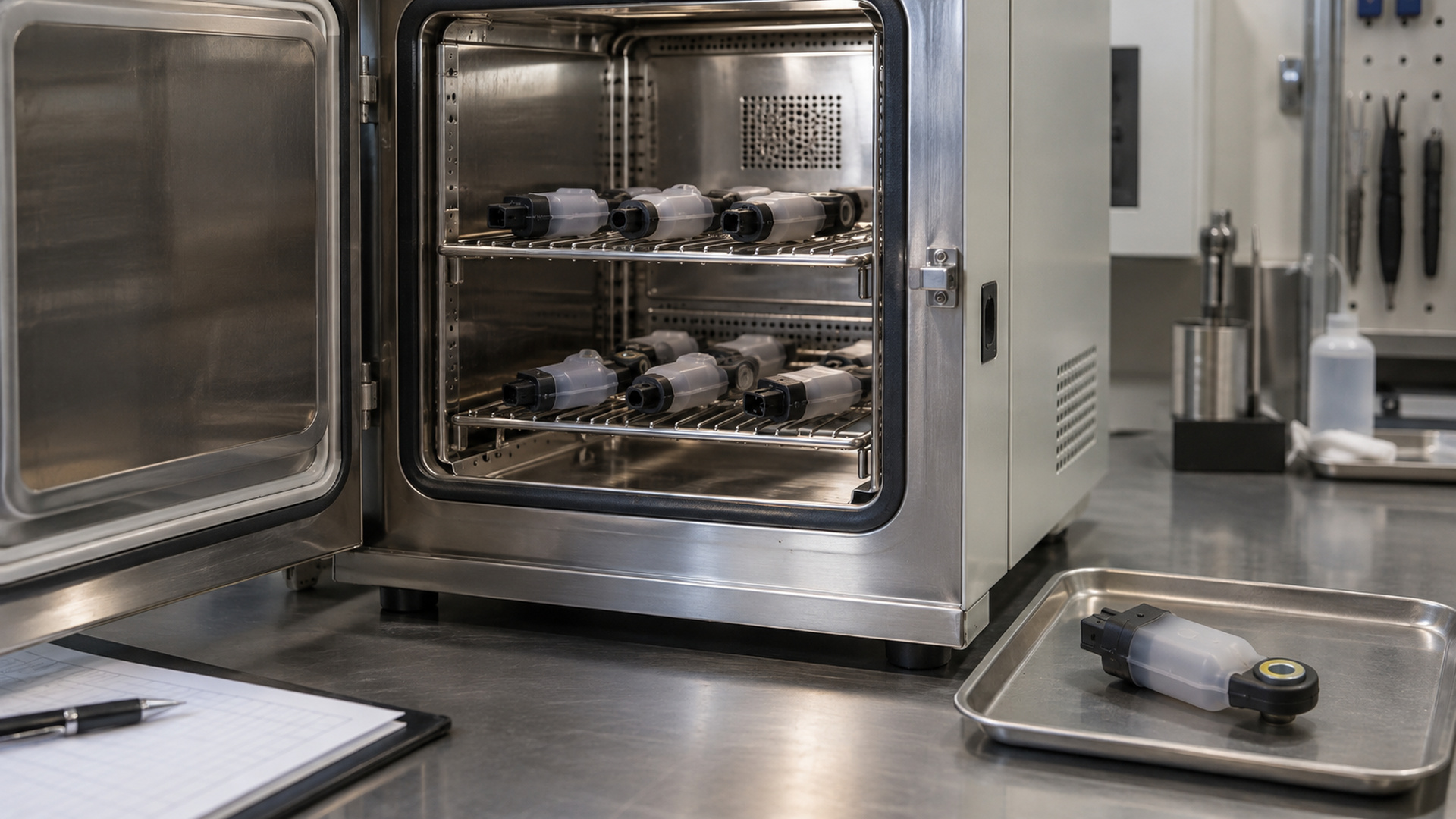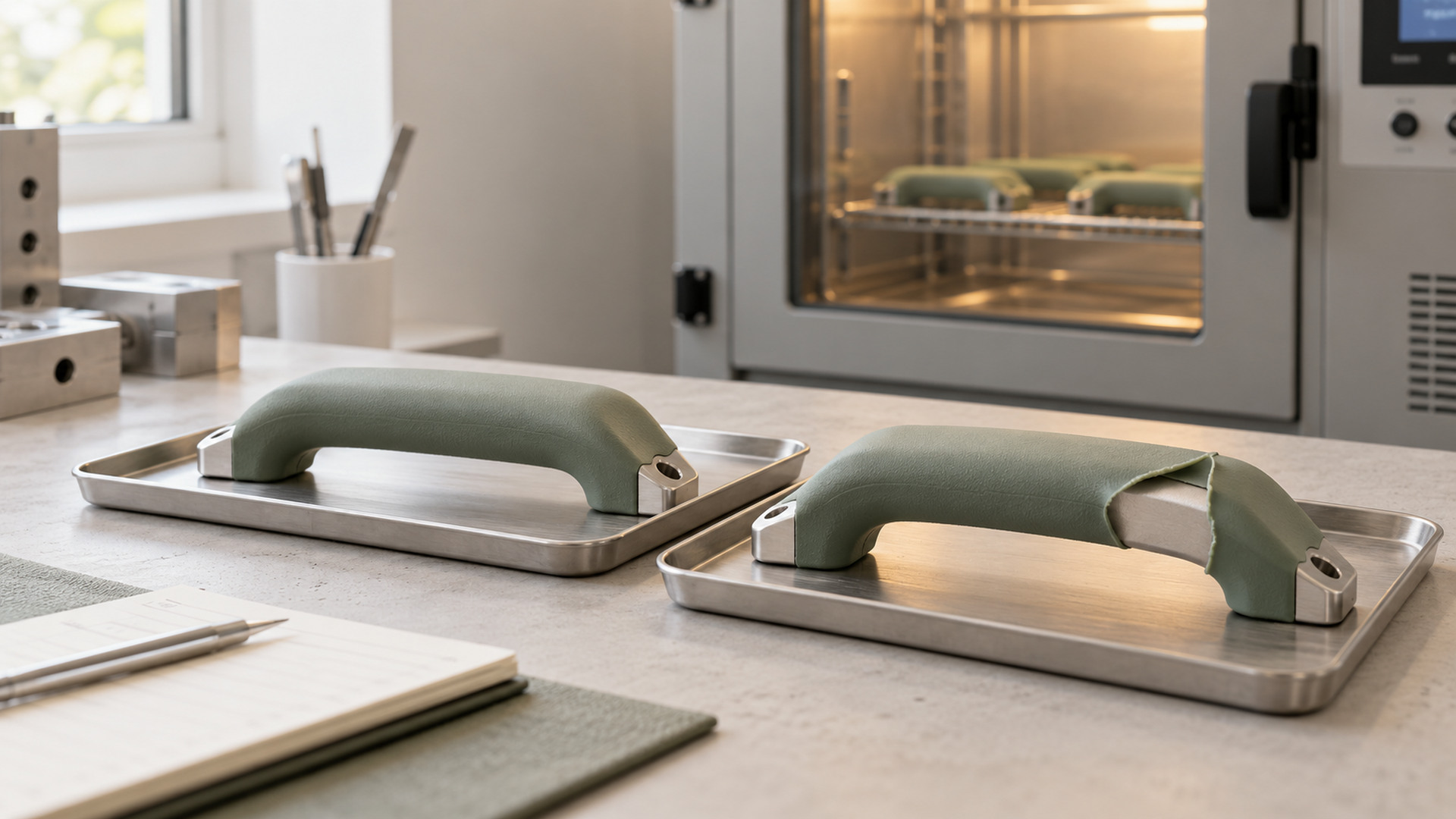
Why can an overmold bond fail after aging despite passing an initial check?
A bond that passes a pull test on the day it is molded can peel apart months later. This is not a contradiction — it is the most common way overmolded silicone parts fail. The initial test measures the bond at its peak, when the primer is fresh, the insert is clean and the part has never seen heat or chemicals. Aging introduces stresses that day-one testing does not.
For product teams debugging or preventing field delamination, the work is examining contamination, material compatibility and the real use environment rather than assuming a passing first-article test is enough.
What actually changes after aging
Several mechanisms weaken a fresh bond:
- Thermal cycling. The plastic or metal insert and the silicone expand at different rates. Each cycle flexes the bond line.
- Moisture and humidity. Water vapor works its way under the primer from the edges.
- Cleaners, oils and sweat. Chemicals can attack the primer layer or swell the silicone.
- Residual contamination. Fingerprint oil, mold release or dust on the insert was invisible at molding but prevents full adhesion.
- Primer under-cure or over-application. A thin, uneven primer bonds well on day one but degrades faster.
The fresh pull test cannot detect these because none of them have had time to develop.
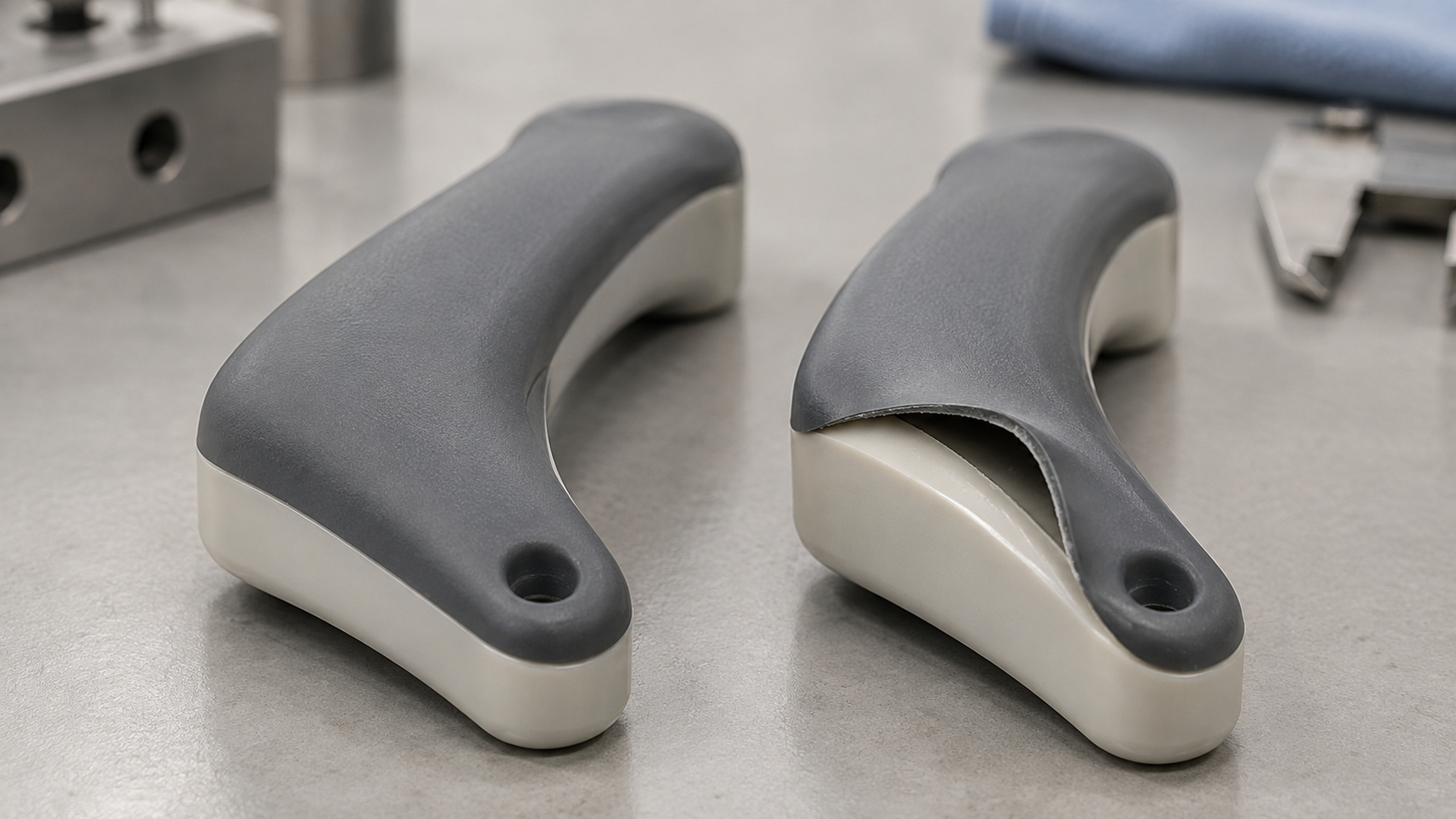
The most common root causes
When a bond fails after aging, look first at:
- Surface contamination on the insert. Release agent from prior processing, skin oils, or storage dust.
- Substrate grade mismatch. The plastic chosen for cost or stiffness was not compatible with the primer.
- Missing mechanical interlock. The bond relied entirely on chemistry, which is the most sensitive to aging.
- Cleaner exposure. A product wiped with alcohol or disinfectant that the primer was not specified for.
- Thermal environment. A part that spends months in a hot car or on a wearable against skin.
Two checks are especially important:
- Specify the exact substrate grade and surface condition on the drawing.
- Combine chemical adhesion with a mechanical interlock where risk justifies redundancy.
Turn the problem into an acceptance test
"Good bond out of the mold" is not a durability claim. Convert the requirement into:
- A controlled reference — an assembly that has already survived the intended aging.
- Critical characteristics — pull-off or peel force after aging.
- A test condition — heat aging, thermal cycling, humidity, cleaner exposure, flexing.
- An acceptance rule — no delamination after aging; cohesive failure in silicone is the target.
- A revision record — which primer batch and substrate lot the aged test was run on.
Compare options by trade-off
If aging failure is suspected, the fixes are: clean the insert more rigorously, switch to a compatible primer or grade, add a mechanical undercut, or age-test the next batch. Compare them on tooling cost, process control burden and the cost of a field failure.
Validate before production
Run the aging test before tooling is locked, not after. A coupon aged for days at elevated temperature can reveal a bond problem that would otherwise surface months after shipment.
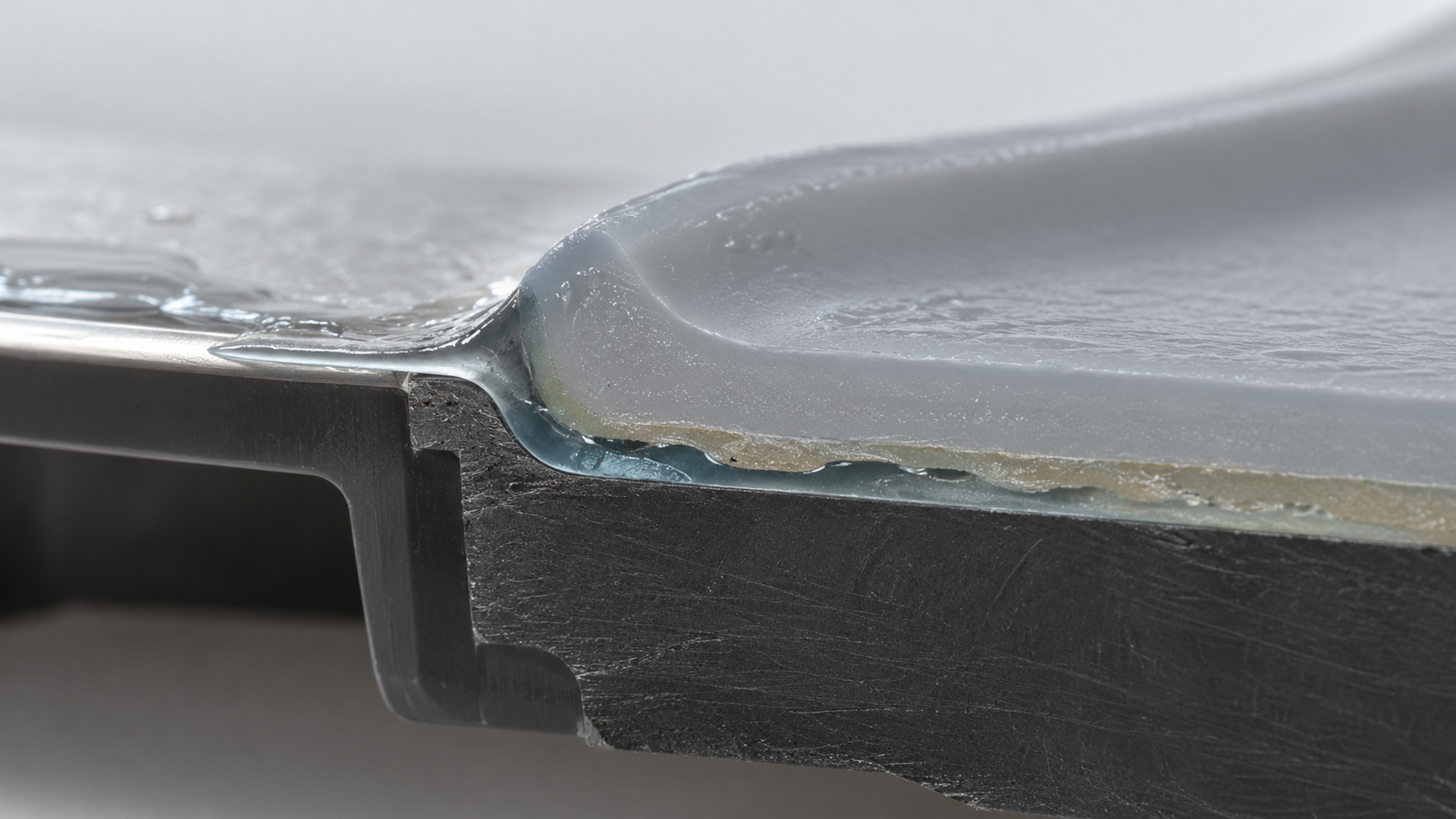
What to prepare before the RFQ
- The exact substrate grade and surface treatment.
- The environment the finished product will see (heat, humidity, cleaners, sweat).
- How the product will be cleaned or disinfected.
- Expected product lifetime.
- Whether the joint is safety-critical.
- The failure mode that would be unacceptable.
If the cleaning regimen is not yet defined, describe the worst-case cleaner the product might encounter.
Questions to ask the supplier
- Do you age-test the bond before tooling sign-off?
- Which primer and substrate combination has survived thermal cycling before?
- How are inserts cleaned immediately before overmolding?
- Does the bond survive the cleaners the product will see?
- What is the root-cause process when a bond fails after aging?
Generic "the bond passes" answers without an aging condition are not enough.
Conclusion
A fresh bond test measures peak adhesion; it does not measure durability. Bonds fail after aging because of contamination, substrate mismatch, missing mechanical redundancy, or chemicals and heat the primer was not designed for. Age-test before tooling, add a mechanical interlock where the joint is critical, and define the cleaning and thermal environment up front.