How can silicone assemblies securely retain magnets and hardware?
A magnet or metal insert that is simply dropped into a pocket and covered with silicone will work loose over time. The silicone shrinks around it, the part flexes, and the hardware migrates until it falls out — or, worse, becomes a loose small part inside a product used by children or pets. The fix is the same whether the insert is a neodymium magnet, a screw, a spring or a metal eyelet: capture it mechanically, do not rely on friction or adhesion alone.
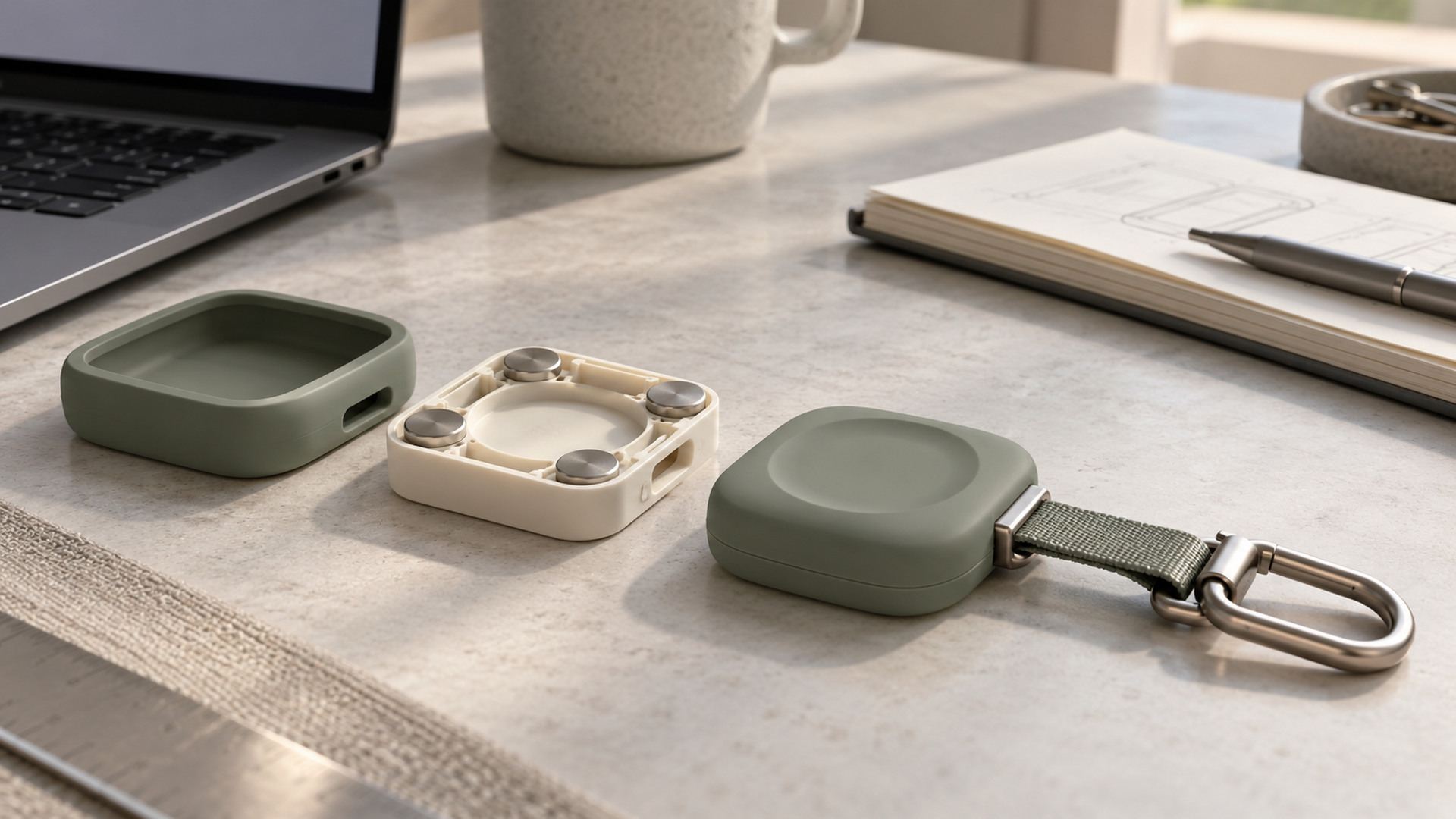
For product teams designing magnetic clasps, silicone toys, pet accessories or wearables with embedded hardware, the requirement is treating hardware retention as a safety validation item, not an assembly detail.
Why magnets and inserts work loose
Three mechanisms cause retention failure:
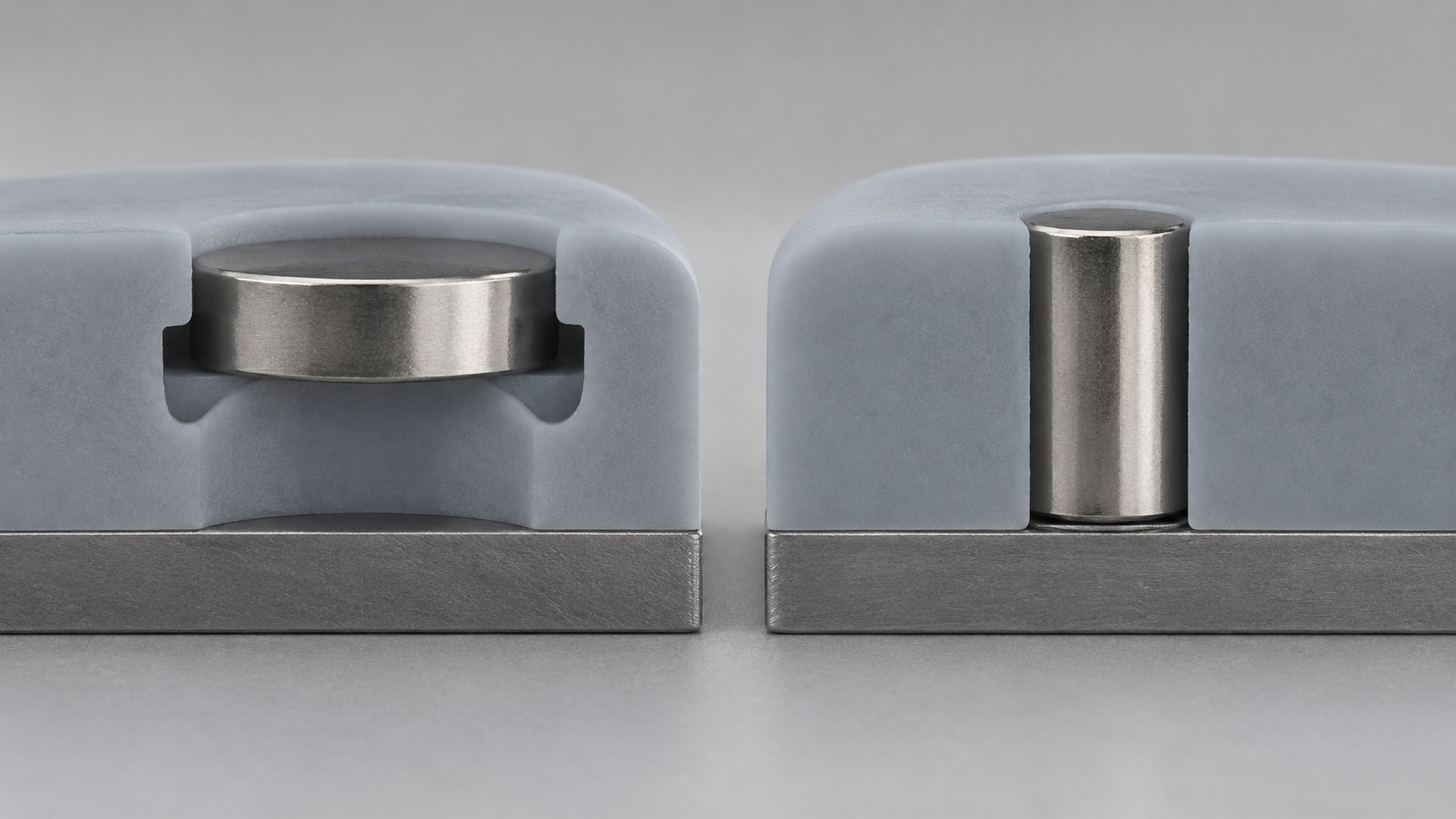
- Shrinkage gap. Silicone shrinks as it cures. A straight cylindrical pocket does not grip a magnet after shrinkage if there is no undercut.
- Repeated flexing. The silicone around the hardware moves with every use, rocking the insert until it loosens.
- Corrosion or plating changes. A plated magnet can outgas or corrode, breaking the bond between silicone and metal.
A hand-pull test at the bench does not catch these.
Designing mechanical capture
The reliable approach is to make the hardware mechanically impossible to pull out:
- Undercuts or barbs on the insert that silicone flows behind.
- Through-holes that silicone bridges across.
- Knurled or cross-hatched surfaces on magnets or shafts.
- Oversized or shaped pockets (not straight cylinders) that lock the insert in multiple directions.
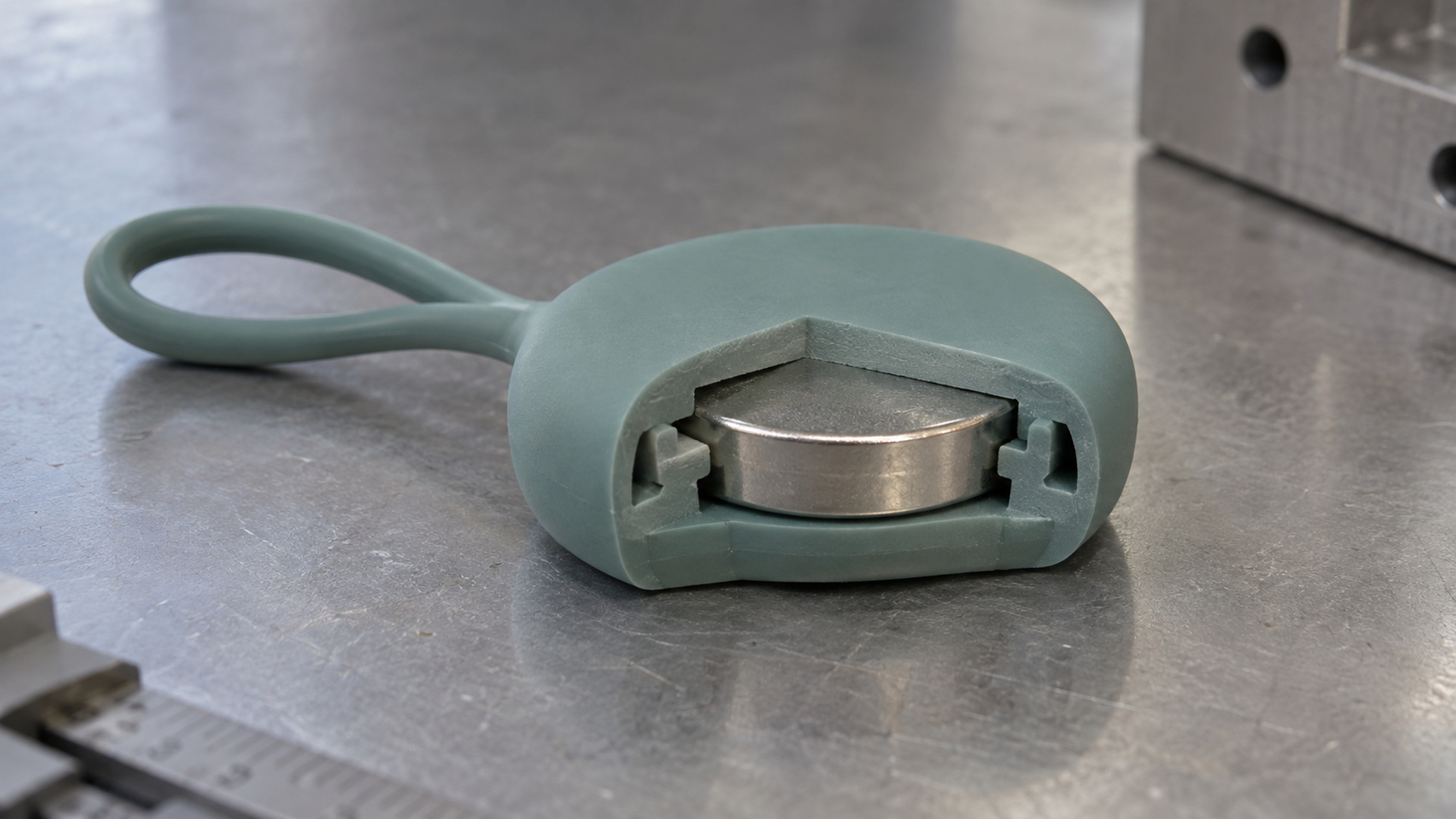
- Fully encapsulating the magnet so no sharp edge is exposed.
Two checks are essential:
- Review the mechanical capture and pull-out path, not just the nominal magnetic pull or adhesive bond.
- Check corrosion, plating and edge conditions where the metal meets the silicone.
Magnets need extra care
Neodymium magnets are brittle and corrode easily. They are usually nickel-plated or epoxy-coated. When overmolding:
- Use the coating specified by the magnet supplier for overmolding.
- Avoid sharp corners on the magnet that could stress the plating.
- Fully encapsulate the magnet so chipped plating cannot become an exposure.
- Consider whether the magnet's magnetic field interferes with nearby electronics.
Key variables to control
- Exact magnet or hardware material and coating.
- Mechanical interlock geometry.
- Surface preparation of the metal.
- Insert location during molding.
- Aging and drop conditions the product will see.
Turn retention into a safety test
"Stays in place" is not a test. Convert it into:
- A controlled reference — an approved assembly that has passed retention testing.
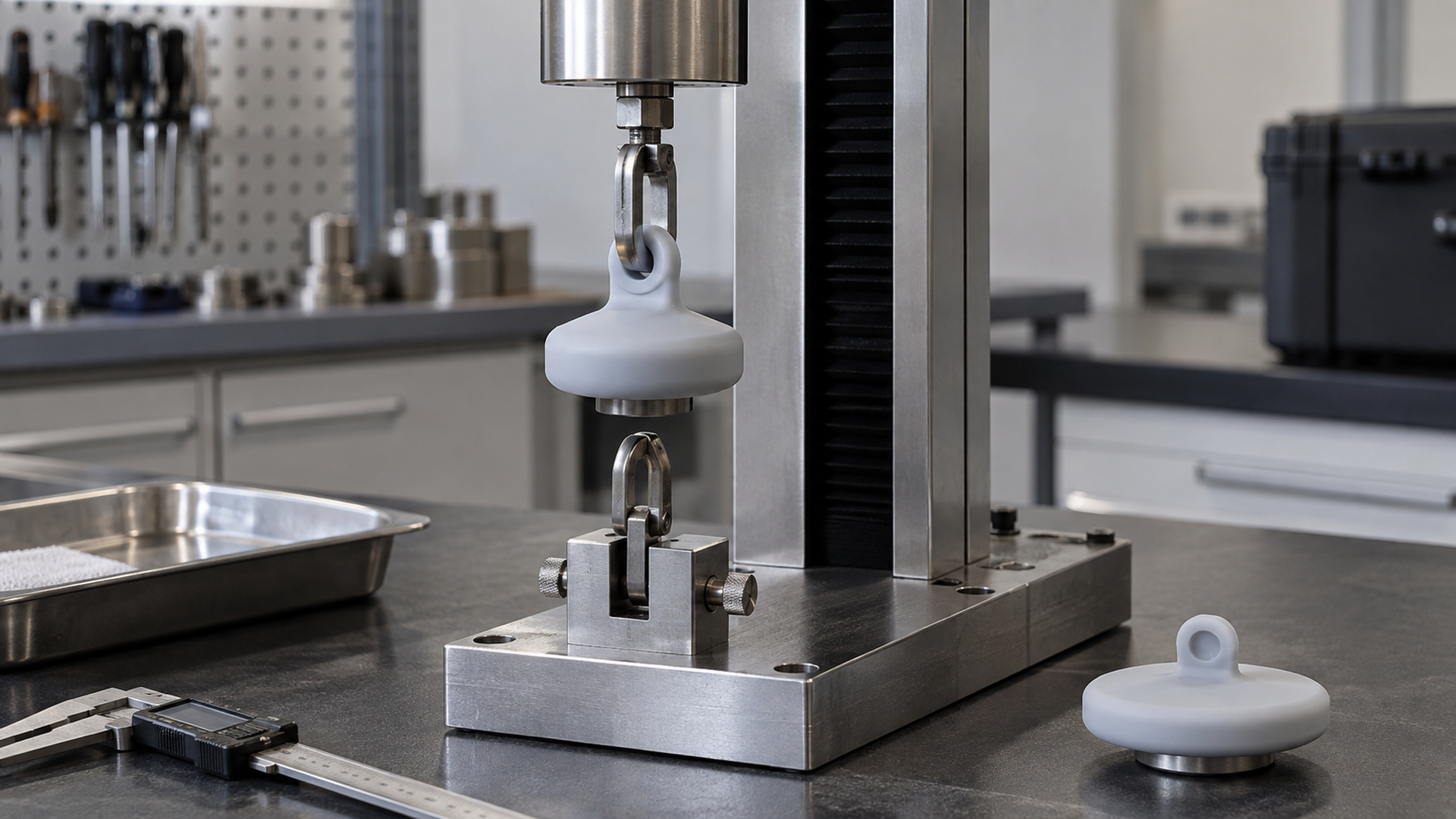
- Critical characteristics — pull-out force, torque resistance, drop performance.
- A test condition — as-molded, after thermal cycling, after drop, after flexing.
- An acceptance rule — no hardware movement or dislodgement; no exposed sharp edges.
- A revision record — which magnet lot and coating the approval covers.
For products that may reach children, follow applicable small-parts and hardware-retention guidance rather than relying on internal feel tests.
Compare options by trade-off
A fully encapsulated, undercut magnet costs a little more tooling than a straight pocket, but it eliminates the recall risk of a loose magnet. The cheaper option is rarely cheaper once a field return is counted.
Validate before production
Run pull-out, drop and flex tests on representative assemblies. A magnet that survives a pull on day one may still move after thermal cycling.
What to prepare before the RFQ
- CAD of the silicone part and the magnet or hardware.
- The exact magnet or hardware specification, including coating.
- The pull-out or retention force required.
- The user group (children, adults, pets) and applicable safety expectations.
- Whether the magnet is visible or hidden.
- Target volume and regulatory context.
If the safety classification is not yet decided, flag it — it changes the retention test program.
Questions to ask the supplier
- How is the magnet mechanically captured?
- What pull-out force does the design target?
- How do you prevent magnet plating damage during molding?
- Do you run drop and flex retention tests?
- How is hardware traceability maintained across production lots?
Generic "we overmold magnets" answers without a retention force or test method are not enough.
Conclusion
Magnets and hardware in silicone parts are retained by geometry, not by luck. Add undercuts, through-holes or knurling that lock the insert in multiple directions, choose a magnet coating that survives overmolding, and validate pull-out and drop performance on aged samples. When the part could reach children, treat retention as a safety requirement from the first drawing review.