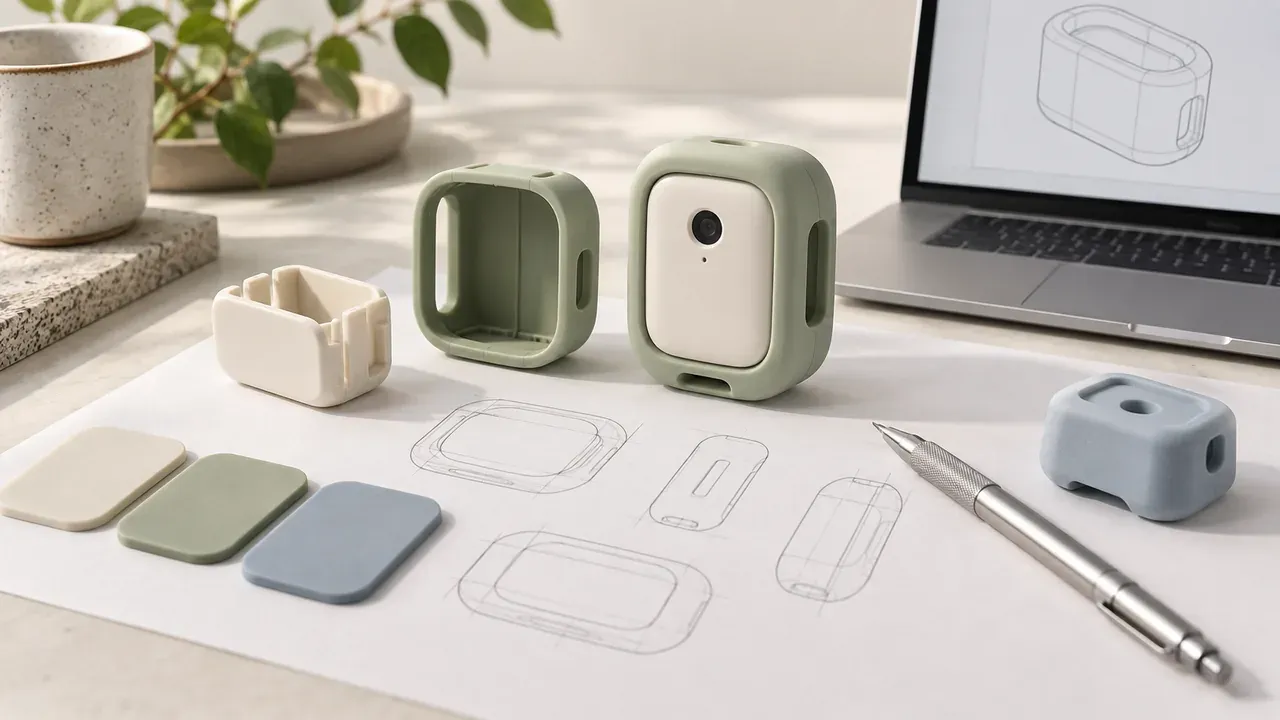
A good RFQ does not need to be complicated. But the more clearly a manufacturer understands the product, the easier it is to select the right molding route and avoid repeated quotation revisions.
1. Drawing or CAD
If available, send 3D CAD, 2D drawing, PDF, STEP/STP or a reference sample.
2. Application
Explain what the part does: sealing, grip, keypad, wearable interface, connector protection, appliance component, etc.
3. Quantity
Share expected order quantity, annual demand if known, pilot quantity and future volume range.
Volume metrics that sharpen tooling decisions
Three figures help the manufacturer propose the right tooling route: (1) prototype or sample quantity, (2) initial production order, and (3) estimated annual volume. With these, engineers can weigh a single-cavity soft tooling approach against a multi-cavity hardened-steel tool on total cost rather than guesswork.
4. Material and hardness
If known, include silicone type, hardness, color, transparency and any food-contact or skin-contact requirement.
5. Insert or substrate details
For overmolded parts, include plastic type, metal alloy, coating, magnet grade or electronic-insert details.
6. Compliance
Tell the manufacturer the target country and any food-contact, RoHS, healthcare or customer-specific testing requirements.
7. Assembly and packaging
If the final product includes plastic, metal, textile, labels or packaging, include that from the beginning.
8. Timing
Share target sample date, launch date and mass-production timing.
If you only have a concept
You can still start with a sketch, photo, reference sample, approximate dimensions and target use.
Compare quotations on the same assumptions
Quotations differ because suppliers make different assumptions from the same drawing: mold route and cavity count, material grade, secondary operations, inspection level and packaging. When comparing offers, ask each supplier to state these assumptions in writing so the quotes can be evaluated on the same basis.
Standards commonly referenced in silicone specifications
Depending on the product and market, silicone specifications commonly reference standards such as: ISO 3302-1 (dimensional tolerances of rubber products), FDA 21 CFR 177.2600 (rubber articles for repeated food contact), LFGB §30/§31 (German food-contact law), ISO 10993-5/-10 (biological evaluation — cytotoxicity and skin sensitization), ASTM D2240 (durometer hardness) and UL 94 (flammability). Applicable requirements are confirmed per project and market — inclusion in a specification does not by itself imply certification.
Have a silicone project to quote? Send the drawing, quantity and application to Amy for review.
The Product Development page explains how reviews move from first contact to tooling, and the Contact page receives your completed RFQ directly.