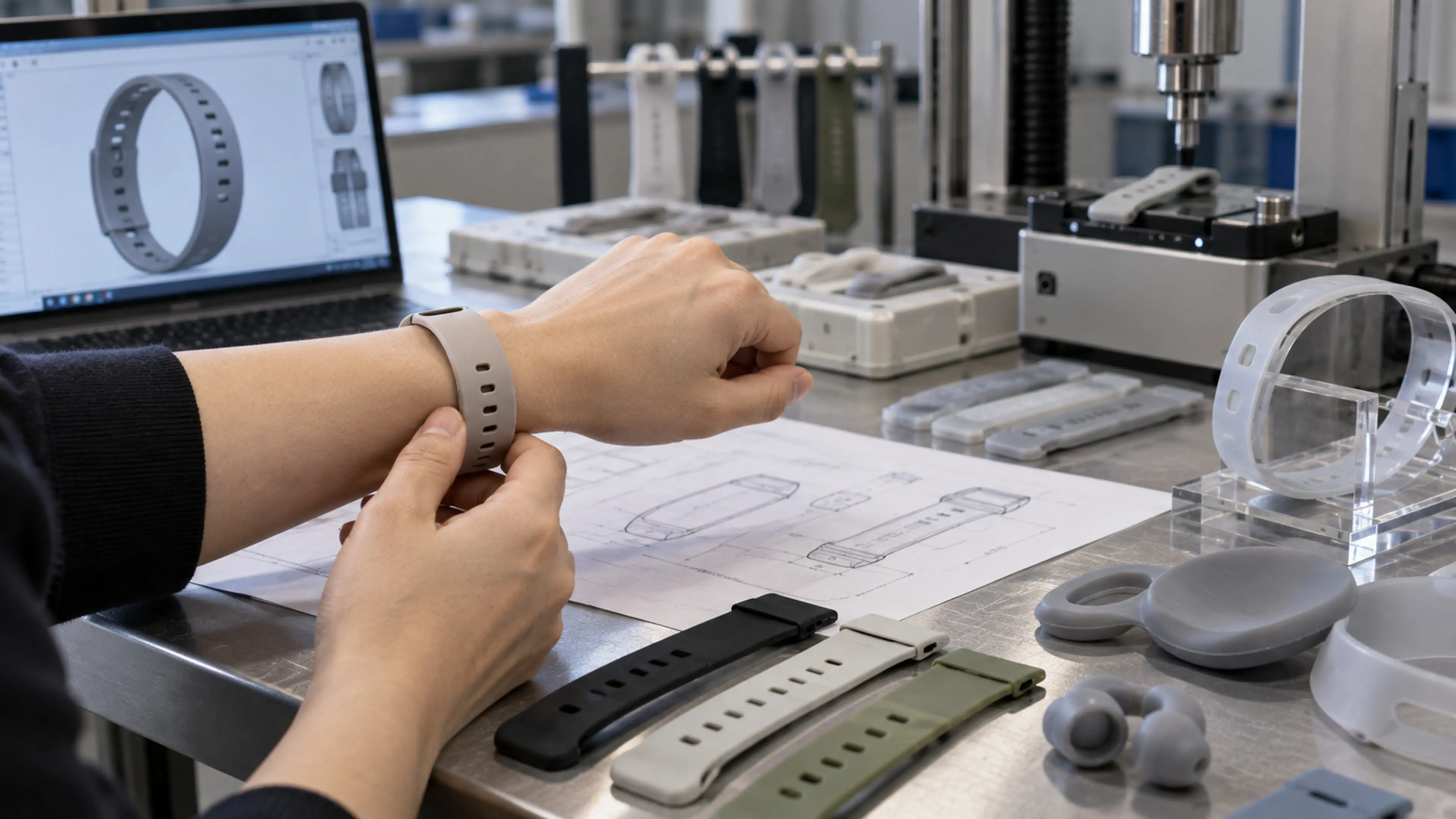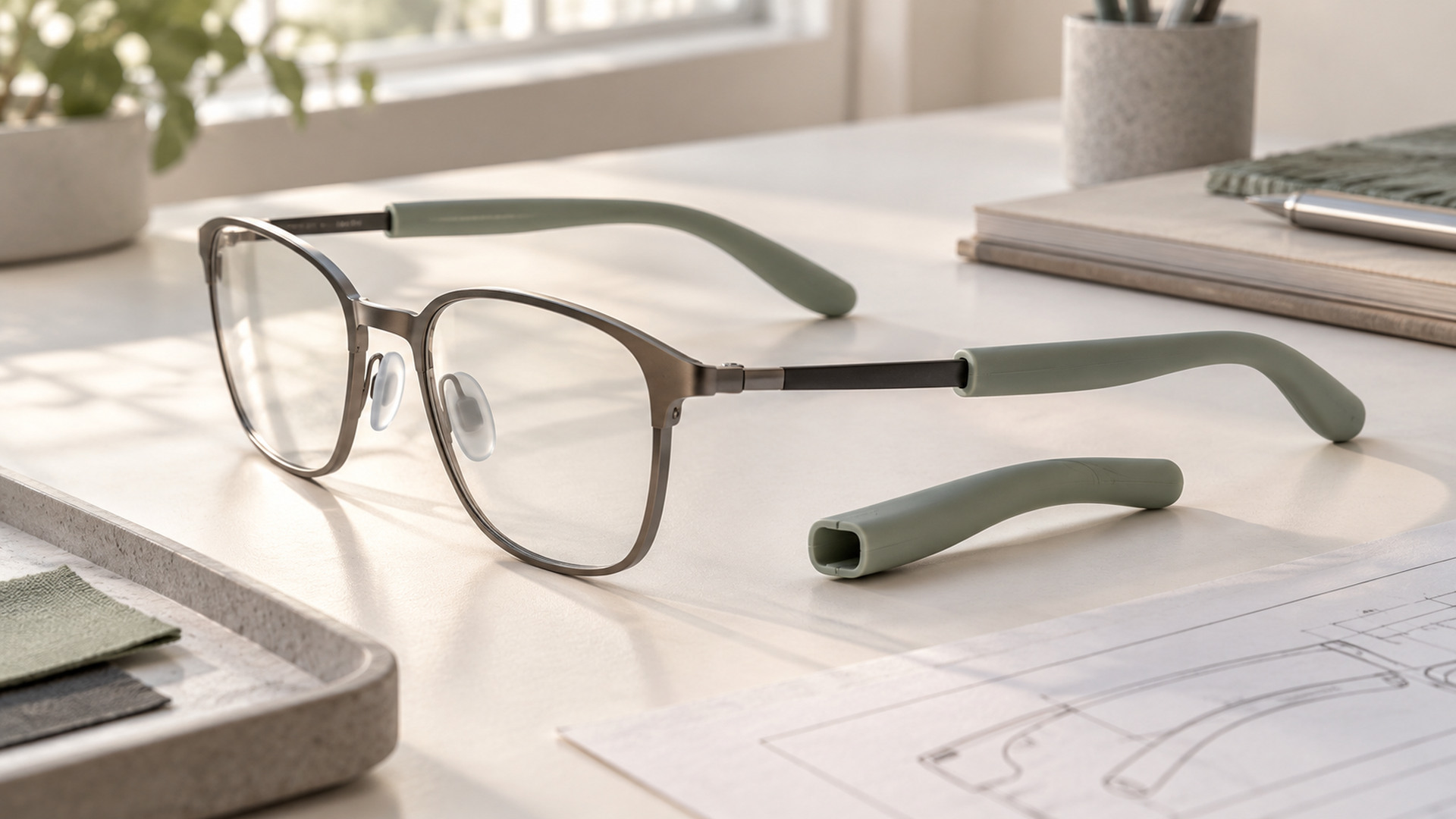
How can wearable silicone parts balance comfort, retention and skin-contact requirements?
A wearable silicone part faces a triangle of competing demands: it must be soft enough to wear for hours, grippy enough not to slide, and inert enough against skin that it does not irritate, trap sweat or react with sunscreen. Make it too soft and it stretches loose and falls off. Make it too firm and it digs in. Pick the wrong finish and it traps heat and dirt.
For product teams designing fitness bands, facial light-therapy masks, earbuds, medical wearables or pet trackers, the design starts by defining contact duration and use scenario — a 15-minute mask pad has different requirements than an all-day wristband.
Why wearables fail
Wearable silicone parts rarely fail structurally. They fail at the skin interface:
- Irritation from a tacky surface rubbing against skin for hours.
- Sliding because the surface is too smooth or the strap stretches.
- Buildup of sweat, oils and sunscreen in surface texture.
- Retention loss after the material softens with body heat and repeated stretch.
The fix is almost always geometry and surface finish, not a softer compound.
Design for the contact duration
The longer the skin contact, the more careful the spec:
- Short contact (minutes): ear tips, mask seals, grip sleeves. Can be firmer, more textured.
- Daily wear (hours): wristbands, chest straps. Need a balance of softness and recovery.
- Extended wear (all day / overnight): medical or continuous-monitoring pads. Need low-irritation materials, breathable geometry and easy cleaning.
Two checks matter:
- Use the real contact media and realistic exposure sequence in validation (sweat, sunscreen, cleaners).
- Inspect both appearance and functional change after exposure.
Comfort versus retention
The band must hold the device still, but not clamp. The design levers are:
- Cross-section shape. A rounded, tapered edge distributes pressure; a sharp edge digs in.
- Durometer. Softer against skin, firmer where retention is needed.
- Surface texture. A subtle matte finish is grippy but less irritating than a glossy one.
- Local thickness. Thin where it flexes, slightly thicker where retention matters.
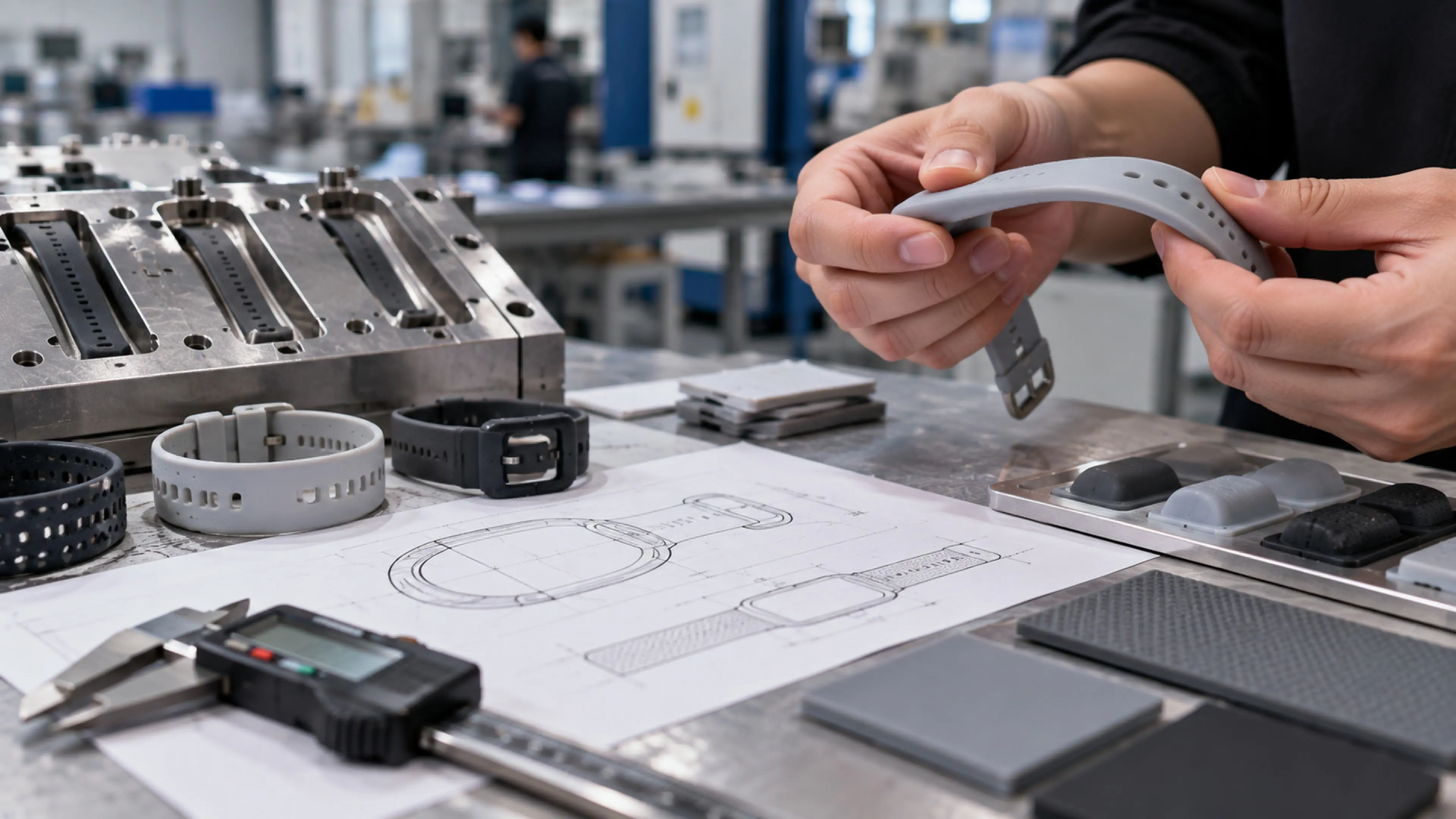
Turn the requirement into an acceptance test
"Comfortable" is not measurable. Convert it into:
- A controlled reference — a wearable sample approved for feel and retention.
- Critical characteristics — strap dimensions, retention force against skin, surface roughness.
- A test condition — after sweat, sunscreen, cleaning and a realistic wear cycle.
- An acceptance rule — no irritation change, no slip under use, surface unchanged after cleaning.
- A revision record — which material lot and finish the approval covers.
Compare options by trade-off
A softer, smoother wearable feels nicer out of the box but traps heat and loses grip after sweat. A textured, firmer one retains better but may irritate on long wear. The right balance depends on the contact duration.
Validate with real contact media
Test against actual sweat, skin oils and the sunscreen or cosmetics the wearer will use. A material that looks inert in a lab can bloom or discolor after weeks against sunscreen.
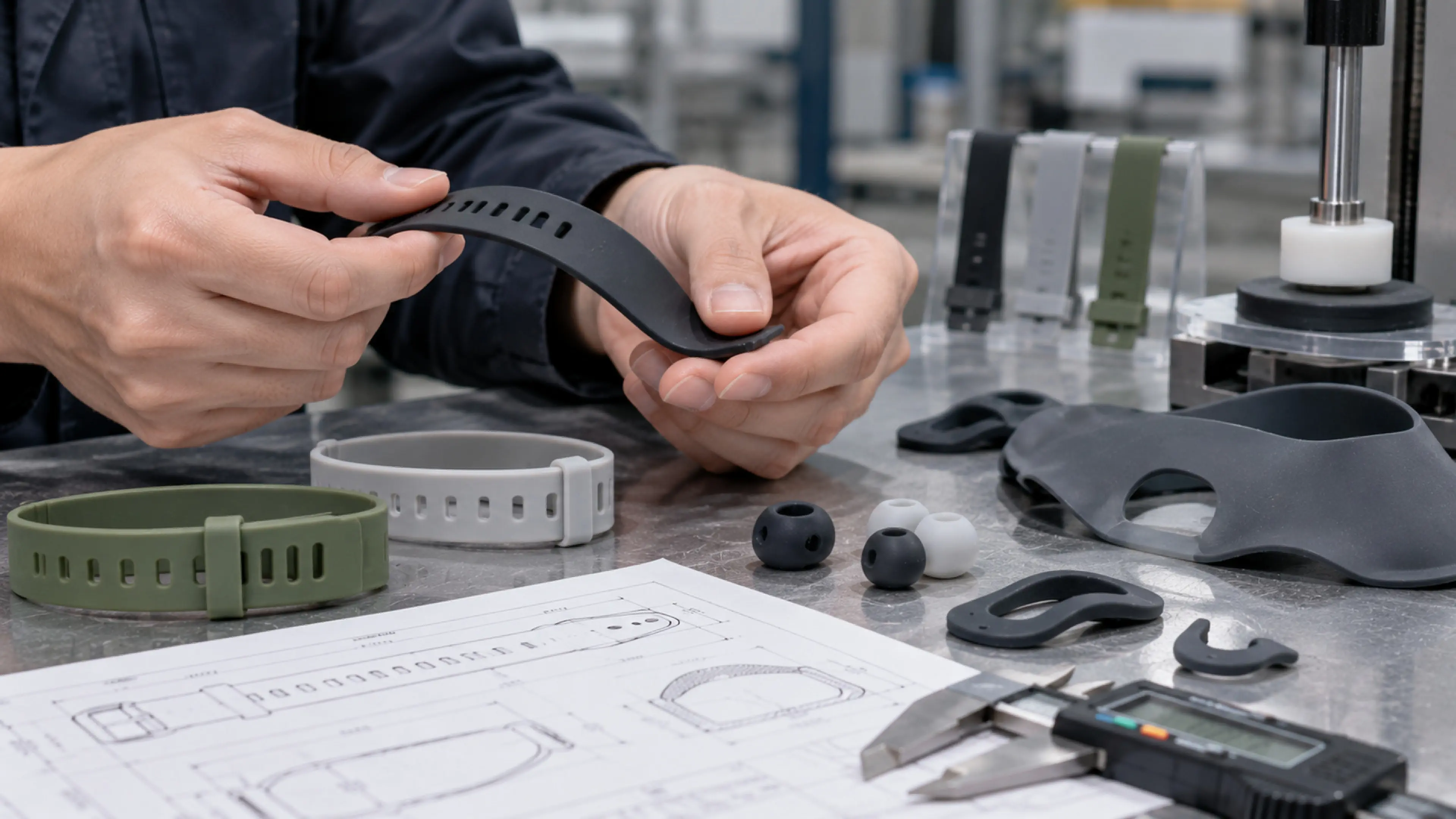
What to prepare before the RFQ
- Where on the body the wearable sits and for how long.
- The device weight the strap or pad must retain.
- Whether the user applies sunscreen, oils or cosmetics.
- Cleaning method (wipes, soap, machine wash).
- Material contact expectations (skin-safe, biocompatible if relevant).
- Target market and regulatory context.
If wear duration is not yet defined, say so — it changes the material grade.
Questions to ask the supplier
- What material grade do you recommend for skin contact over this duration?
- How do you test sweat and sunscreen resistance?
- What surface finish balances grip and comfort?
- How is retention verified after repeated stretch?
- How do you prevent irritation at the strap edges?
Generic "skin-safe silicone" answers without exposure testing are not enough.
Conclusion
Wearable silicone is designed around the body it touches. Define how long and where it contacts skin, choose a durometer and finish that balance comfort with retention, and validate against real sweat, sunscreen and cleaning. A band that feels good for five minutes can irritate or slip after eight hours — design and test for the full wear time.