How should actuation force, travel and return be specified for silicone keypads?
A silicone keypad that feels right in your hand on a Friday can feel different on Monday, and completely different in production. "Nice click" or "firm but soft" are not specifications — they are impressions that drift between samples, between people and between molding runs. The only way to lock button feel is to convert it into numbers: actuation force, travel distance, return force and tactile consistency, measured with a defined method.
For product teams designing remote controls, medical devices, industrial controls or wearables with silicone keypads, the task is translating button feel into engineering acceptance criteria that can be inspected on the production line.
What defines keypad feel
Three things control how a silicone button feels:
- Actuation force. How hard you press to register the switch.
- Travel. How far the button moves before bottoming out.
- Return. How forcefully the button comes back, and whether it returns cleanly every time.
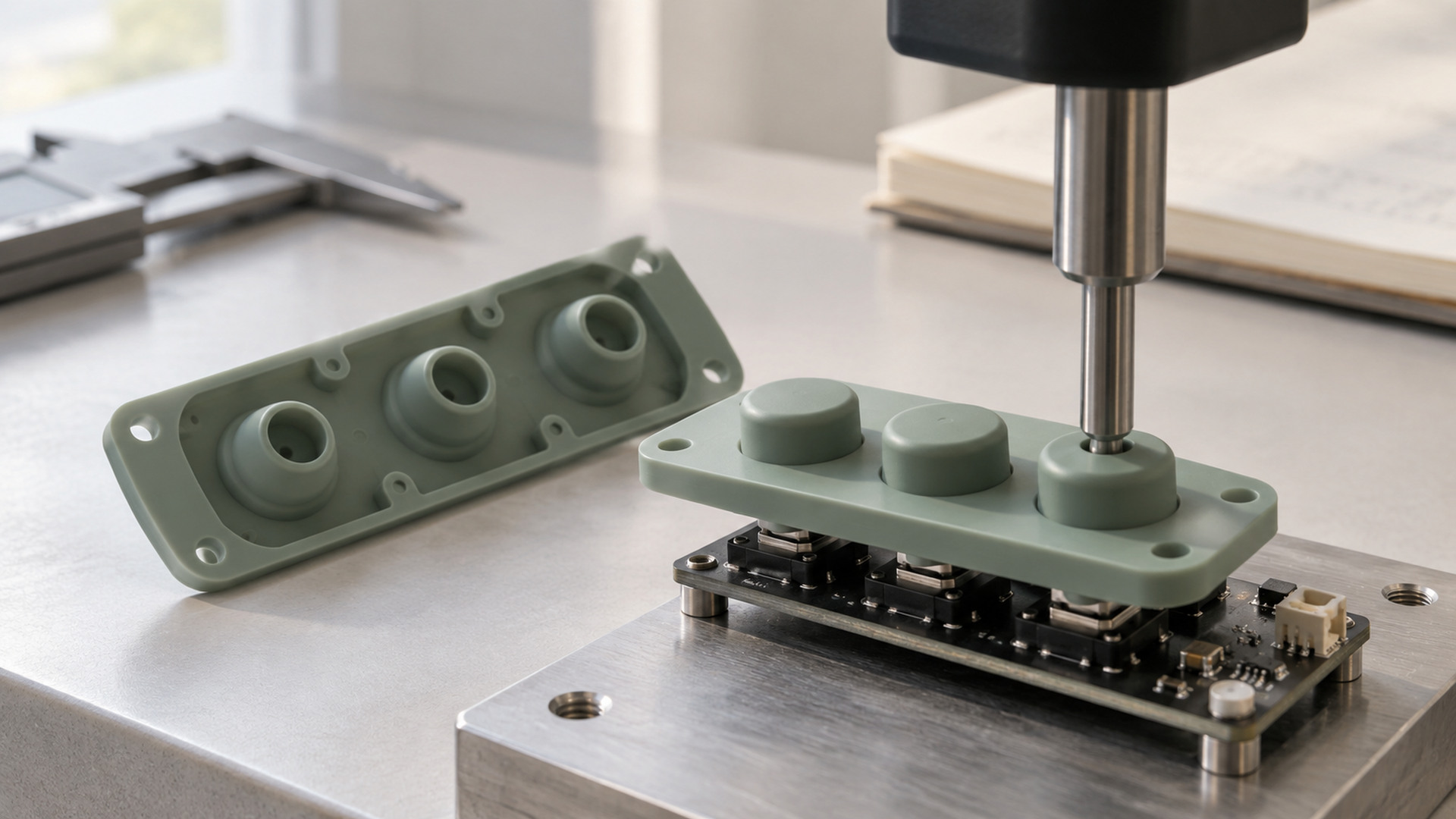
These are set by the silicone hardness, the web thickness around the button, the vent height of the dome, and the geometry of the plunger that hits the PCB switch.
Why "soft" is not a spec
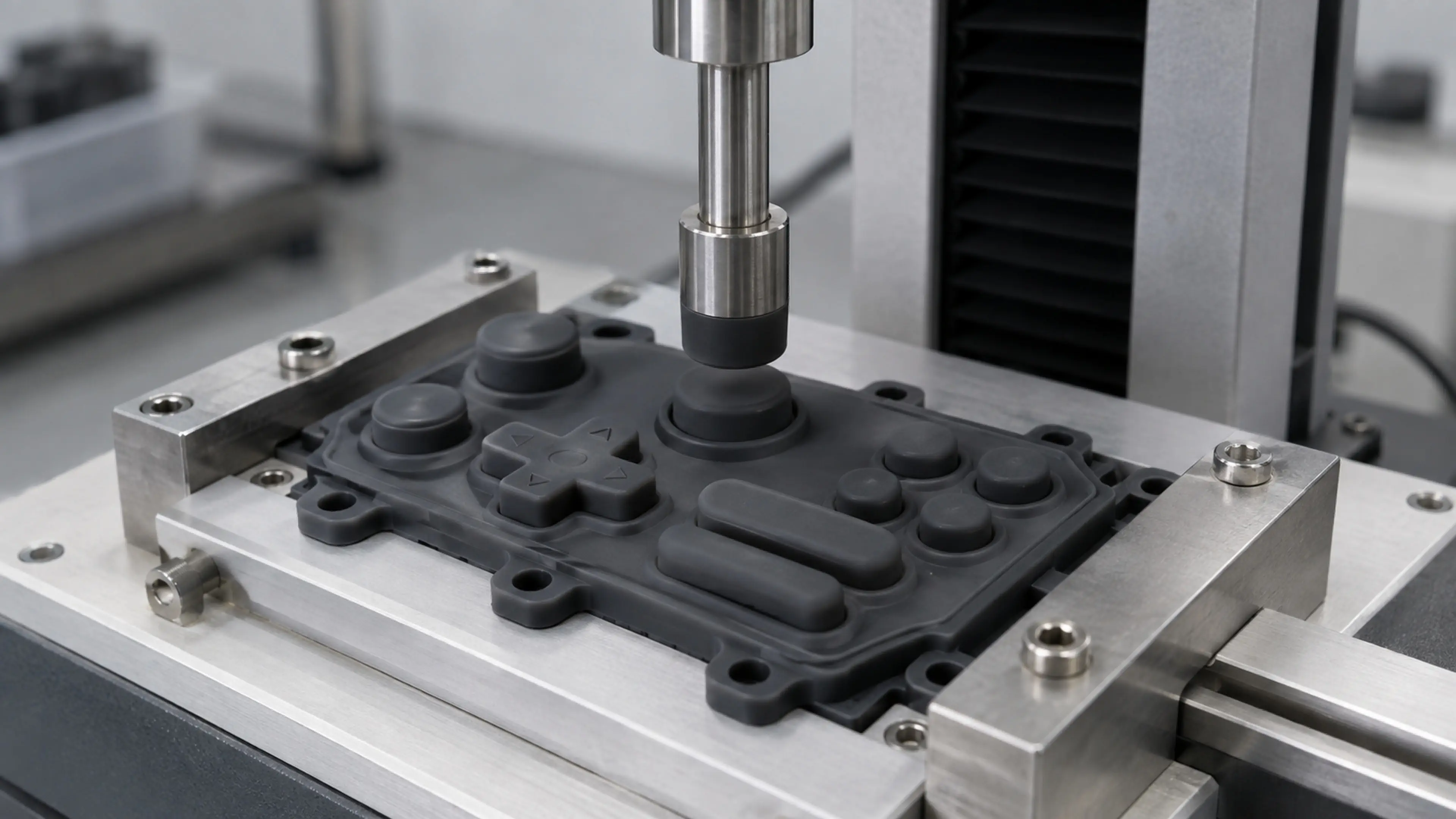
A 50 Shore A keypad can be made to feel firm or mushy depending on web thickness. A 30A keypad can feel crisp if the dome geometry is right. Hardness alone does not determine feel — it is the combination of material and geometry that matters.
Two checks are worth writing into the drawing:
- Define force, travel, return and tactile consistency using a documented test method and a reference sample.
- Check how web thickness and dome geometry interact with the chosen material hardness.
Specify the numbers
A useful keypad spec includes:
- Actuation force range — the force to register the switch, with an upper and lower limit.
- Travel distance — the button movement before the dome inverts or bottoms out.
- Return force — how firmly the button comes back.
- Tactile ratio — the ratio between actuation force and return force (the "clickiness").
- Durability — number of actuations before force decays.
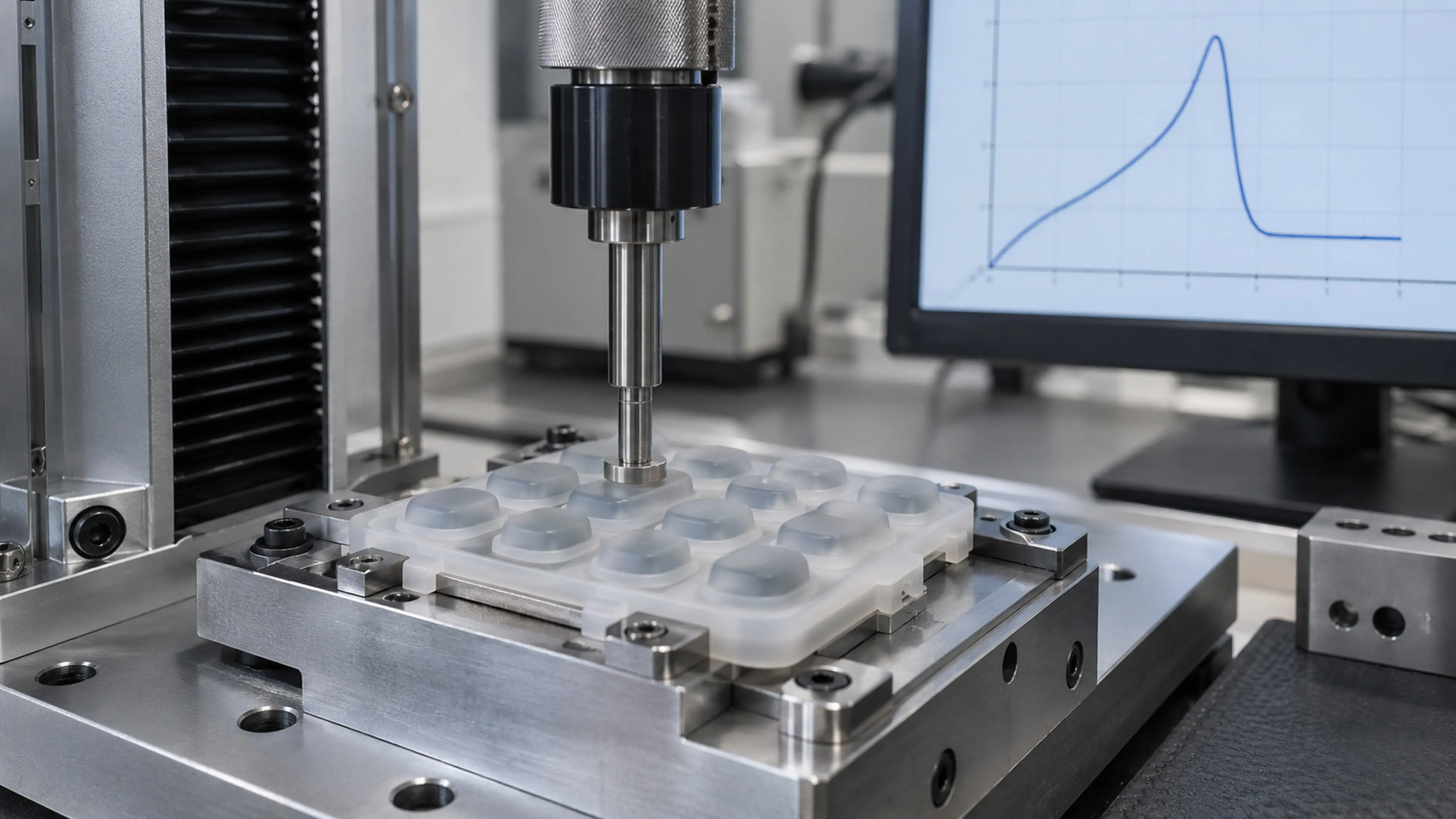
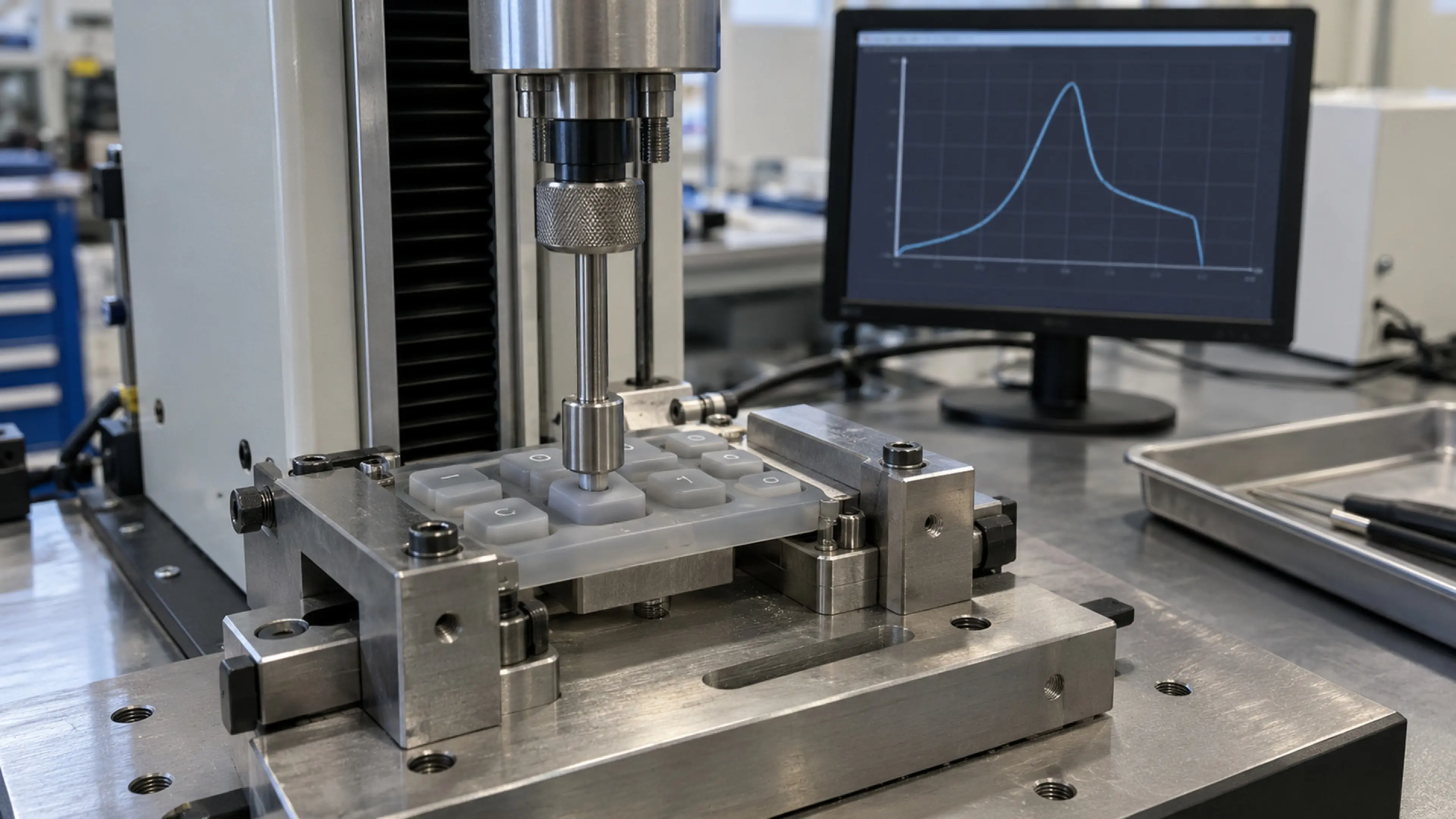
These are measured on a force-displacement tester, not by finger.
Turn feel into an acceptance standard
"Good feel" is not inspectable. Convert it into:
- A controlled reference — an approved keypad sample that feels right.
- Critical characteristics — actuation force, travel, return force ranges.
- A test condition — how the button is pressed, at what speed, on which fixture.
- An acceptance rule — measured values within the range; reference sample matches.
- A revision record — which web thickness and material lot the approval covers.
Compare options by trade-off
A firmer keypad costs less to press consistently but may feel harsh. A softer keypad feels premium but can require tighter web tolerances and may bottom out on thick PCB switches. Choose the force range first, then tune web thickness and hardness to hit it.
Validate before production
Measure force-travel curves on production-representative samples, not just on a hand-finished prototype. The curve shape — not just the peak force — defines the feel.
What to prepare before the RFQ
- CAD of the keypad and the PCB switch it actuates.
- The target actuation force and travel, or a reference keypad to copy.
- Number of buttons and any size variation.
- Material hardness preference, if known.
- Expected actuation life (number of presses).
- Backlighting or decoration requirements.
- Target volume and regulatory context.
If you have a reference keypad you like, send it — it is more useful than a written description.
Questions to ask the supplier
- What actuation force and travel can this keypad design achieve?
- How do you measure force-travel in sample approval?
- What web thickness and hardness are assumed?
- How does feel change over the rated number of actuations?
- How is tactile consistency checked across buttons?
Generic "good tactile feel" answers without measured ranges are not enough.
Conclusion
Button feel is engineered, not hoped for. Measure actuation force, travel and return with a force-displacement tester, define the ranges on the drawing, and tune web thickness and hardness together. A reference sample plus a numeric spec is the only way to reproduce the feel you approved across production runs.