How do I calculate landed cost beyond the molded part price?
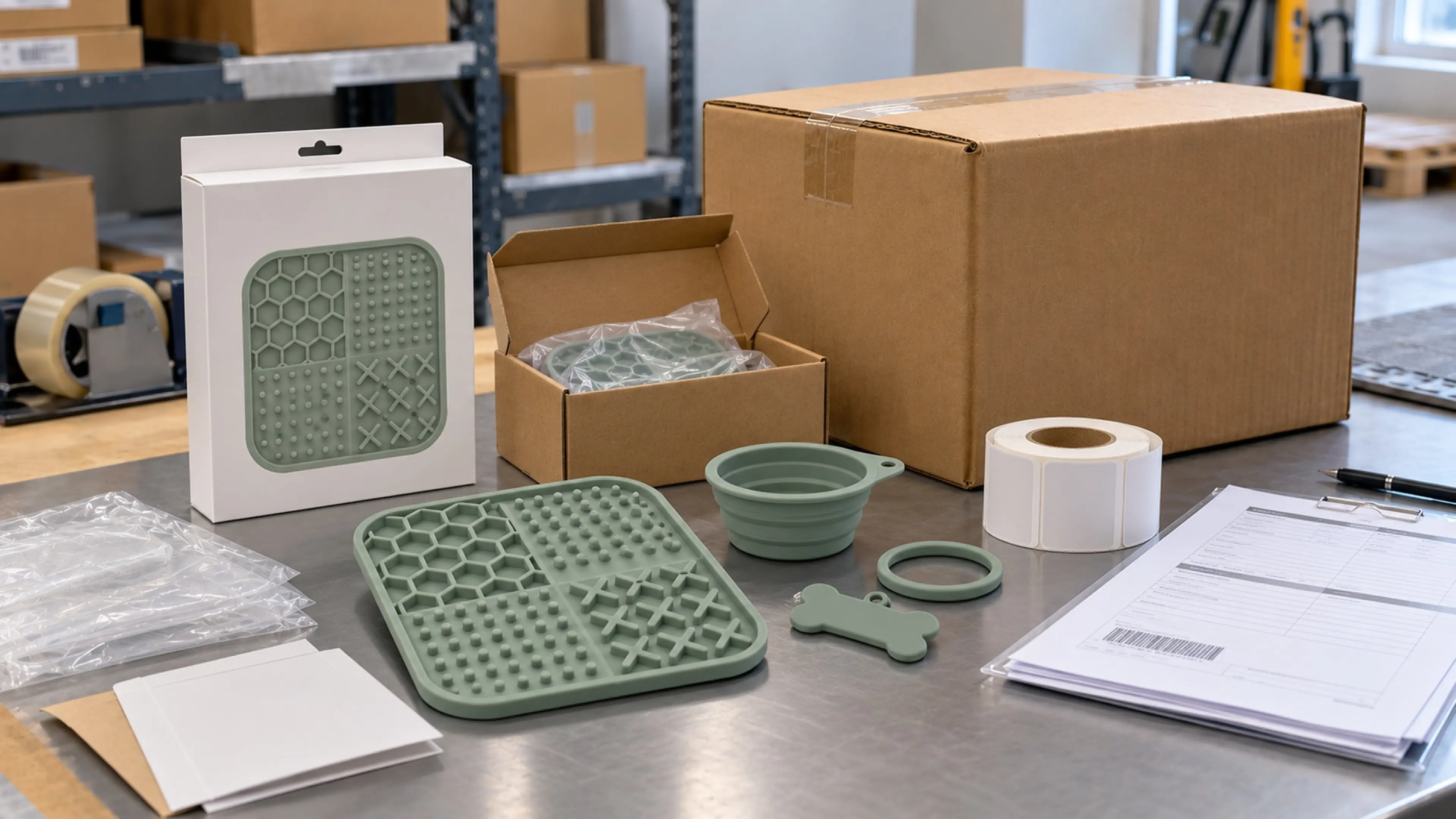
The molded part price is the number everyone quotes, and it is rarely the number you actually pay. A custom silicone product travels through tooling, packaging, inspection, freight, and customs before it reaches your warehouse, and each of those stages adds a line that a unit price does not show. Comparing factories on the per-part number alone is comparing partial sums.
The buyer's job is to stop treating unit price as total cost. Landed cost is the build-up from factory gate to your shelf, and once you itemize it, the cheapest quote often stops looking cheapest.
Build the cost up line by line
A useful landed-cost model starts at the molded part and adds everything between factory and you:
- Molded unit price. The base, for a defined material grade and cavity count.
- Tooling. One-off mold cost, or the portion amortized into each unit.
- Secondary work. Assembly, kitting, logo printing, or decoration.
- Packaging. Retail box, bag, labels, and any custom print run.
- Quality and compliance. Inspection, outgoing QC, and testing or certification for the destination market.
- Freight. From factory to port or airport, then international carriage to you.
- Duties and clearance. Import duty and customs handling, which depend on the product classification and Incoterm.
- Failure reserve. Expected rework, rejects, or a first-run learning curve.
Two quotes that differ on unit price can land at nearly the same door cost once these are added — or diverge further.
Freight is where silicone surprises people
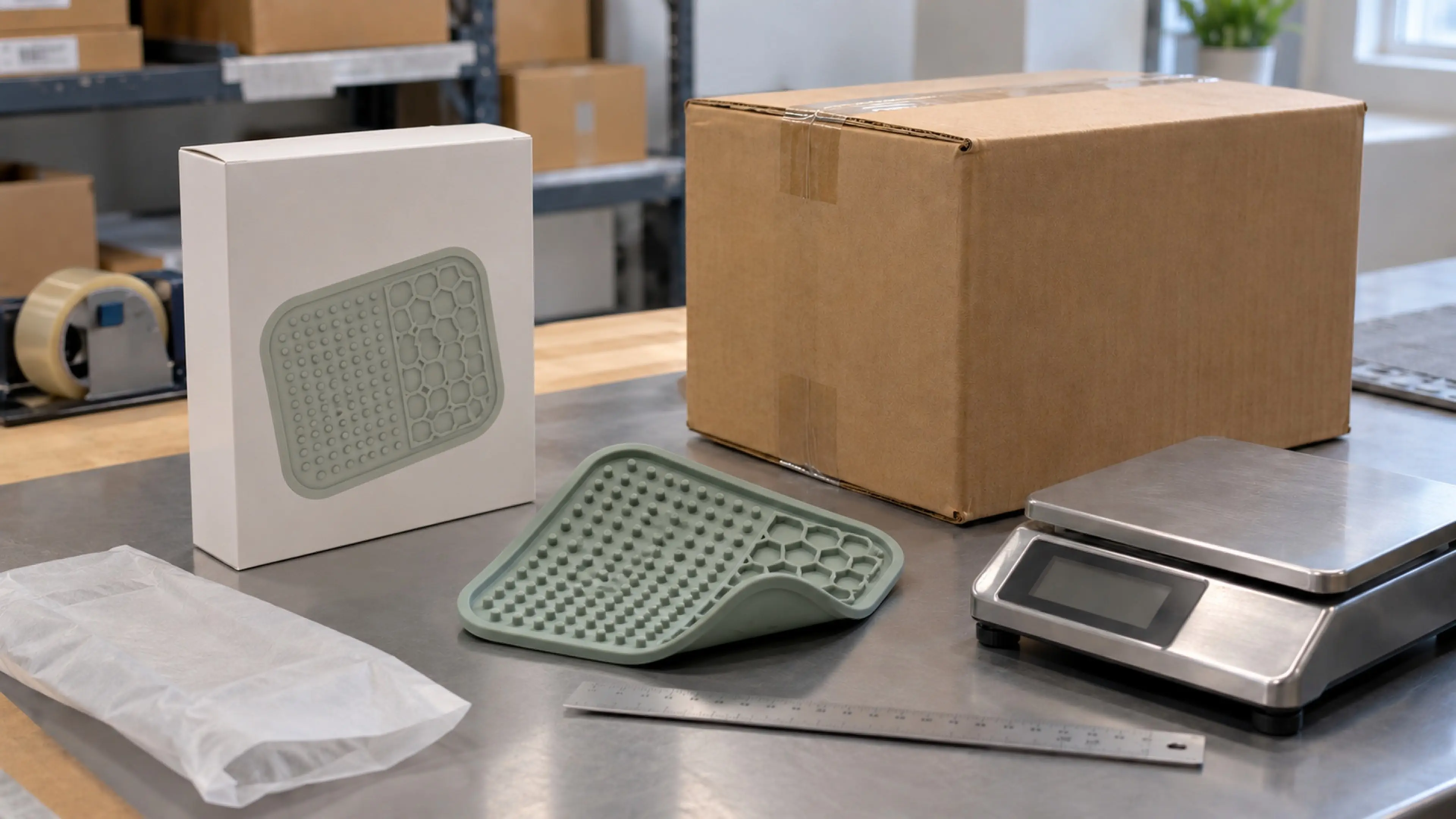
Silicone parts are light but often bulky, and freight is commonly charged on whichever is larger: actual weight or volumetric (dimensional) weight. A squishy, cavity-filled product that weighs little but fills a big box can ship as if it were far heavier. That makes packaging density a real cost lever, not a cosmetic one.
Ask the supplier for the packed carton dimensions and how many units per carton, then work out the volumetric weight yourself rather than accepting a freight line you cannot check.
Incoterms decide who pays what
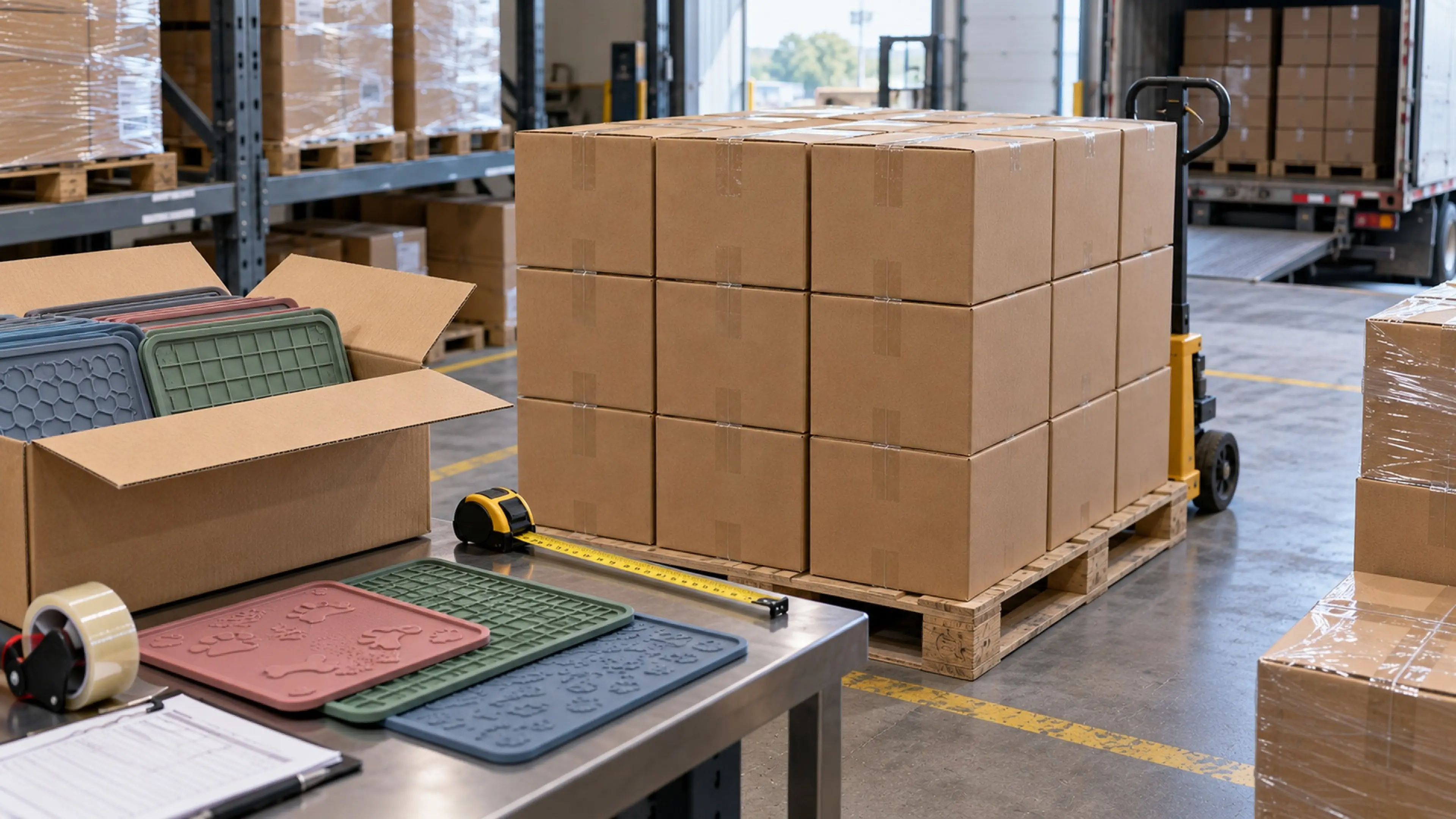
The price a supplier quotes is tied to a delivery term, and that term quietly moves cost between you. Under one Incoterm the factory handles export clearance and main carriage; under another, you do. The ICC Incoterms rules define exactly where responsibility and cost transfer, so "FOB Shanghai" and "DDP to your warehouse" are not the same quote even with an identical molded part.
State the Incoterm you want when you request a quote, and price it on that basis. A CE-marking or destination-market compliance note applies here too: whether the finished product actually needs marking depends on which EU legislation covers it, not just on selling into Europe — and that testing cost belongs in the landed model, not as an afterthought.
Compare the scope, not the headline number
When you have two landed-cost builds, compare them on the same scope: material grade, tooling, cavity count, inspection, packaging, and delivery term. A cheaper route wins when the requirement is simple and risk is controlled. A more expensive route earns its place when it removes an assembly step, tightens repeatability, or protects a critical interface. The question is always what cost is being removed and what risk is being traded.
If a quote folds in tooling validation, defined inspection, packaging, and traceability, it is not directly comparable with one that only covers molded parts. Ask each supplier to itemize exclusions before you choose on unit price.
Turn vague language into an acceptance standard
Landed-cost accuracy depends on defined scope. Words like "premium packaging," "food-safe," or "good quality" let a supplier price the cheapest version while you assume the good one. Convert the requirement into something priced and inspected:
- A controlled reference — approved sample, color standard, and signed drawing.
- Critical characteristics — the dimensions, seal, appearance zone, or function that govern acceptance.
- A test condition — how parts are checked, aged, or assembled.
- An acceptance rule — what passes, what fails, cosmetic versus functional.
- A revision record — the drawing, sample, and packaging version the price assumes.
What to prepare before you ask for the landed cost
Before requesting a door-to-door number, gather as much as the project allows:
- CAD or 2D drawing and the defined material grade.
- Packaging, assembly, kitting, and labeling scope.
- Target market and the compliance that actually applies.
- Packed carton estimate and units per carton for freight math.
- Preferred Incoterm and destination.
- Launch quantity and repeat-order forecast.
If something is still open, ask the supplier to price the assumption rather than guess silently.
Questions to ask the supplier
- What is included in the unit price, and what is billed separately?
- What Incoterm are you quoting on, and who pays freight and duties?
- How many units per export carton, and what are the carton dimensions?
- How will the part ship — by actual weight or volumetric weight?
- What compliance or testing cost applies to my destination market?
- What is the expected first-run rejection rate?
Credible answers break the number into named lines. "Best price," "FDA silicone," or "100% guaranteed" does not tell you what actually lands on your dock.
Conclusion
A landed cost is built up, not quoted. Start from the molded part, add tooling, secondary work, packaging, QC, freight — remembering bulky silicone may bill by volumetric weight — and duties under your agreed Incoterm, then hold a small reserve for first-run failure. Only then is the comparison fair. Unit price is useful; total door cost is what your margin is really built on.