How should a design consultancy hand off a silicone project for manufacturing?
A beautiful render handed to a factory is not a handoff. The moment a silicone project moves from design consultancy to manufacturer, the product changes owner in practice, and what travels with it decides whether tooling starts smoothly or stalls in clarification emails. The handoff that works is the one where CAD revision, critical characteristics, and responsibility are all unambiguous.
This matters most when a consultancy designed the part for aesthetics and ergonomics but has not yet accounted for how silicone actually molds. The gap between "looks right" and "can be made" is exactly where handoffs fail — and it is the job of the handoff package to close it before steel is cut.
What the handoff package should contain
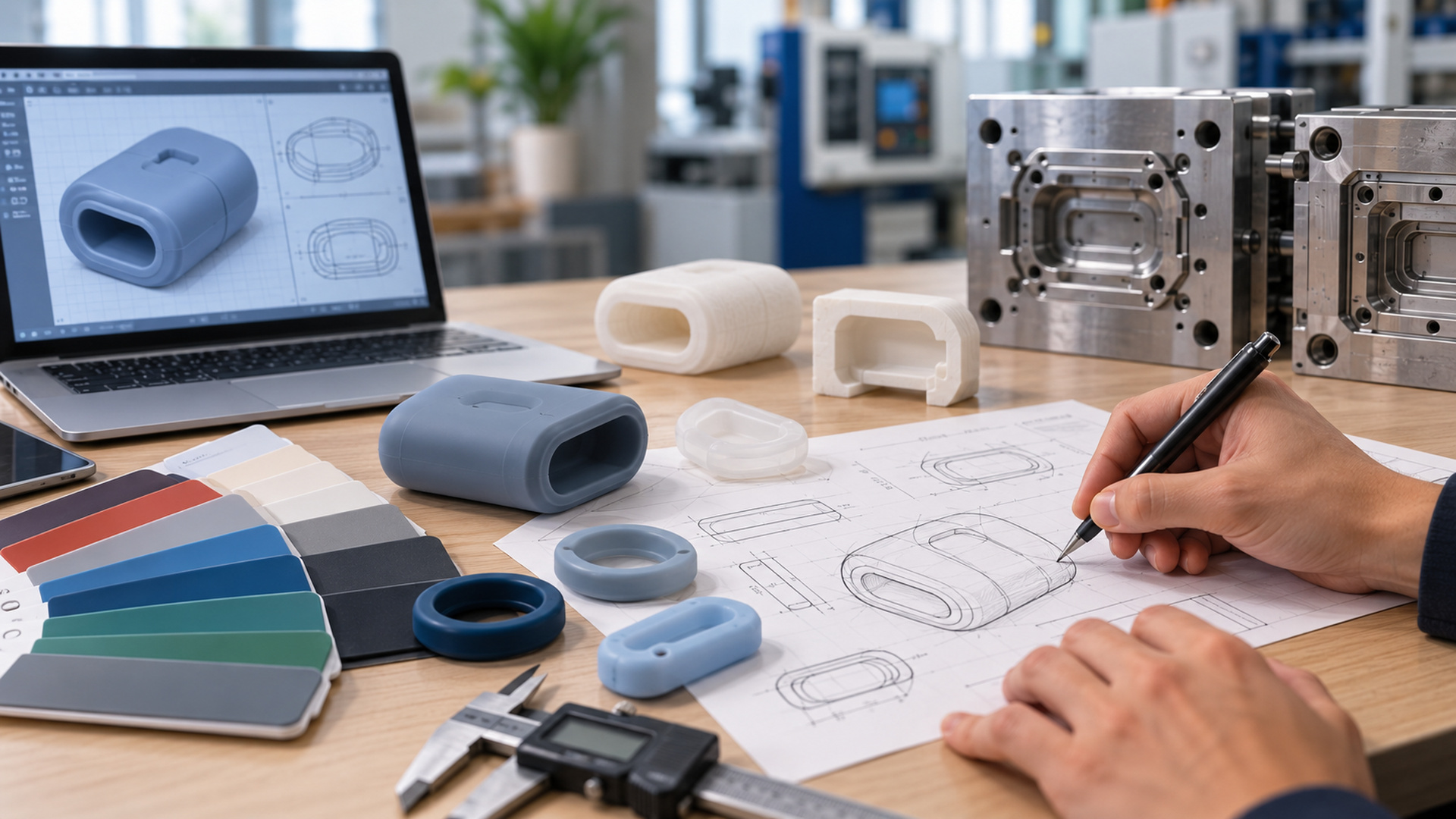
A manufacturer can act on a package, not a folder of renders. At minimum the handoff should include:
- The correct CAD revision. A dated, versioned 3D model — not the design-refinement file with unmerged edits.
- Dimensioned 2D drawings. With tolerances, not just geometry. Silicone cannot hold tight plastic-style tolerances everywhere, so dimensions need intent.
- Critical-to-quality callouts. Which dimensions, forces, seals, or appearance zones actually govern function, and which are cosmetic.
- Material and color standard. The intended durometer, material family, and a real color reference — Pantone or a physical chip, not a screen photo.
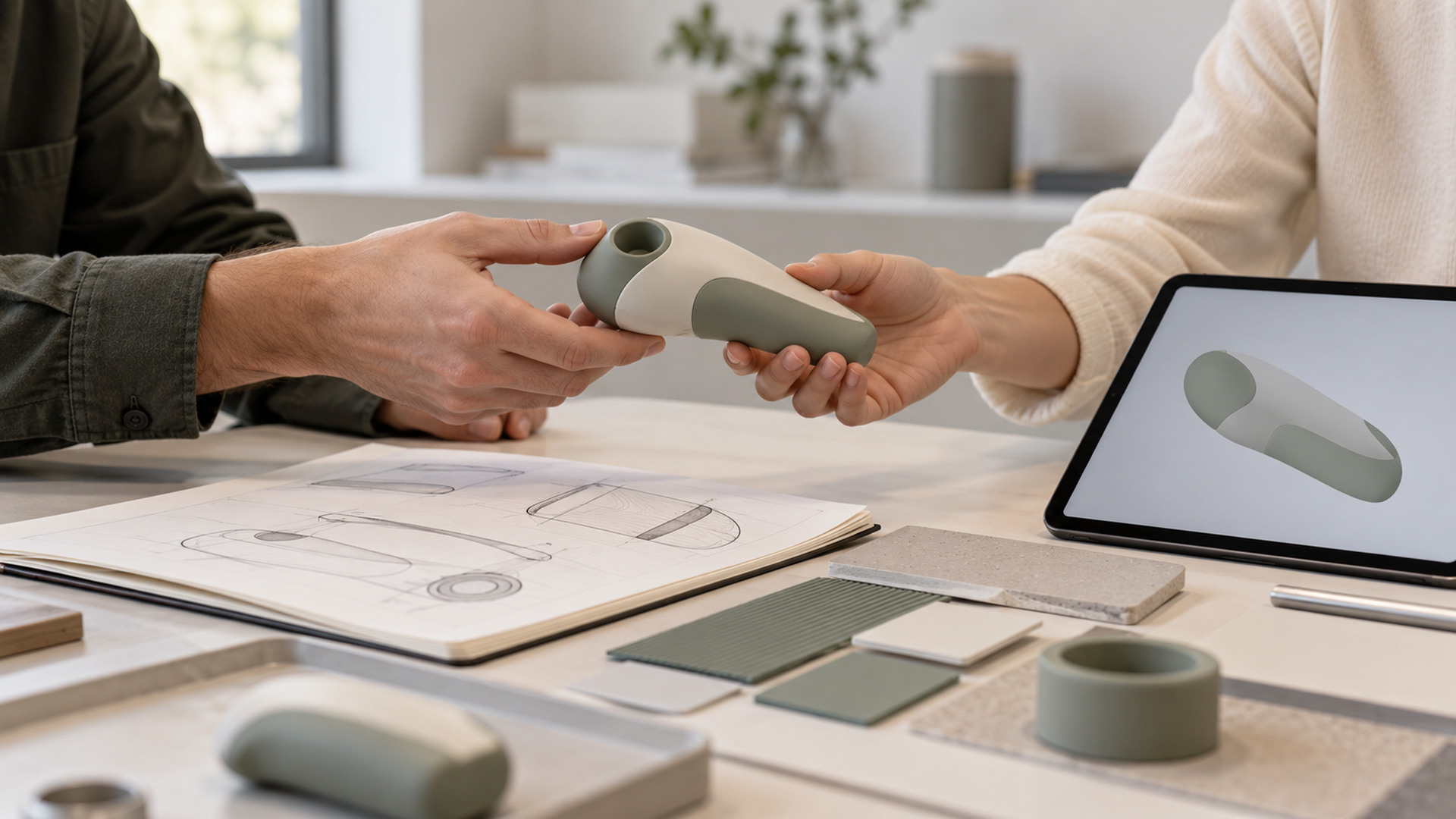
- An approved sample. A representative physical reference of the look and feel, where one exists.
- Open assumptions. Anything still undecided, and who owns closing it.
Handing off a render without a dimensioned drawing means the manufacturer invents the tolerances for you.
Define the function before the solution
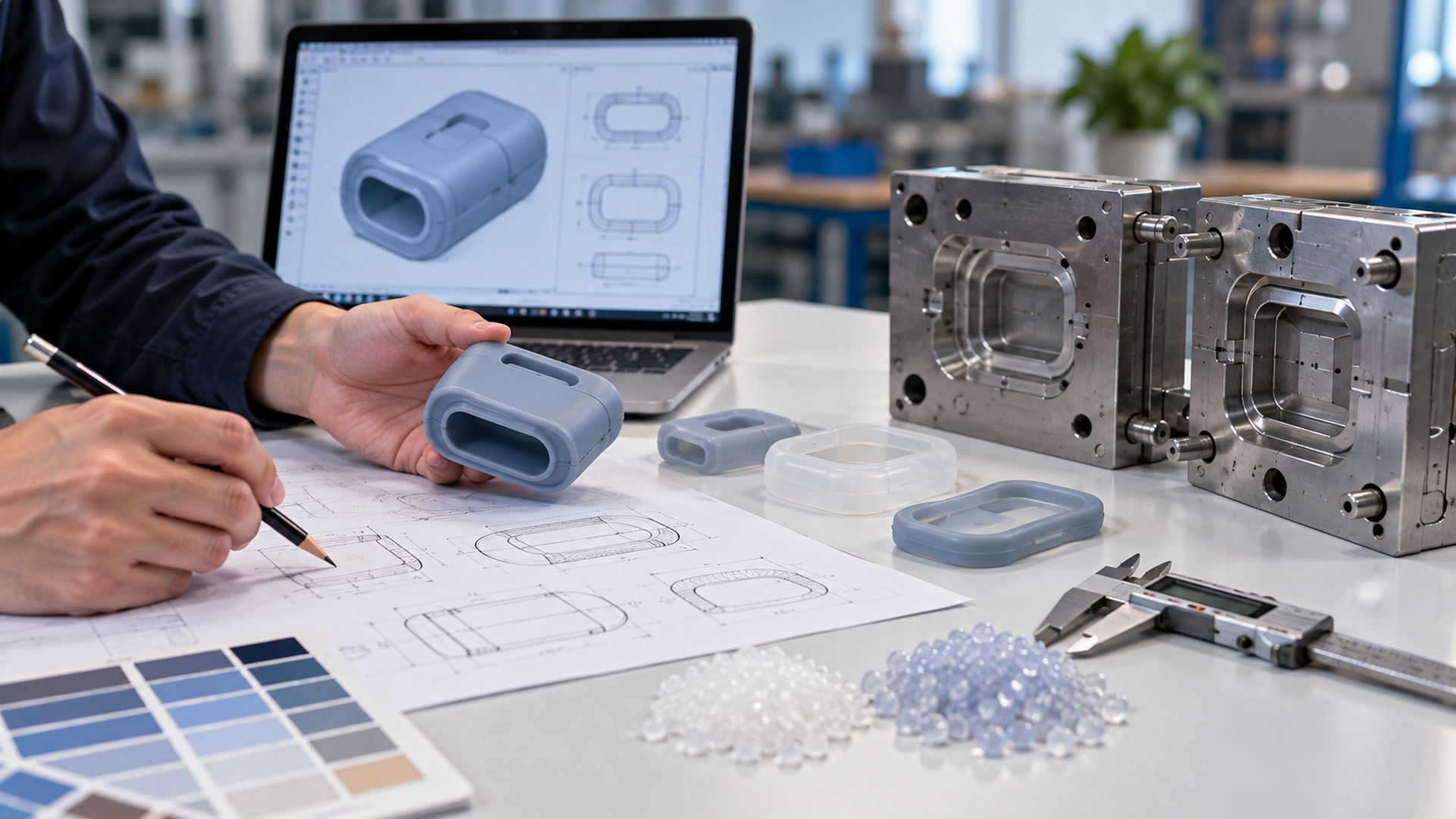
A common handoff mistake is to specify the material and process before specifying what the part must do. If the consultancy has already chosen "LSR, 50A, overmolded onto polycarbonate" without documenting why, the factory inherits a decision it cannot easily challenge. Better to hand over the functional requirement — seal against X, grip Y, survive Z — and let DFM pressure-test the chosen route.
Use a representative sample and written acceptance criteria so there is one agreed answer to "does this match?" rather than three people interpreting a photo differently.
Split who owns DFM
Design consultancies and manufacturers each own half the truth. The consultancy knows the product intent and the brand experience; the factory knows what the mold can actually do. The handoff should name who does what:
- The consultancy owns the design intent and approves any change that alters look, feel, or ergonomics.
- The manufacturer owns DFM recommendations — draft, radii, wall thickness, gate, parting line — and flags where the design will not mold cleanly.
- Someone owns the response loop: who replies to a factory's DFM question and how fast.
When that split is undocumented, the factory either silently deviates to make the part moldable, or stalls waiting for a decision that nobody knows they are supposed to make.
Turn vague language into an acceptance standard
Handoffs fail on subjective words. "Soft," "premium feel," "clean parting line," or "food-safe" read fine in a portfolio but cannot be inspected on a line. Convert intent into something the factory can build and check:
- A controlled reference — approved sample, color standard, and signed CAD/2D drawing.
- Critical characteristics — the dimensions, force, retention, appearance zone, or seal condition that matter.
- A test condition — how the part is loaded, aged, cleaned, or assembled.
- An acceptance rule — what passes, what fails, cosmetic versus functional.
- A revision record — the exact drawing, sample, and material version the handoff covers.
This is especially important when the prototype was 3D-printed or hand-cast. It proves the form; it does not prove the molded result.
Validate the handoff, do not just transfer files
Before the factory commits a quote or cuts steel, run a design review where the factory states back the proposed process, material family, tooling approach, and inspection scope. That is the moment hidden assumptions surface.
For a high-risk feature, expect more than one kind of evidence later. Measure the dimension, but function-test the assembly. Review the material compliance report, but confirm the finished-product plan fits the destination market. A handoff that ends at file transfer is a handoff waiting to be corrected on the mold.
Questions the consultancy should be ready to answer
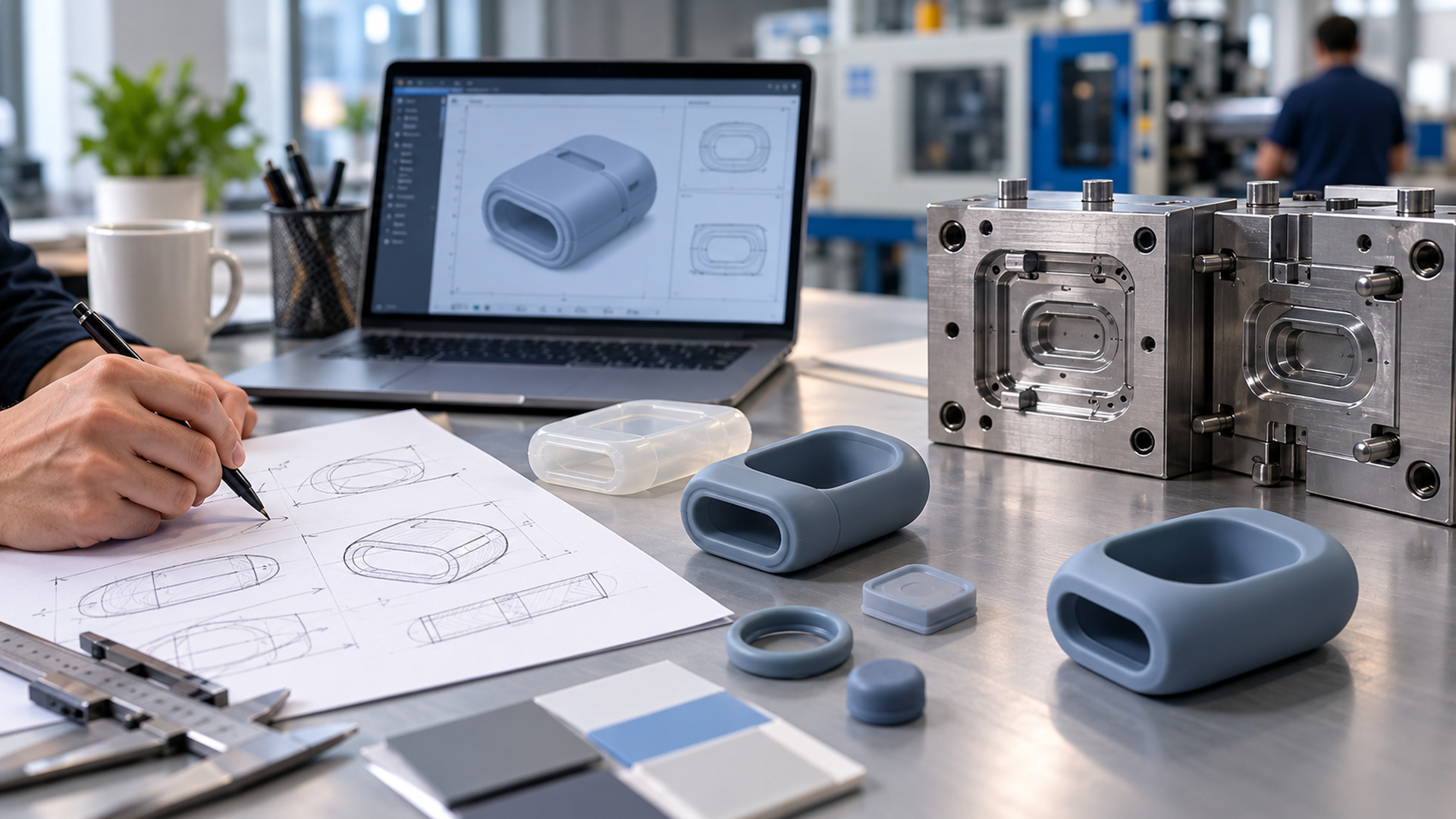
- Which CAD revision and drawing revision does this handoff finalize?
- Which dimensions and features are critical-to-quality versus cosmetic?
- What material grade, durometer, and color reference should the mold target?
- What is the functional requirement, and which design choice is flexible?
- Who approves DFM changes that affect appearance or ergonomics?
- What does an approved sample look like, and how is it stored?
Credible handoffs answer these in writing. "The design is in the CAD, just build it" is what turns a clean transfer into an expensive DFM firefight.
Conclusion
A handoff succeeds when the factory receives a versioned CAD, dimensioned drawings with CTQs, a material and color standard, an approved sample, and a written split of who owns design changes. Define the function first, name who answers the factory's DFM questions, and freeze the revision before steel. Done well, the handoff is a starting line; done badly, it is where the design intent quietly gets negotiated away.