What approval milestones take a silicone product from concept to production?
A silicone product does not go from sketch to shelf in one jump. It moves through a series of approval gates, and the whole point of those gates is to catch a problem while it is still cheap to fix. The most expensive mistake in this timeline is cutting the steel production mold before the design is genuinely frozen.
Each milestone below has a deliverable and a sign-off. If a gate is skipped, the risk does not disappear — it just shows up later, after the mold is machined, when a change means re-cutting steel.
The milestones, in order
| Gate | What is approved | What it costs to change later |
|---|---|---|
| Concept / DFM review | Geometry, material, route, tolerances, cost | Cheap — still on screen |
| Prototype samples | Feel, fit, function, appearance intent | Low — soft tooling or hand-cast |
| Design freeze | The drawing and spec that go to the steel mold | Still cheap, but about to get expensive |
| T1 / first-article samples | Parts from the production mold | Mold corrections, but not yet mass-produced |
| Pilot / first run | Real process, real cycle, real packaging | Small — a controlled first production |
| Mass production | Repeatable supply | Locked in cost and tooling |
The design-freeze gate is the pivot. Before it, changes are drawings. After it, they are mold modifications.
Why prototype approval is not the finish line
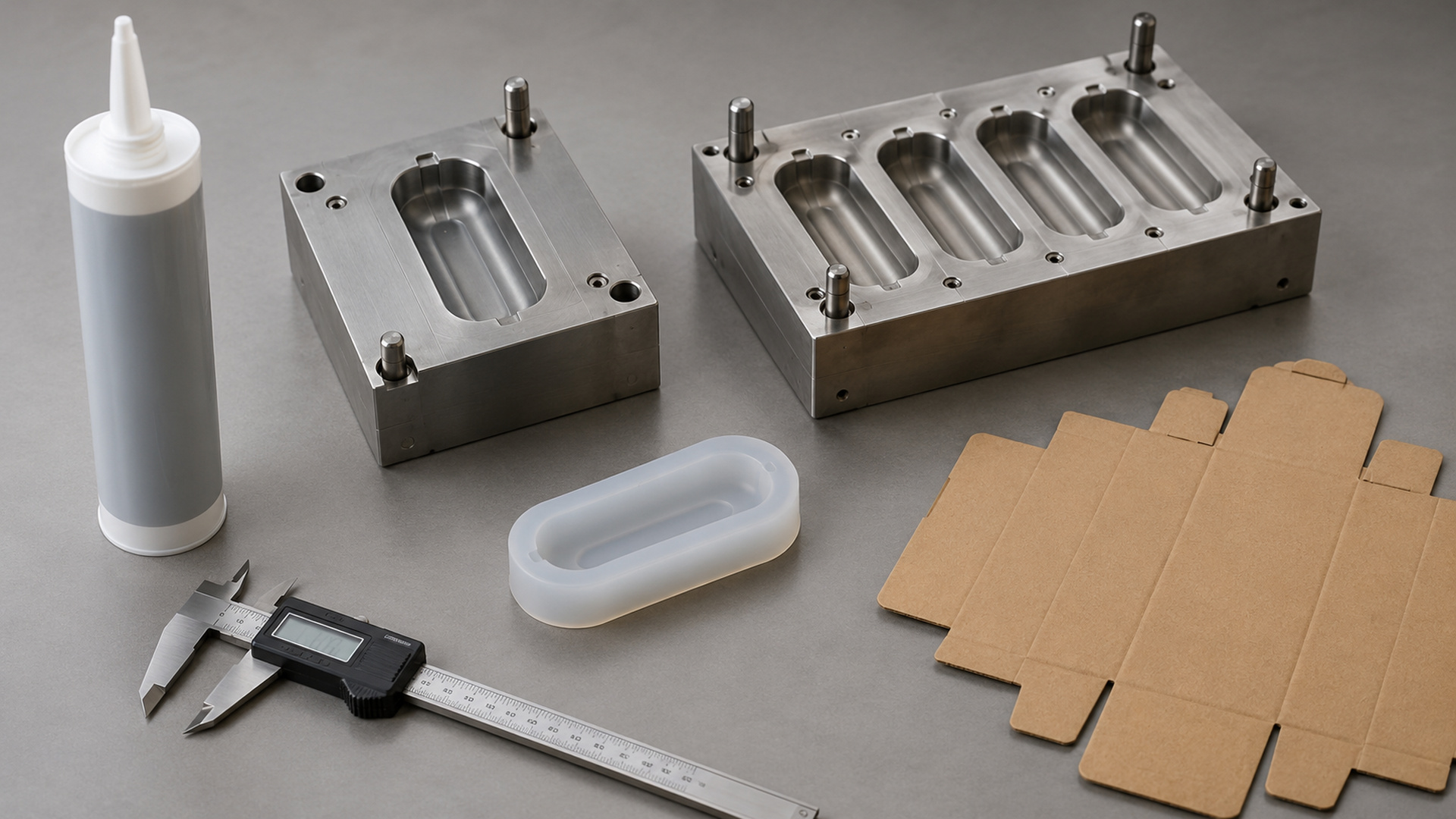
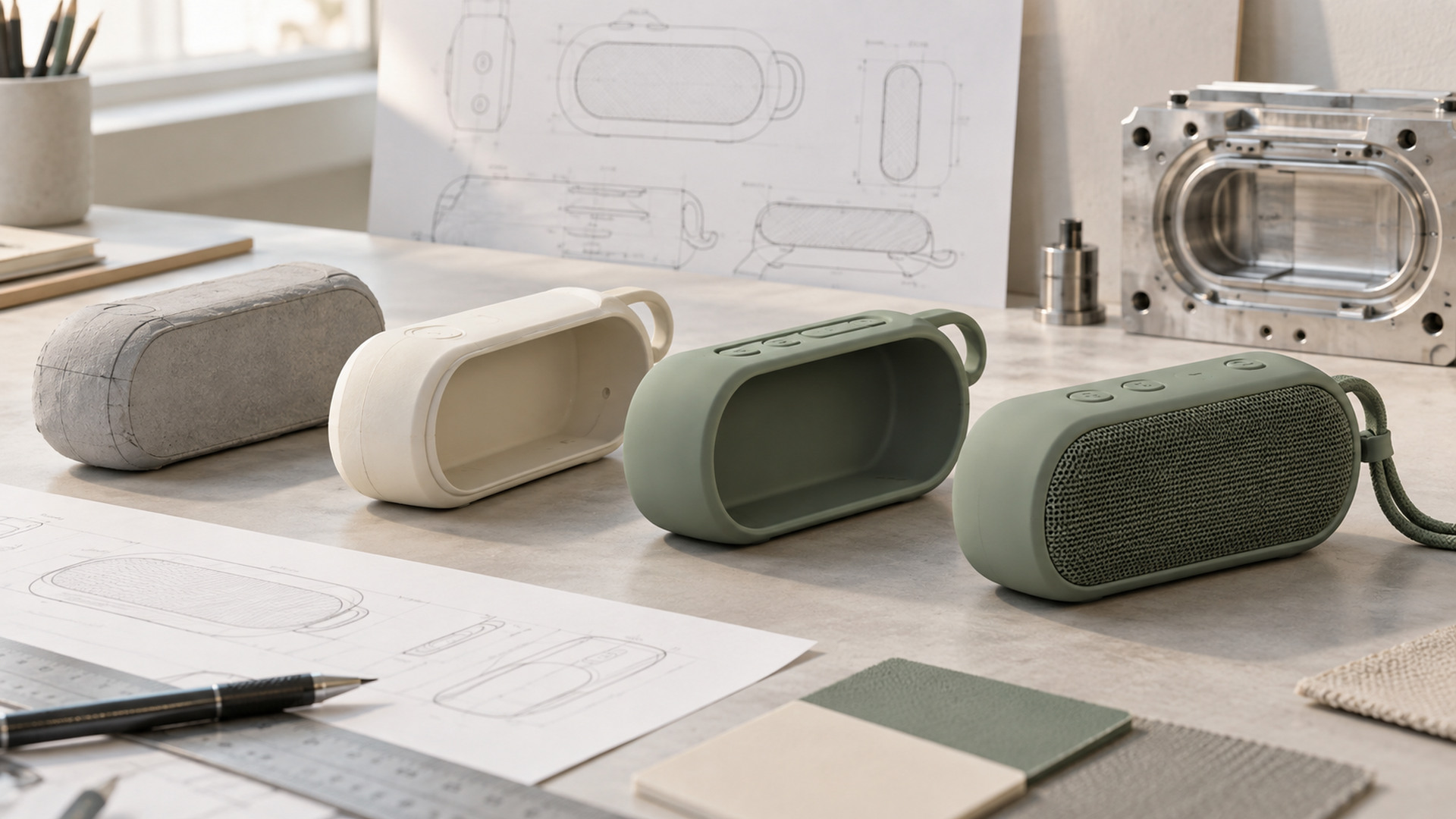
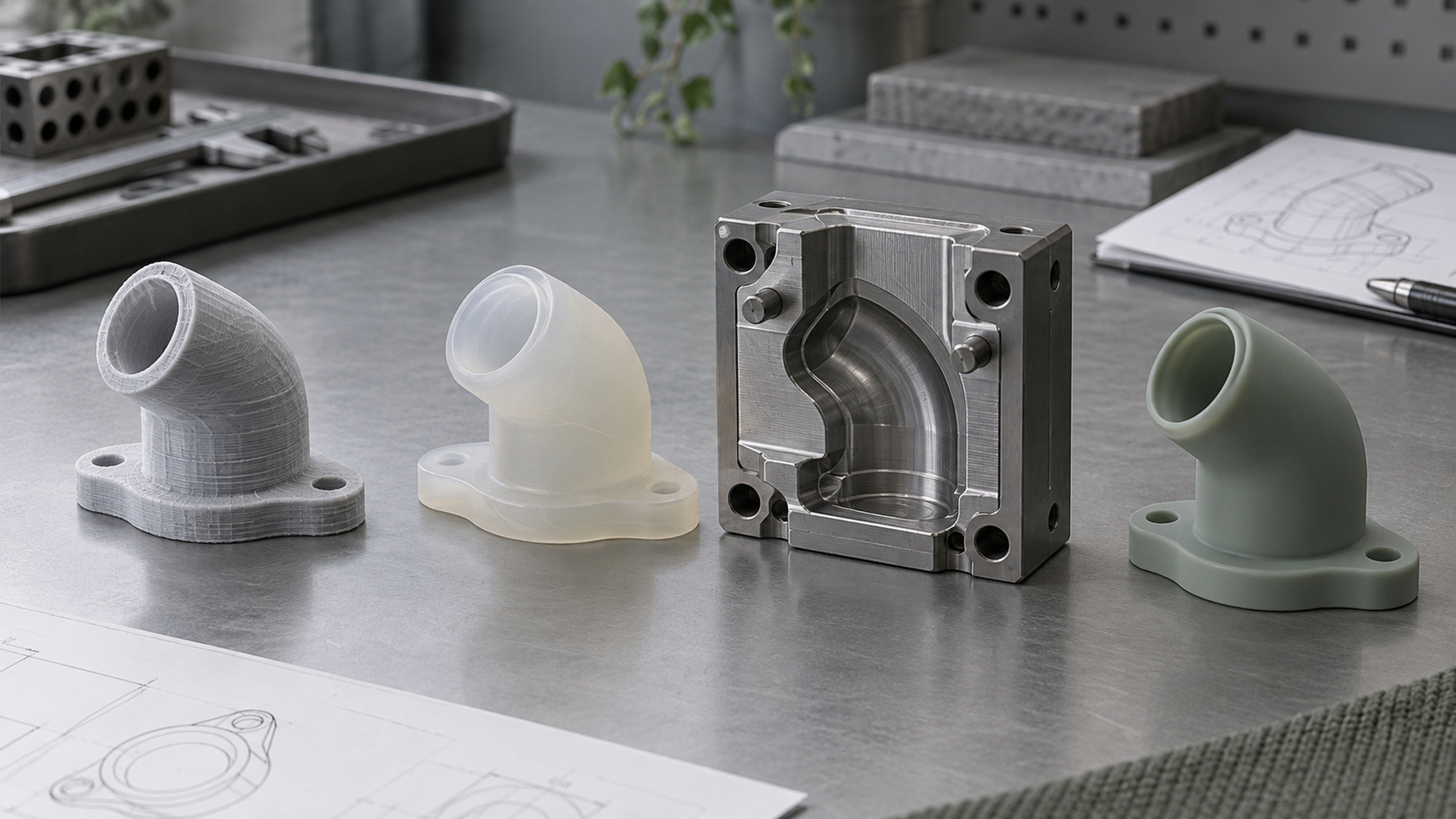
A working prototype feels like proof the product is done. Usually it proves the concept works, not that production variation is solved. Hand-cast, 3D-printed, or soft-tool samples are made by a different method than the steel mold, so they do not reveal shrinkage, flash, weld lines, or cavity-to-cavity variation.
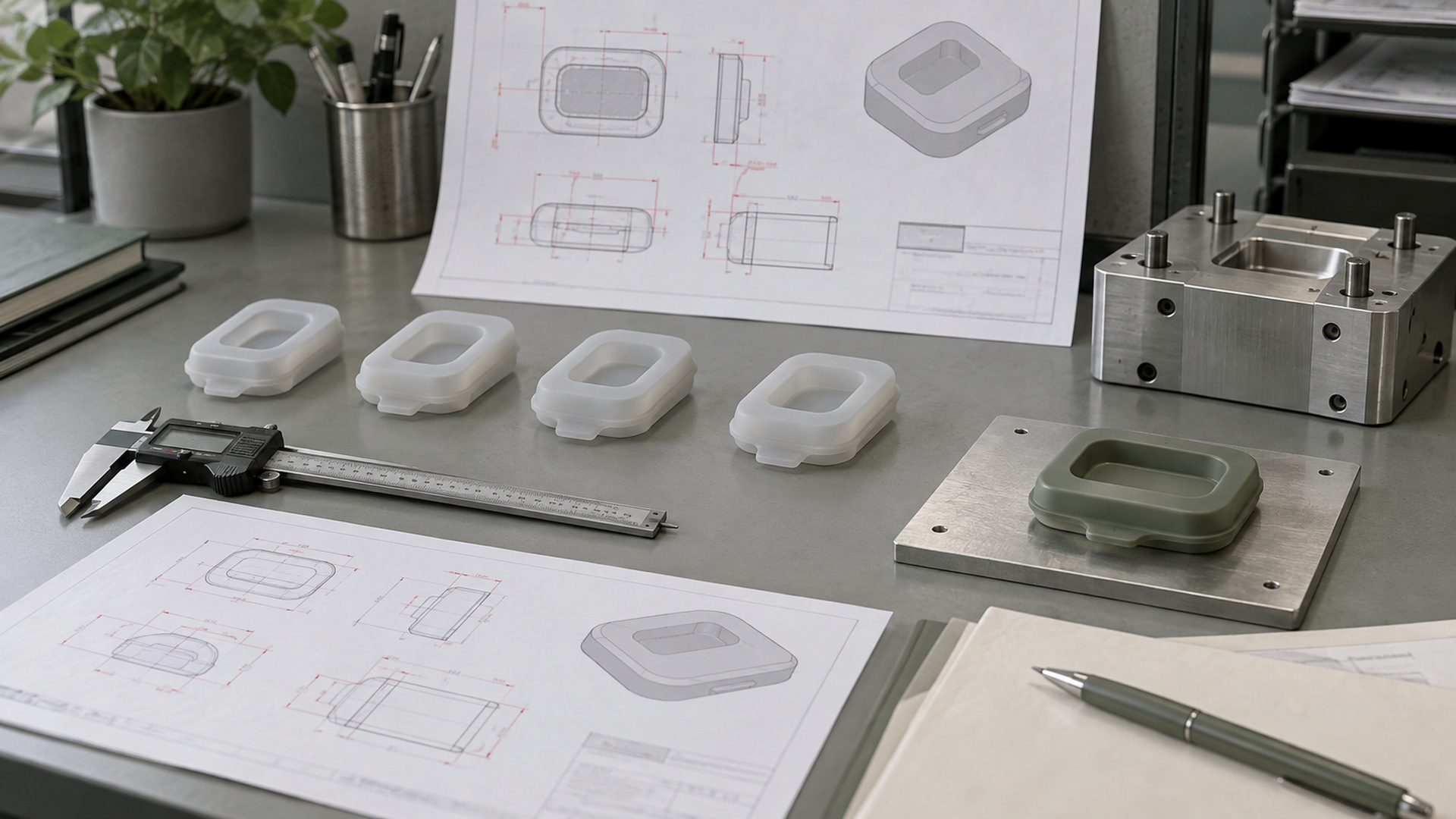
Treat prototype approval as evidence that the design intent is sound. Treat the T1 samples from the production tool as the first true test of manufacturability. Comparing T1 against the signed dimension drawing is where most fit and appearance issues actually surface.
At the design-freeze gate, the DFM review is where small geometry decisions get locked: draft angles, radii, gate and parting-line placement, and where the flex and undercuts will release. Raising those on screen is cheap; raising them after the cavity is machined means EDM work or a new insert. This is the gate to slow down, even if the schedule is pressing.
Freeze the design before steel is cut
Before the mold is machined, convert design intent into a signed, measurable spec:
- A controlled reference — approved sample, color standard, and signed CAD/2D drawing.
- Critical characteristics — the dimensions, actuation force, appearance zone, or seal condition that must hold.
- A test condition — how the part is measured, aged, or assembled.
- An acceptance rule — what passes, what fails, cosmetic versus functional.
- A revision record — the exact drawing, sample, and packaging version the freeze covers.
Everything still open at freeze time should be listed as an assumption with a date by which it is closed. "Soft," "premium finish," or "food-safe" are not freezable on their own.
Compliance belongs on the timeline, not after launch
Compliance testing that is left until after production tooling is cut has a way of revealing a material choice that does not meet the destination market. Where the product will be sold shapes which material grade and documentation are even valid.
One recurring confusion is CE marking. Whether a finished product needs it depends on which EU legislation applies to that product — not simply on being sold in Europe. Resolve the market and product category early, so the material and testing decisions made at design freeze are the right ones.
Compare routes at the DFM gate
When several material or process routes seem possible, score each on manufacturability, functional risk, tooling investment, unit economics, QC burden, and compliance. A cheaper route is right when the requirement is simple; a more expensive one earns its place when it removes an assembly step or protects a critical interface. Deciding this at DFM is free. Deciding it after the mold is cut is not.
Questions to ask at each gate
- DFM review: What features do you see as highest risk, and how would you design them out?
- Prototype: Does this sample represent the final material, process, and surface, or only the form?
- Design freeze: Is every critical dimension and acceptance rule signed off in writing?
- T1: How do these samples deviate from the drawing, and which deviations are acceptable?
- Pilot: Does this run match the approved sample across material lot and cycle?
Strong answers are specific to the part. "We can make anything," "FDA silicone," or "100% guaranteed" are not gate evidence.
Conclusion
The milestones exist so that every expensive decision is preceded by a cheaper one. Lock the spec at DFM, validate form on prototypes, freeze the design before steel, then prove real process on T1 and pilot samples. Run mass production only once those gates are signed — that is what keeps a design intent from becoming an expensive mold modification.