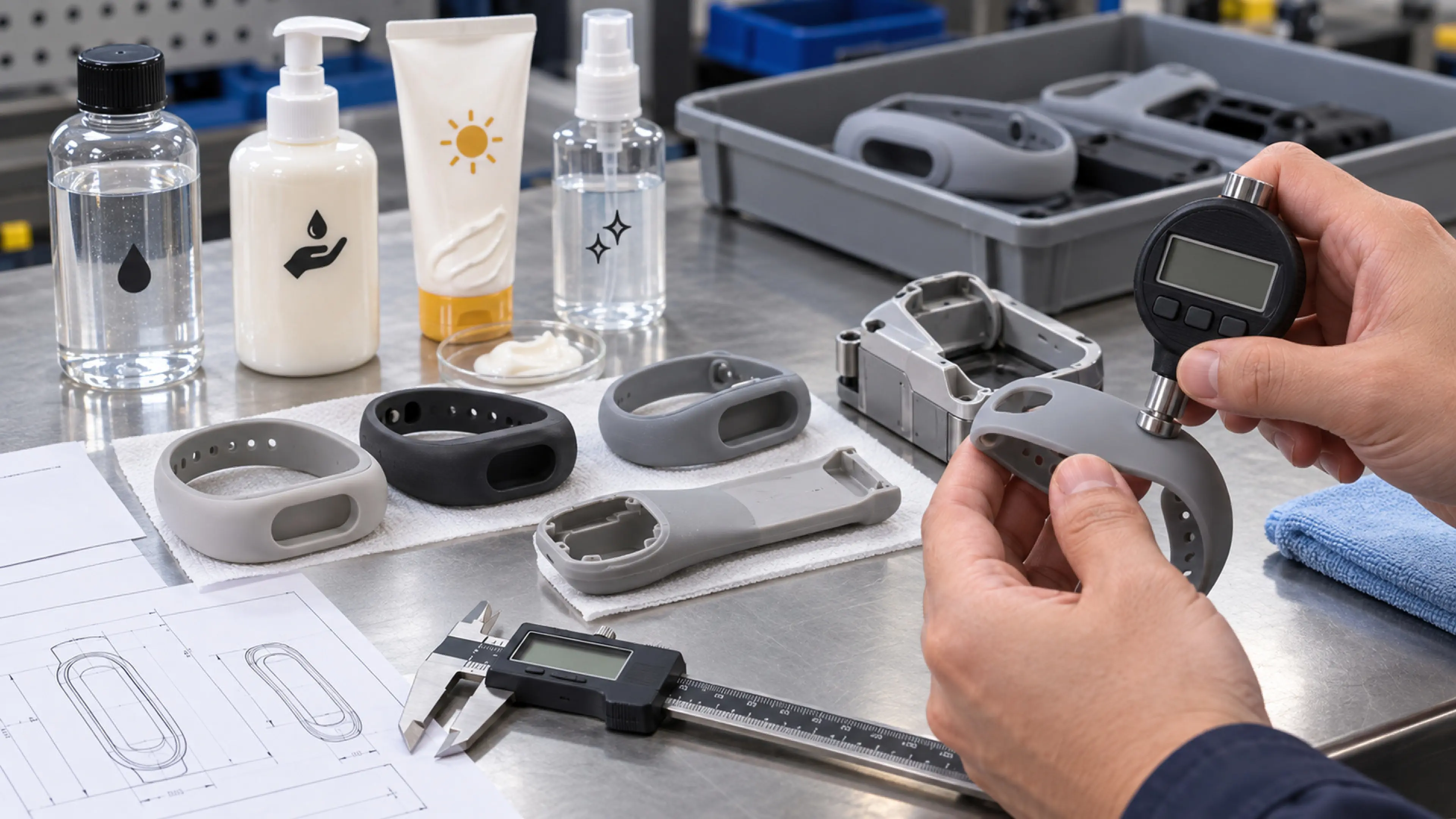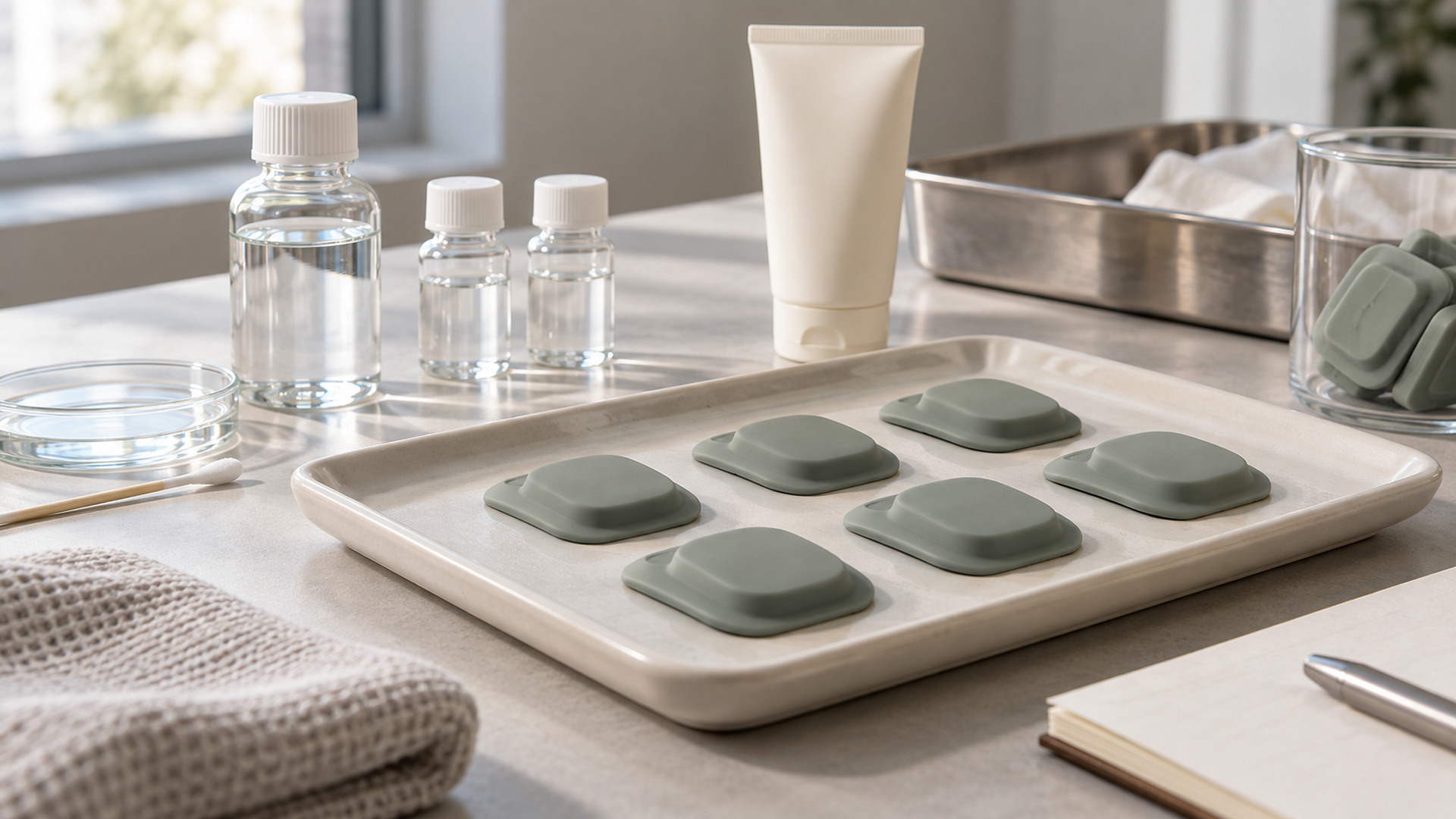
How should device silicone be validated against sweat, skin oils, sunscreen and cleaners?
A material datasheet saying "skin-safe silicone" does not tell you how the part will look or function after months against sunscreen, self-tanner, insect repellent or disinfecting wipes. Silicone is broadly inert, but it can swell, discolor, soften or lose surface finish when exposed to specific oils, solvents or fragrances — and the products customers actually use are rarely the simple saline solutions in lab tests.
For product teams designing wearables, earbuds, bottle accessories or medical-adjacent devices, the validation should be designed around the real contact media the user will bring to the part, not around a generic material grade.
Why lab tests miss real exposure
Standard skin-contact or biocompatibility tests use standardized simulated fluids. They do not replicate:
- Sunscreen oils and fragrances that can swell or stain silicone.
- Insect repellents containing DEET or other solvents.
- Disinfecting wipes used daily on devices.
- Self-tanners and cosmetics that transfer color.
- Sweat mixed with body oils over long contact.
A part that passes a standardized fluid test can still discolor or soften after a summer of sunscreen.
Build the exposure list from the use case
Start by asking what the user actually applies to their skin or the device:
- Does the product see sunscreen, bug spray or tanner?
- Is it wiped with alcohol wipes, soap or disinfectant?
- Does it sit against skin for hours or just minutes?
- Does it see pool water, salt water or chlorine?
- Does it come off and get washed in a sink or dishwasher?
Two checks matter:
- Use the real contact media and a realistic exposure sequence in validation.
- Inspect both appearance and functional change after exposure.
Design the test
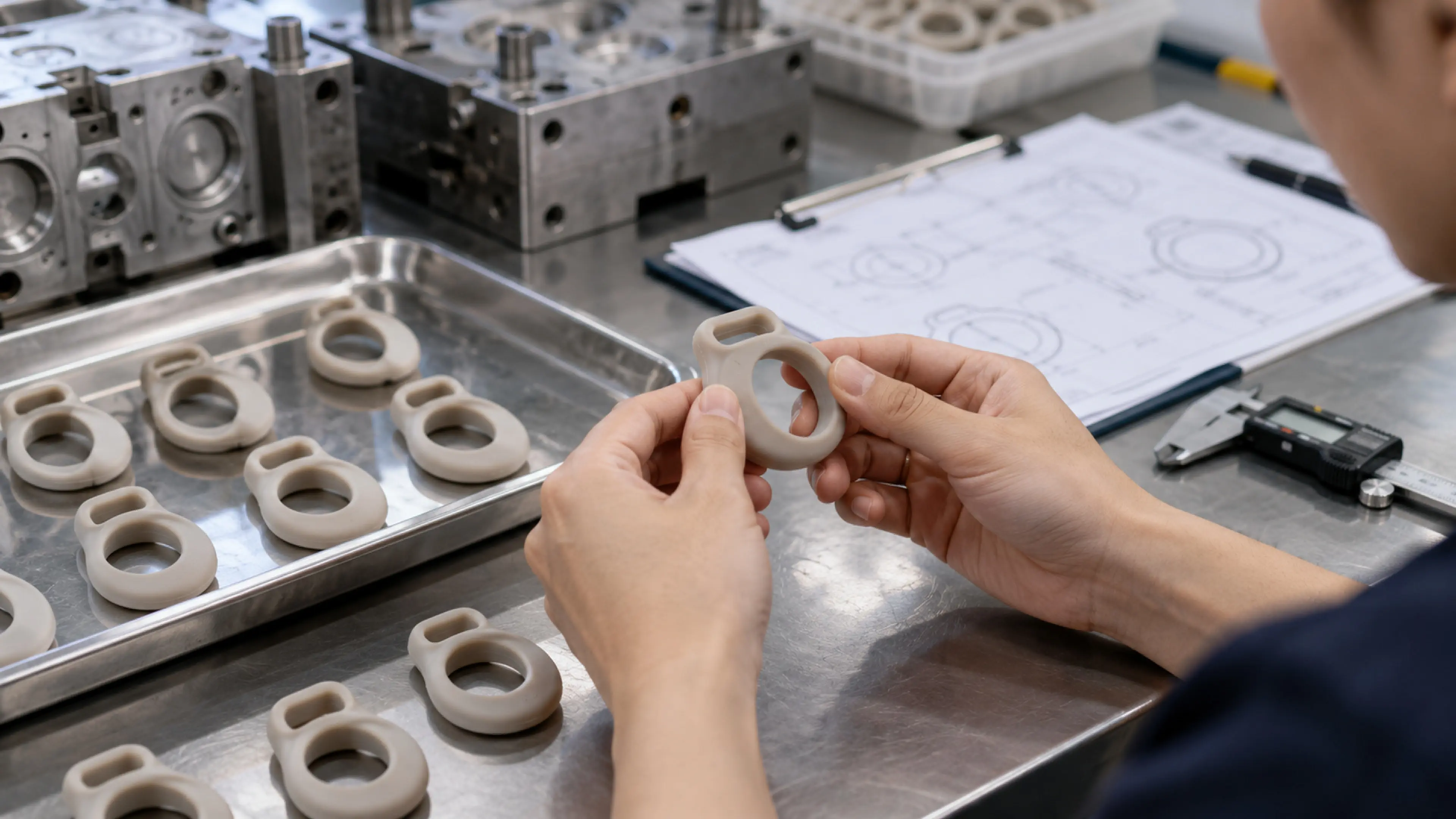
A practical exposure validation includes:
- Pick the actual media — sunscreen brand type, wipe type, soap — or representative industry formulations.
- Soak or wipe samples on a schedule that mirrors real use.
- Age alongside the exposure if the product sees heat (pocket, car, skin).
- Inspect after exposure for discoloration, swelling, softening, tack or surface change.
- Function-test the part after exposure — does a seal still seal, a strap still retain, a button still actuate.
Turn exposure into an acceptance standard
"Resistant to sweat" is not a result. Convert it into:
- A controlled reference — an unexposed sample.
- Critical characteristics — color change, dimensional change, hardness change, function.
- A test condition — the media, duration and temperature.
- An acceptance rule — what level of color or functional change is acceptable.
- A revision record — which material lot and exposure media the test used.
Compare options by trade-off
If a specific sunscreen or cleaner attacks the chosen grade, the options are: switch to a more resistant grade, change the surface finish, or add a cleaning instruction. Compare them on cost, compliance and user experience.
Validate the finished part, not just a coupon
Run exposure on representative finished parts, because geometry and color pigment can change how a material responds. A clear coupon may survive while a pigmented part discolors.
What to prepare before the RFQ
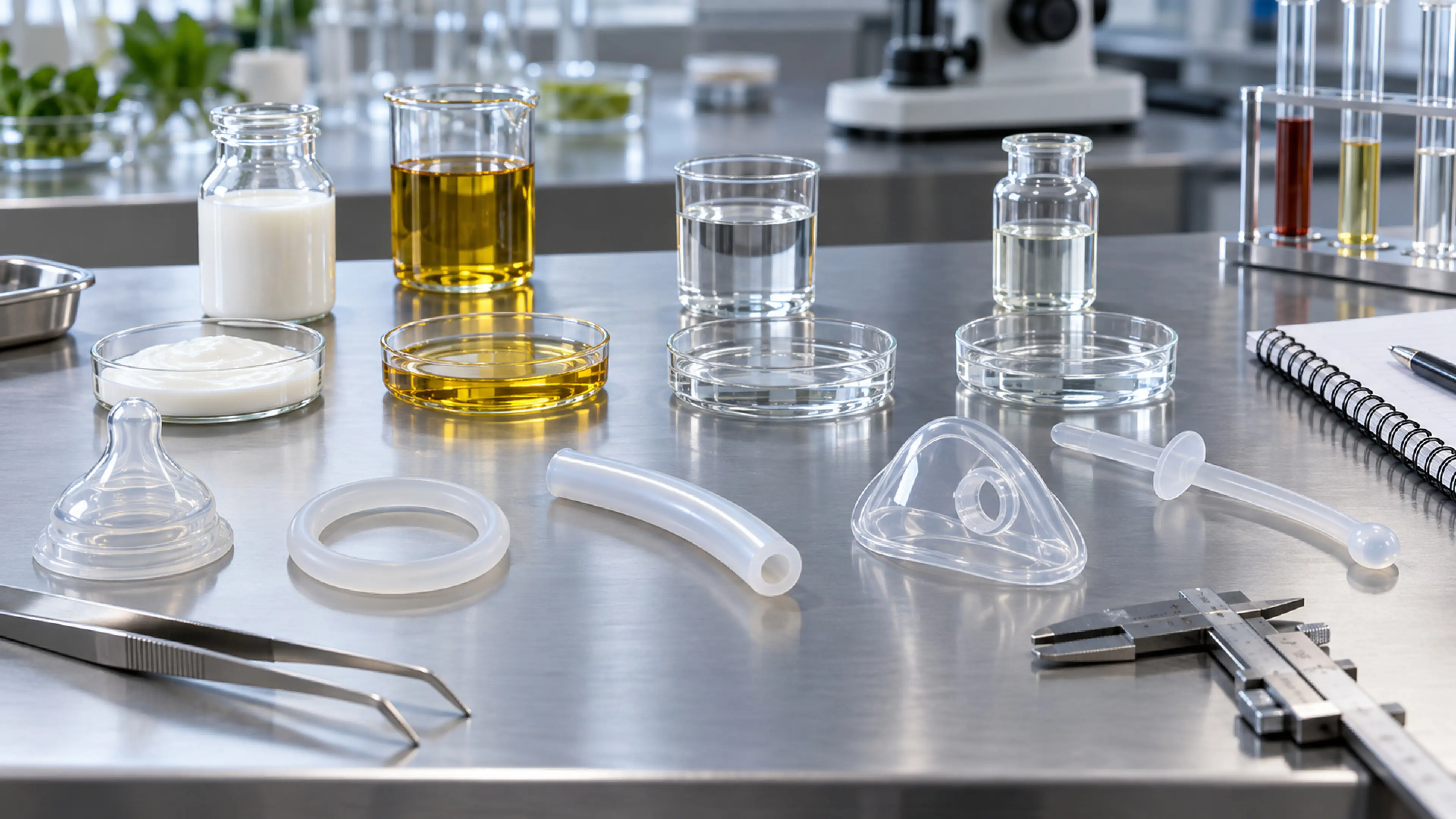
- The products the user will apply near the device.
- How the device is cleaned or disinfected.
- Contact duration and body location.
- Whether the part is pigmented or clear.
- Expected product lifetime.
- Target market and any regulatory expectations.
If the cleaning regimen is not yet defined, describe the harshest reasonable cleaner.
Questions to ask the supplier
- Which contact media have you tested this silicone against?
- How do you test sunscreen and cleaner resistance?
- Does pigmentation affect chemical resistance?
- What discoloration or functional change do you consider acceptable?
- How is long-term exposure tracked in production?
Generic "medical-grade silicone" answers without specific exposure data are not enough.
Conclusion
Silicone is broadly skin-compatible, but "skin-safe" on a datasheet is not a guarantee against the specific oils, sunscreens and cleaners customers actually use. List the real contact media, expose representative parts on a realistic schedule, and inspect both appearance and function afterward. That is how you avoid a product that survives the lab but discolors after one summer outdoors.