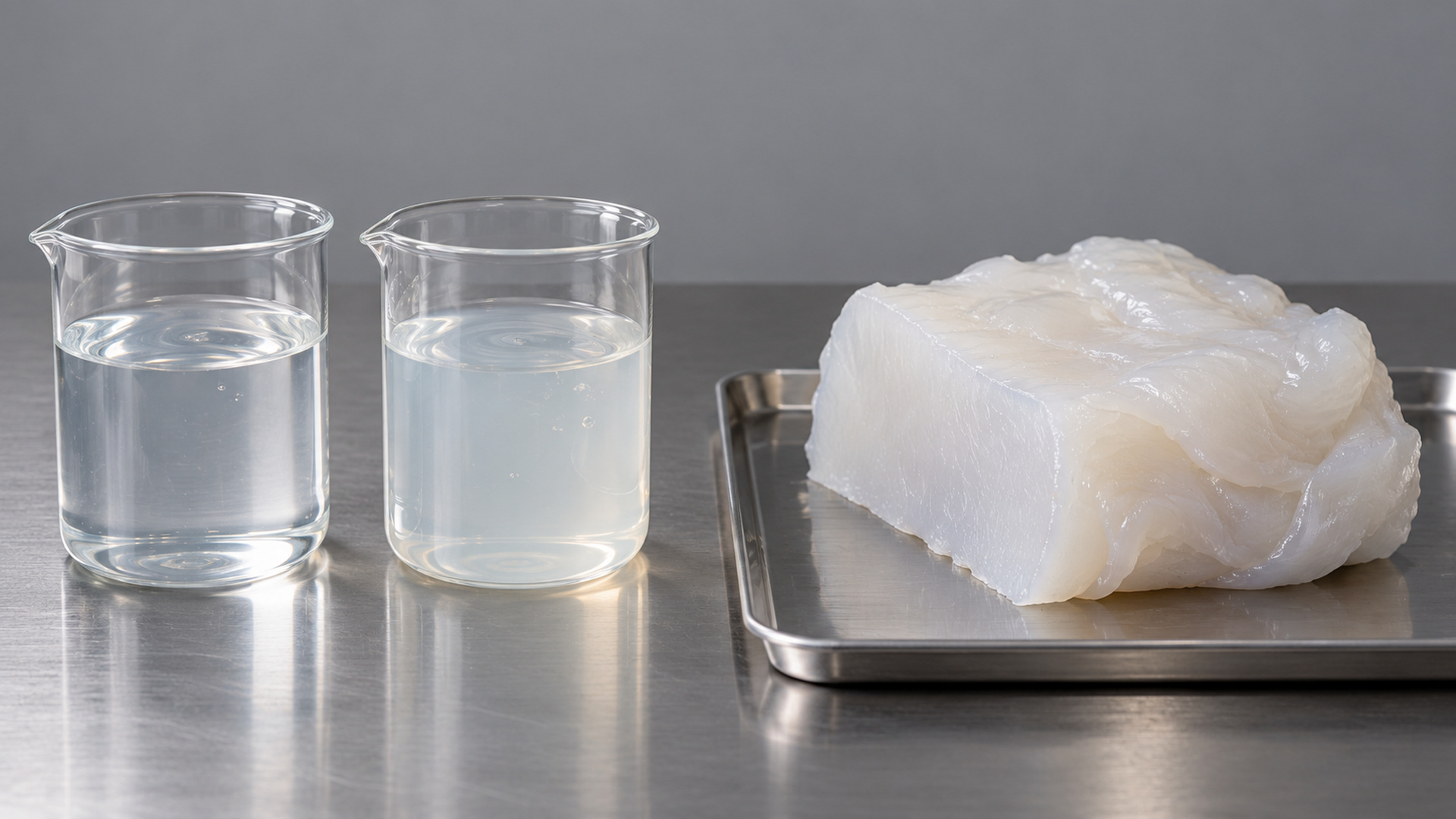
Choosing between liquid silicone rubber (LSR) and high-consistency rubber (HCR) is not simply a materials question. It is a manufacturing decision that affects tooling, part geometry, automation, tolerance control, insert handling and long-term production efficiency.
Both processes can produce high-quality silicone parts. The better choice depends on what the part needs to do and how it will be manufactured.
What is LSR?
Liquid silicone rubber is a two-part silicone system processed through injection molding. Because the material flows easily before curing, LSR is well suited to small details, thin sections, complex flow paths and highly repeatable molded features.
For product teams, LSR is often considered when the part includes:
fine sealing features
small holes or thin ribs
complex geometry
insert or overmolding requirements
precision interfaces
high repeatability across larger production runs
The process is especially useful when silicone must be molded around plastic, metal, electronic inserts or other rigid substrates.
What is HCR?
HCR, often referred to as solid silicone or high-consistency silicone rubber, is processed as a solid compound. It is commonly used in compression molding and related processes.
HCR can be a practical choice for:
thicker or larger molded parts
simpler geometries
sleeves, pads, covers, gaskets and grips
lower-complexity tooling
projects where compression molding is already proven
LSR vs HCR: the practical differences
1. Geometry
LSR usually has an advantage when the part has thin walls, small channels, fine sealing ribs or complex geometry. HCR can be more straightforward for thicker, broader shapes that do not depend on highly controlled flow.
2. Overmolding and inserts
If silicone needs to be molded onto a rigid substrate, LSR often becomes the preferred route because it can flow around inserts and into complex interfaces. The substrate, bonding method, insert geometry and tooling design still need to be reviewed together.
3. Tooling
LSR tooling requires strong control of shut-offs, venting, material flow and temperature. Small variations can affect flash, bonding or fill behavior. HCR tooling still requires control of parting lines, compression behavior and demolding, but the flow-management challenge is different.
4. Automation
LSR is commonly selected when higher levels of automation and repeatability are important. HCR can still deliver stable repeat production, but the process is often more labor dependent.
5. Volume and economics
There is no universal rule that LSR is for small parts and HCR is for large parts. Annual volume, tooling investment, geometry and required consistency all influence the economics.
Questions to ask before selecting the process
What are the thinnest wall sections?
Does the part include fine sealing features?
Does silicone need to bond to plastic or metal?
Is there an insert that must remain precisely positioned?
What are the annual volumes?
What hardness and surface feel are required?
Are visual or dimensional tolerances critical?
Do not choose the process based on factory preference
A better approach is to review the application, geometry, substrate, tolerance and volume first, then choose the molding route that best supports the product.
At ESKY, we support both LSR injection molding and solid silicone molding. For projects still at the CAD or sample stage, a DFM review can help determine which process is more practical before tooling begins.
Not sure whether your part should use LSR or solid silicone? Send your drawing for a manufacturing review.