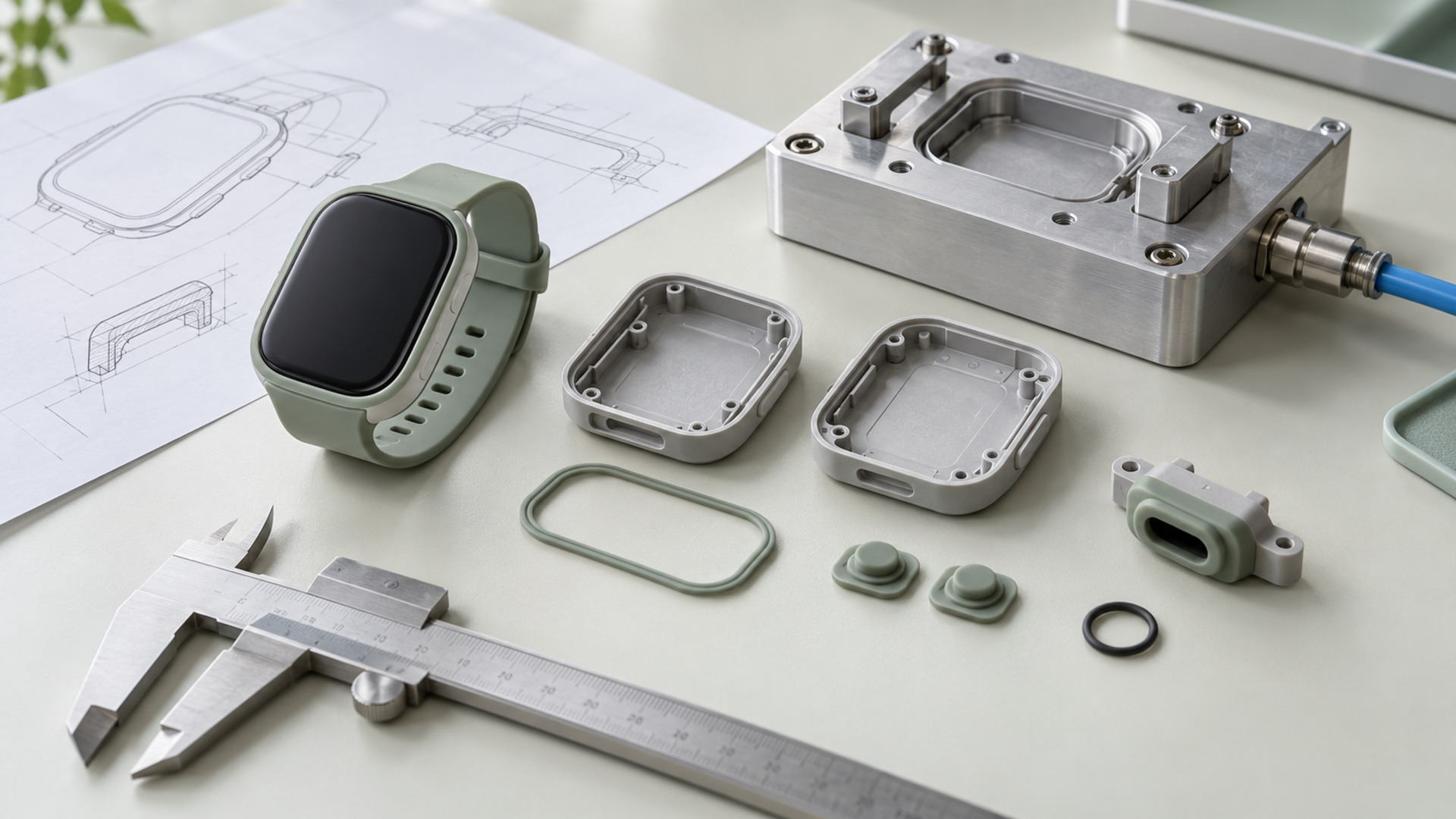
From Prototype to Pool: Designing Silicone Seals and Soft Interfaces for Waterproof Wearables
A waterproof wearable can pass an early prototype test and still develop leaks in production. Waterproofing is rarely determined by one material or one gasket. It depends on a complete system: seal geometry, material behavior, housing stiffness, compression, interfaces, assembly variation, aging and inspection.
For a wearable used in swimming, outdoor sports or repeated wet environments, the challenge is greater. The product may face water immersion, chlorine, salt, sweat, cleaning chemicals, temperature changes, and repeated button or charging-interface use.
So product teams should not start with "which waterproof silicone should we use?" The better question is: where can water enter, under what conditions, and how will every interface hold its seal over the intended product life? That reframes waterproofing from a material-selection problem into a product-development and manufacturing problem.
Start With the Water-Exposure Matrix, Not the Material Name
Before selecting silicone hardness or designing a gasket, define the actual environment. "Waterproof" can describe very different use cases. A wearable might experience occasional rain, sweat during exercise, shower exposure, repeated pool swimming, prolonged immersion, saltwater, chlorinated water, cleaning chemicals, or warm and cold water cycles. These conditions are not interchangeable.
Underwater Audio, for example, markets its Delphin player specifically for swimming and states that its devices are tested to IPX8 for continuous immersion. That illustrates a key distinction: a device designed for underwater use has a different exposure profile from a wearable designed mainly for rain or sweat.
Before DFM, build a simple exposure matrix covering environment, duration, frequency, temperature, chemicals and mechanical use. That gives engineering a better starting point than a generic request for "waterproof silicone."
Map Every Seal Path, Button, Port and Charging Interface
Water does not care which component was meant to be the "main seal." It looks for a path.
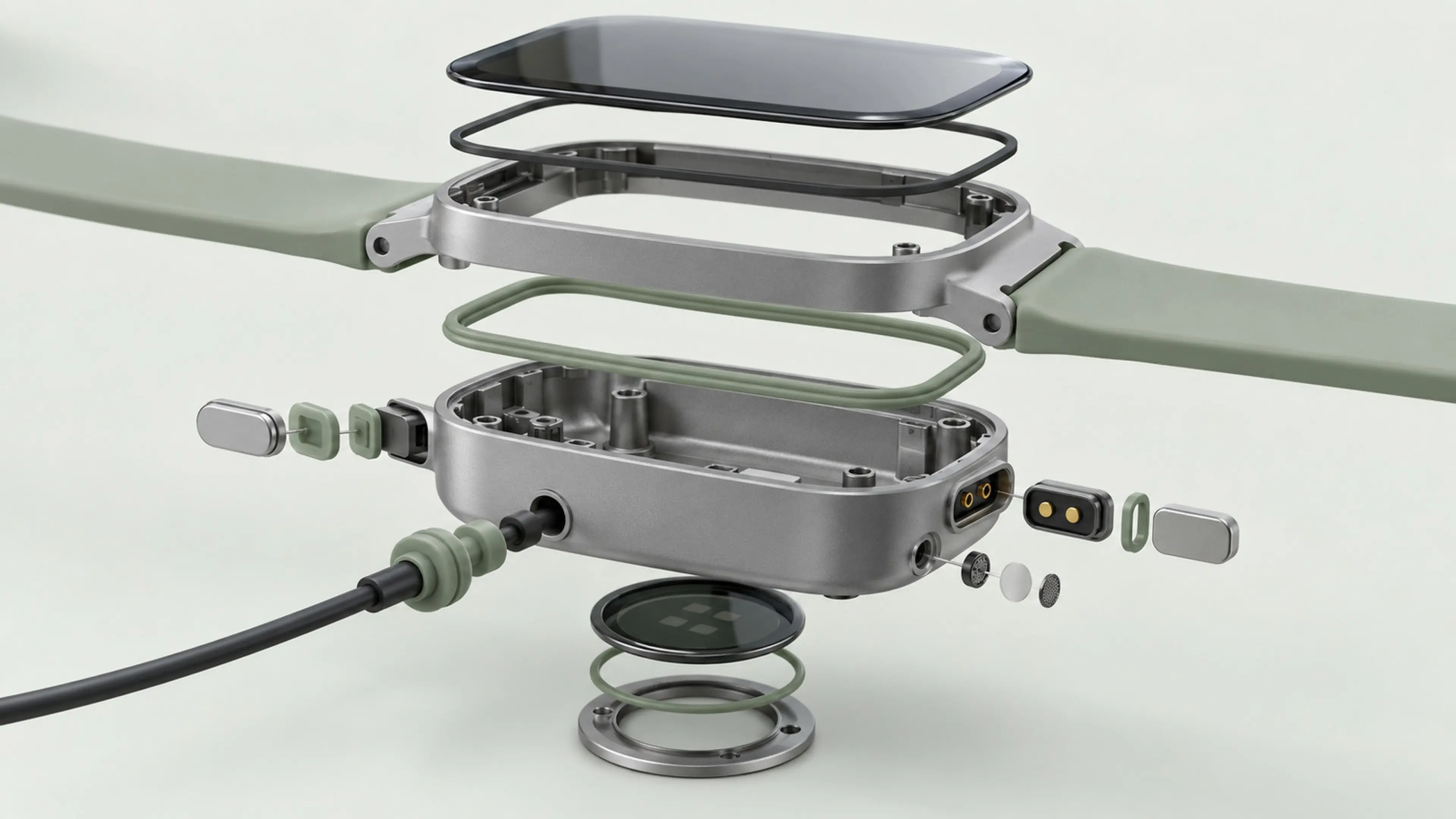
For a wearable device, potential ingress points include housing joints, display interfaces, buttons, charging contacts, microphone or speaker openings, sensor windows, cable exits, screws, removable covers, molded inserts and overmold boundaries.
Map these interfaces individually before tooling. For each one, ask what stops water here: a compressed gasket, a molded membrane, an overmold, an adhesive, a mechanical seal, or another engineered barrier. This exercise usually shows that the waterproof strategy depends on several interacting components rather than one silicone seal.
IP Testing and Real-Use Exposure Answer Different Questions
An IP rating is important, but it is not the complete durability specification for a wet-use product. An ingress-protection test evaluates defined conditions. Actual use adds variables: chlorine, repeated immersion, sweat, sunscreen, cleaning agents, mechanical cycling, temperature variation and aging. These affect elastomers, coatings, adhesives and interfaces differently over time.
The validation plan should therefore distinguish ingress-protection validation from application-specific durability validation. A product intended for regular pool use may need aging and exposure testing that reflects pool conditions before being retested for leakage; a marine or open-water product may need a different program. The objective is not to replace IP testing. It is to avoid assuming that one successful ingress test answers every lifetime-reliability question.
Gasket, Membrane, Boot, Bumper or Permanent Overmold?
Not every soft interface should use the same construction. Silicone performs several very different roles inside a wearable.
Gasket. A separate gasket seals between rigid housing components. It can be replaceable and straightforward to assemble, but its performance depends heavily on groove geometry, compression and assembly consistency.
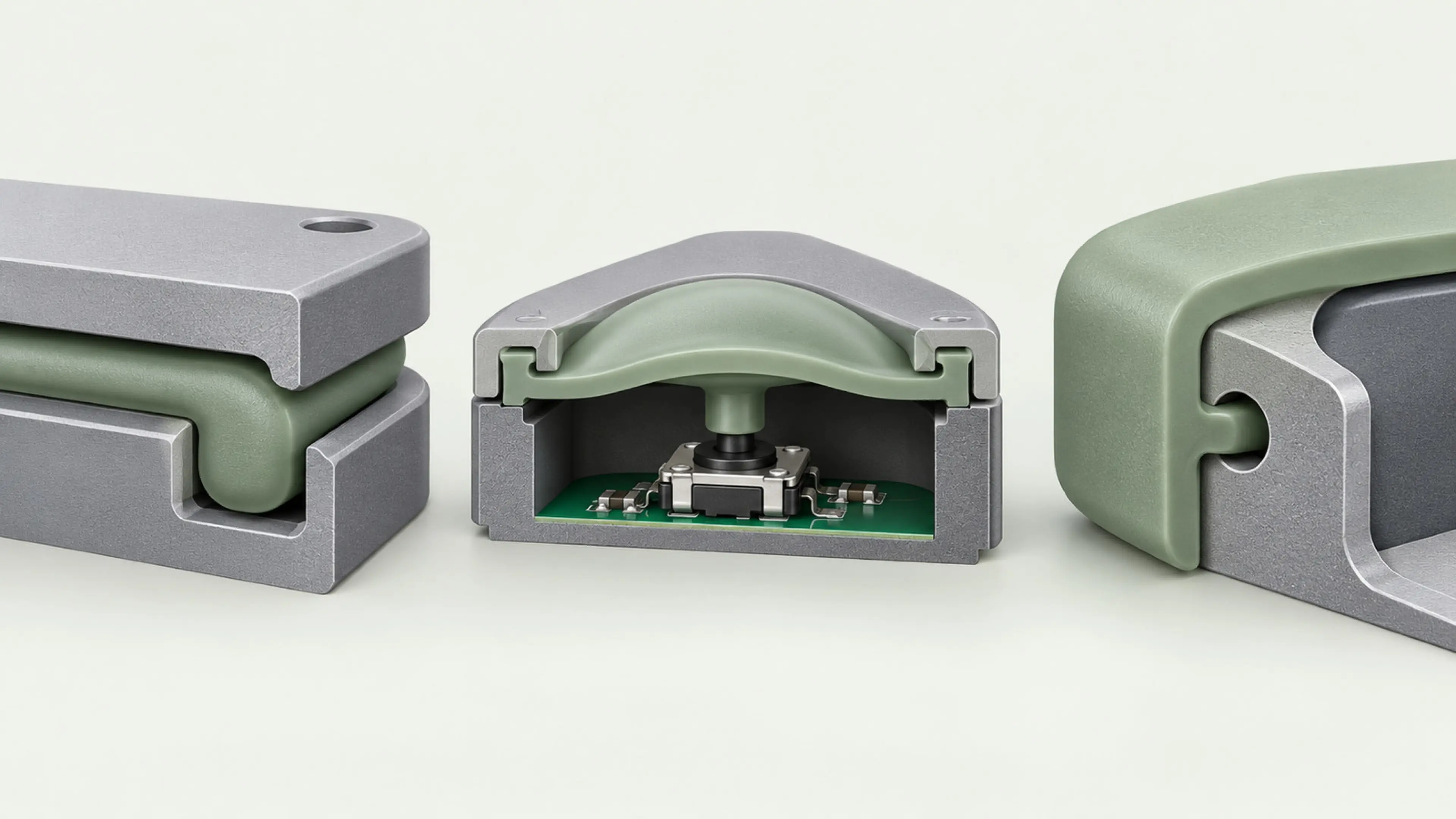
Button membrane. A molded silicone membrane provides both user input and environmental separation. Tactile response, travel, fatigue life and sealing requirements interact here.
Boot or cover. A flexible boot protects a connector, cable transition or exposed interface.
Bumper. A silicone bumper mainly provides impact protection and grip rather than acting as the primary water seal.
Permanent overmold. Overmolding integrates soft material directly with a rigid substrate, reducing separate components. It introduces its own engineering questions around substrate design, mechanical retention, bonding, molding conditions and interface reliability.
The right choice depends on the product architecture. Do not select the silicone process before defining what the soft component actually needs to do.
Hardness, Compression Window and Compression Set
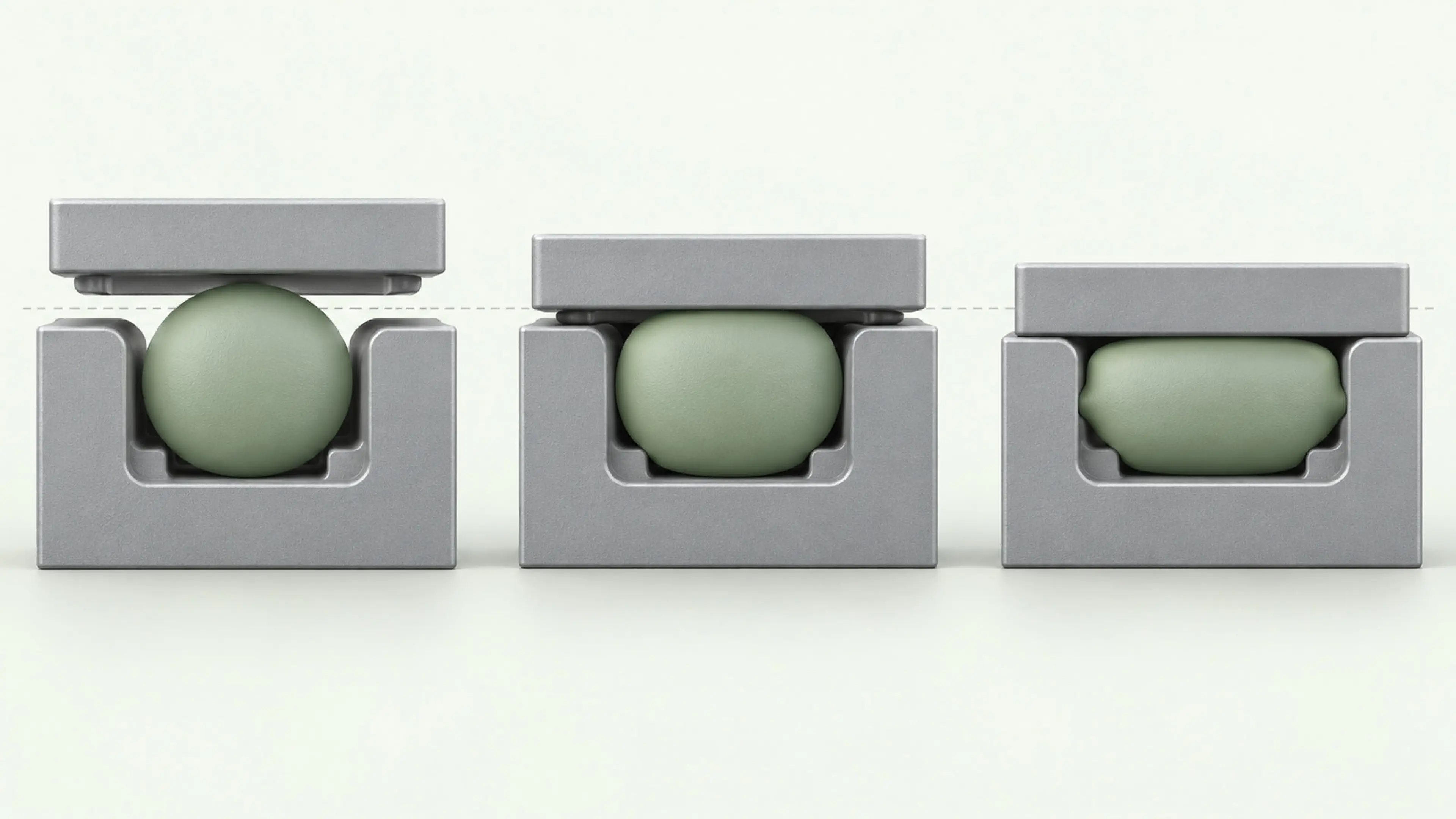
A gasket works because it is compressed, but more compression does not automatically mean better sealing. Too little compression fails to create a reliable seal; too much can overstress the gasket, increase assembly force, distort nearby structures, accelerate permanent deformation and create inconsistent compression across the seal.
Silicone hardness also interacts with geometry. A softer material conforms more easily, but material selection should consider the complete application rather than Shore hardness alone.
For production, define a usable compression window rather than relying on nominal CAD dimensions. That means accounting for variation in gasket dimensions, housing dimensions, assembly position, fastener force and material behavior. The real question is not whether the nominal CAD model seals, but whether the system still seals when production tolerances stack in an unfavorable direction.
Protect Audio, Haptics, Sensors and Wireless Keep-Out Zones
Wearables often need to be sealed without preventing the device from functioning, and that creates competing requirements. Microphones need acoustic access, speakers need sound transmission, pressure sensors may need environmental exposure, optical sensors require clear interfaces, haptic systems need controlled mechanical behavior, antennas require suitable material and geometric conditions, and charging systems need accessible electrical interfaces.
Waterproofing therefore cannot be developed independently of electronics and industrial design. A thick silicone wall may improve protection in one area while creating problems elsewhere; moving a gasket or adding a rigid reinforcement may interfere with an antenna, sensor or assembly process. These conflicts are easier to resolve during DFM than after tooling.
Mechanical Capture vs. Chemical Bonding
When silicone is combined with plastic or metal, the interface deserves special attention. There are broadly two design approaches.
Mechanical retention. The rigid substrate includes features that physically lock the molded silicone into place — holes, undercuts, grooves, ribs or interlocking geometry.
Bonded interfaces. Some projects use material systems and processes designed to create adhesion between the soft and rigid components. Bonding should never be assumed. Compatibility can depend on silicone formulation, substrate material, surface condition, surface treatment, contamination, molding process, geometry and operating environment.
For waterproof applications, interface design should also consider behavior after aging. A connection that looks strong immediately after molding may behave differently after prolonged chemical, thermal or mechanical exposure.
Parting Lines, Gates, Flash and Leak Paths
Mold design influences sealing performance. On a cosmetic silicone product, a small parting line may be a visual concern; on a sealing surface, it becomes a functional one.
During tooling review, pay attention to parting-line position, gate location, flash, venting, surface finish, flow-related features where relevant, and dimensional control around sealing geometry. Mark critical sealing surfaces clearly on the drawing before tooling so the mold engineer and quality team know which areas are function-critical. The same applies to inspection: a cosmetic defect and a potential leak-path defect should not share the same acceptance criteria.
Use Production-Intent Materials Before Final Validation
A common risk in prototype development is validating a product that is not representative of production. An early prototype might use a different silicone formulation, a different hardness, machined rather than molded housings, hand-applied adhesive, different surface treatment or manually selected components. That may be appropriate for proving the concept, but not for final production validation.
Before release, critical tests should use parts that represent the intended material, tooling, molding process, housing and assembly method. This matters especially for long-term sealing behavior. Prototype success answers whether the concept can work; production-intent validation must answer whether it can be manufactured repeatedly within the defined process window. Those are different questions.
Assembly Variation, Inspection and Leak-Test Strategy
Even a well-designed seal can fail if assembly is inconsistent. Potential variables include gasket misalignment, contamination, twisted seals, incomplete seating, incorrect fastener torque, damaged sealing surfaces, dimensional variation and overmold defects.
Waterproofing strategy should therefore include manufacturing controls, scaled to product and risk level:
- incoming inspection of critical molded dimensions or material requirements;
- in-process controls for gasket placement, housing assembly or fastener conditions;
- visual inspection for flash, contamination, damage or incomplete molding;
- leak testing where an appropriate method can identify assembly or sealing failures.
The correct leak-test method depends on product architecture, required sensitivity and production volume. Define this strategy before mass production, not after field failures appear.
When Material, Color or Supplier Changes Trigger Retesting
A common production mistake is treating an apparently small material change as irrelevant to a validated waterproof system. Changes may include silicone formulation, hardness, pigment or color system, rigid substrate resin, adhesive, surface treatment, component supplier, mold modification or assembly process.
Not every change affects sealing performance. But changes that can influence dimensions, compression, adhesion, aging or interface behavior should go through a documented engineering review, and the outcome should be one of three: no retest required, partial validation, or full relevant validation. The point is having a change-control process rather than deciding informally. For a mature product, validation history should stay connected to the exact production configuration that was tested.
What to Include in a Waterproof Wearable RFQ
For a quotation or DFM review of a waterproof wearable silicone component, sending only the silicone CAD file is usually not enough. A useful RFQ package includes:
Product architecture — 2D drawings, 3D CAD, mating components, assembly relationship.
Silicone component — intended function, target hardness if defined, critical dimensions, surface and color requirements.
Interface map — seal paths, buttons, charging interfaces, sensors, audio interfaces, overmold boundaries.
Exposure conditions — immersion depth and duration, freshwater / pool / saltwater use, temperature range, cleaning conditions, chemical exposure where relevant.
Validation requirements — target ingress-protection requirement, aging requirements, mechanical cycling, customer-specific tests, leak-test requirements.
Commercial information — prototype quantity, first production quantity, estimated annual volume, target market, target production date.
Not every specification needs to be finalized before contacting a manufacturer, but separating confirmed requirements from open engineering questions makes the DFM discussion far more productive.
Waterproofing Is a System, Not a Silicone Specification
Silicone is an excellent material for wearable seals, membranes, bumpers and soft-touch interfaces. But selecting silicone does not make a product waterproof. Reliable wet-use products come from coordinating material, seal geometry, rigid housing, compression, interface design, molding, assembly, aging, inspection and validation.
This becomes critical when moving from a functional prototype to repeatable production. The prototype proves that the idea can work. The manufacturing system has to prove that it can keep working across production variation and real-world use.
Technical References
- Underwater Audio — Delphin Swimming Music Player — Official product page; the brand states its devices are tested to IPX8 for continuous immersion. External example of a swim-specific exposure profile, not an ESKY SUPPLY project.