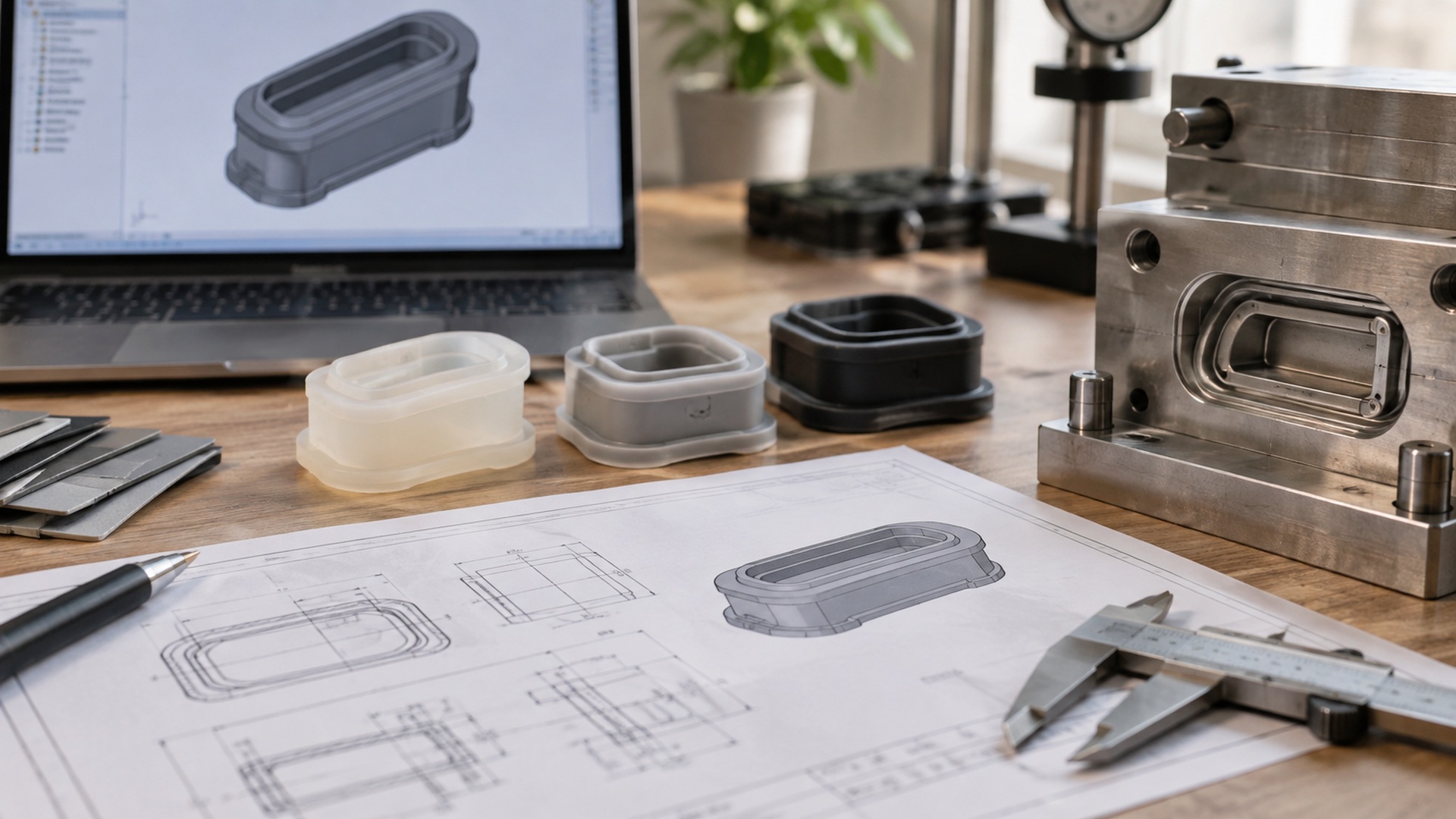
What must be revalidated after changing a pigment, additive or silicone grade?
"It's the same part, just a different color" is the sentence that starts a surprising number of quality problems. Changing a pigment, an additive, or the silicone grade is not a cosmetic swap. It can shift cure behavior, hardness, feel, surface tack, bond strength, and even whether the finished part still meets its contact regulations — and none of that shows up until the change is in production.
The job is to build a change-approval process that revalidates the right things without re-running the entire program. Scope the re-test by what changed and how critical the affected feature is.
What kind of change is it?
Not every change carries the same risk. Group it first:
- Pigment or color change. Most likely to affect appearance, but can also affect lightfastness, bleed, and surface feel. Lower mechanical risk on a cosmetic part, higher if the color contacts food or skin.
- Additive change. A bonding primer, release agent, coating, or processing aid can alter adhesion, odor, and contact safety. Often higher risk because it sits at the critical interface.
- Silicone grade change. The broadest impact: hardness, compression set, cure, aging, and compliance all move, and so may the process window. Treat this as near a redesign.
The revalidation scope should scale with that risk rather than treating every swap the same.
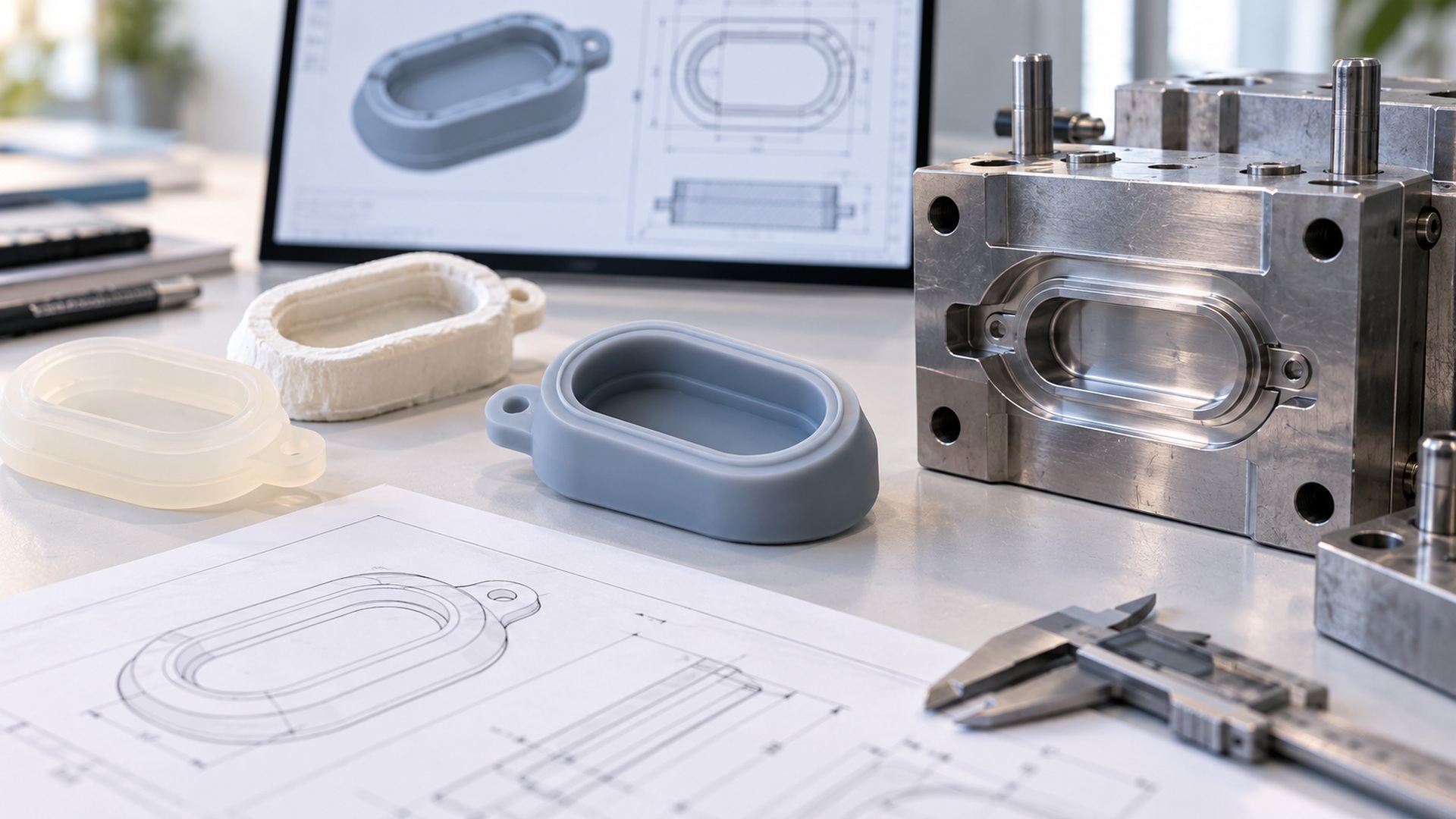
What to revalidate, by risk
For a cosmetic-only color change on a non-contact part, revalidating the color match against the approved standard may be enough. For a grade or additive change on a functional or contact part, re-check the features the change could touch:
- Appearance and color. New samples against the signed color and visual standard.
- Mechanical and feel. Hardness, actuation force, rebound, or compression set if the grade shifted.
- Bond or interface. Pull or adhesion testing if a primer, substrate, or grade changed.
- Dimensional. Shrink and cure can move with a new grade, so re-measure critical dimensions.
- Compliance. A new pigment or grade can invalidate the previous contact evidence; the finished product's compliance may need to be re-established for the new formulation.
Use a representative sample and written acceptance criteria so the re-check has an objective pass/fail rather than a subjective "looks similar."
The finished product, not just the new resin
A common shortcut is to re-validate the new raw material and call it done. As with contact claims generally, the finished part is what matters. A new pigment that is clean on its own still has to be evaluated in the molded, colored, possibly bonded assembly the user actually touches — and the destination market's rules still apply.
Define the functional requirement before choosing the replacement, and record which drawing, sample, and material version the new approval covers. The approved sample becomes the new reference that later runs are measured against.
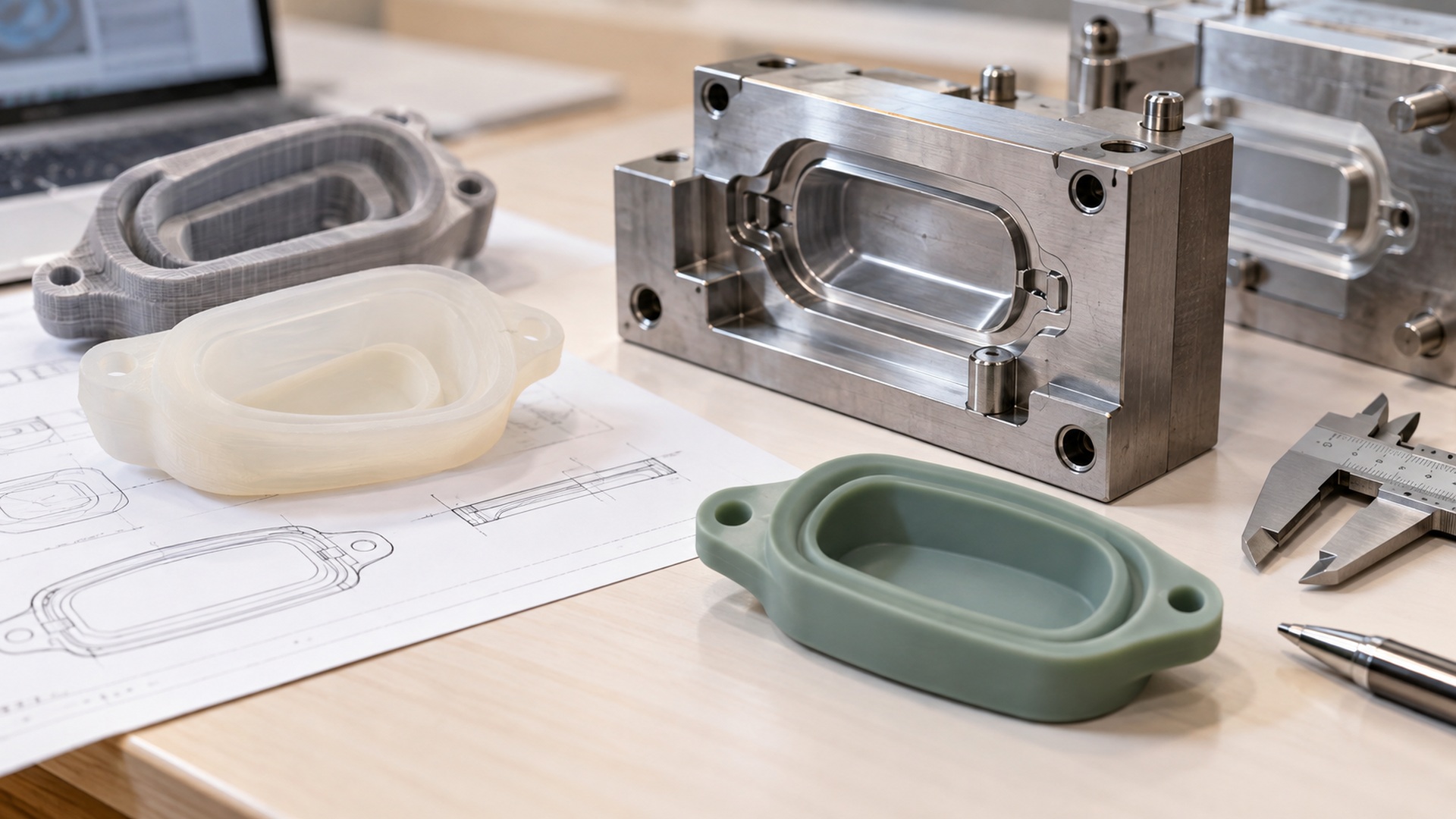
Turn vague language into an acceptance standard
"Looks close" or "same as before" is not a change record. Document each change as:
- A controlled reference — the previous approved sample and the new candidate side by side.
- Critical characteristics — which features the change could affect.
- A test condition — the exact re-tests run for this change.
- An acceptance rule — what passes before the new formulation ships.
- A revision record — the new pigment/additive/grade, and the drawing and sample versions updated.
This is what stops a silent material change from drifting through repeat orders unnoticed.
Plan the transition point as carefully as the re-test. Decide which shipment marks the switch, how old stock and new stock are separated, and how the field can tell them apart if the change is visible. Without an explicit cutover, two 'approved' versions can land in the same channel at once, and a complaint gets hard to trace.
Questions to ask the supplier
- Exactly what changed — pigment, additive, or base grade — and why?
- Which of my critical features could this affect?
- Do we need to re-test color only, or mechanics, bond, and dimensions too?
- Does the new formulation require updated contact or compliance evidence?
- What is the approved transition point between old and new stock?
- How will you prevent mixed lots in the field?
Credible answers map the change to a re-test scope. "It's equivalent, no need to retest" is the assumption you are paying them not to make.
Conclusion
Treat a pigment, additive, or grade change as a small revalidation, not a free re-skin. Scale the testing to the risk: a cosmetic color match for appearance-only changes, and mechanical, bond, dimensional, and compliance re-checks for anything touching function or contact. Always approve the finished part, record the new revision set, and define the transition point — so the part that ships is the one you actually re-tested.
Keep the old and new states easy to tell apart on paper. When you re-approve, update the drawing note, the approved sample, and the incoming-material specification together, and record the change reason. Months later, when a repeat order arrives and someone asks why two batches look slightly different, that record prevents re-litigating a decision already made.